


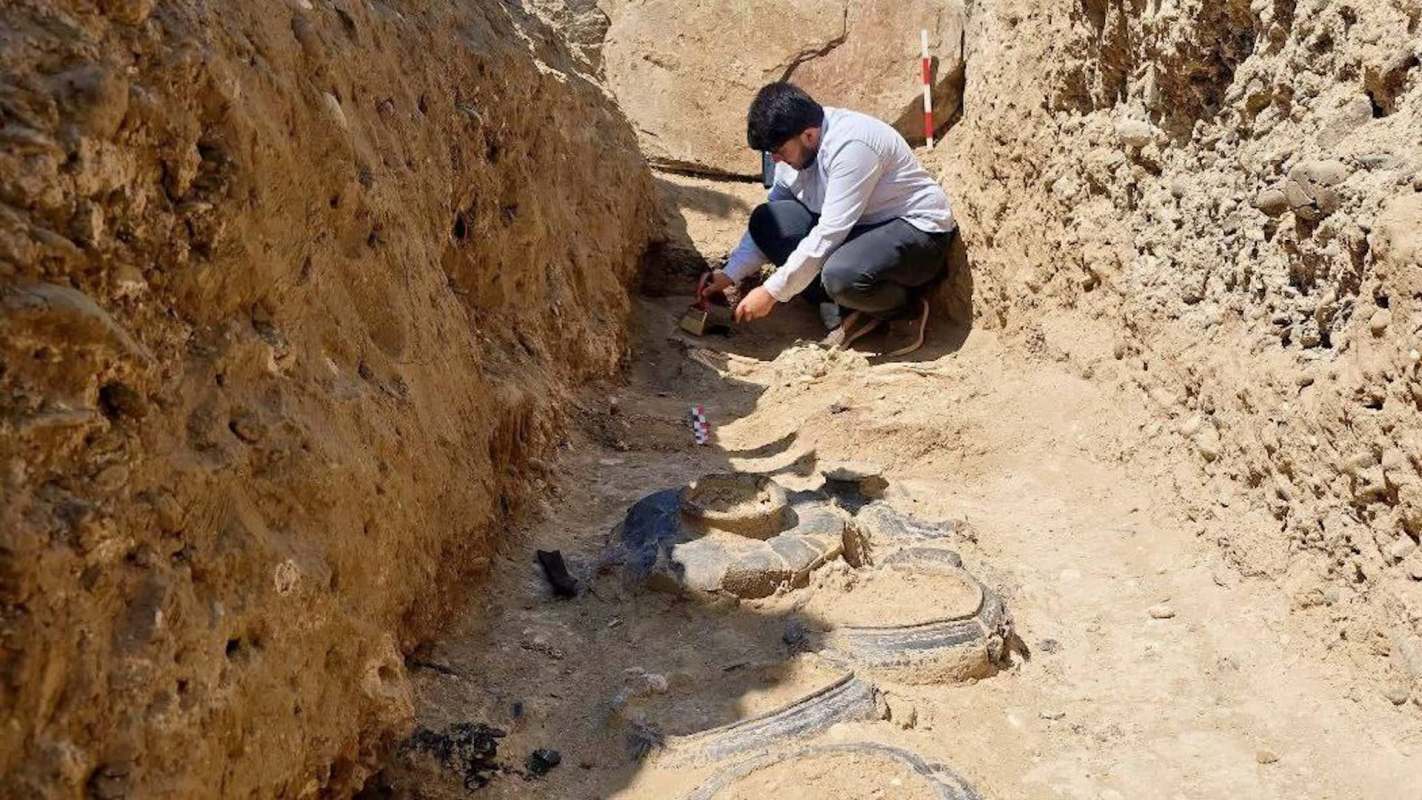
A newly uncovered tomb in Azerbaijan is giving archaeologists a rare glimpse into how power, warfare, and ritual may have intersected nearly 4,000 years ago.
As Colombia One reported, at the center of the large burial mound was a man thought to have been a warrior king, buried with a bronze spearhead still held in his hand.
What happened?
Near the area locally known as Yovsanlidere on Azerbaijan's Ceyranchol plain, archaeologists unearthed a 3,800-year-old kurgan, or burial mound, that experts said could count among the South Caucasus' most significant recent finds. The mound concealed the skeleton of a man that researchers estimated stood more than 6.6 feet (2 meters) tall.
The body was placed in a flexed position, with a four-pronged bronze spearhead remaining in his grasp, which may indicate elite military standing.
Inside the tomb, archaeologists identified three separate sections. One contained the remains and grave goods, another held 12 ceramic vessels, and a third was left empty, which may have had symbolic or spiritual significance.
Decorated pottery and a circular limestone seal were also recovered at the site, and researchers said the seal may reflect early notions of social structure or land ownership. Animal bones from goat, cow, horse, and boar were present as well and appear to have been placed there as offerings, per Colombia One.
TCD Picks » Quince Spotlight
💡These best-sellers from Quince deliver affordable, sustainable luxury for all




Why does it matter?
Finds like this help fill major gaps in what experts know about how ancient societies in regions lived, organized power, and honored the dead.
The unusual spear design appears unlike most weapons previously found in the area and could offer new clues about warfare and status during the Bronze Age.
Food offerings, carefully decorated vessels, and even an empty chamber suggest that death may have been treated not simply as an end, but as a transition requiring ritual preparation.
Discoveries like this can shape museum collections, classroom lessons, and public understanding of how long human communities have been developing political systems, symbolic traditions, and specialized craftsmanship.
The grave was capped by two rows of 14 limestone slabs, each weighing nearly a ton. Constructing something on that scale suggests the community invested substantial labor and importance in honoring the person buried there.
What's being done?
Colombia One said the excavation is part of an ongoing research effort led by the Institute of Archaeology and Anthropology of ANAS with support from Azerbaijan's Ministry of Culture. More than 2,000 people, including students, scientists, and museum workers, have taken part in the project.
Dr. Shamil Najafov, who leads the project, said the team plans to use modern testing methods, such as Carbon-14 dating, to better confirm the remains' age and background, according to Colombia One. Those results are expected to appear in scientific journals and in an upcoming academic book.
Researchers have also introduced a new term, the "Keshikchidagh Kurgans," for this group of burial mounds, and the discovery may shape future study of ancient civilizations in the region.
With its towering burial mound, rare weapon, animal offerings, and possible ritual spaces, the tomb is already reshaping what experts know about the Middle Bronze Age in Azerbaijan, and further testing may reveal even more about the man buried there and the area he ruled.

Get TCD's free newsletters for easy tips, smart advice, and a chance to earn $5,000 toward home upgrades. To see more stories like this one, change your Google preferences here.






