


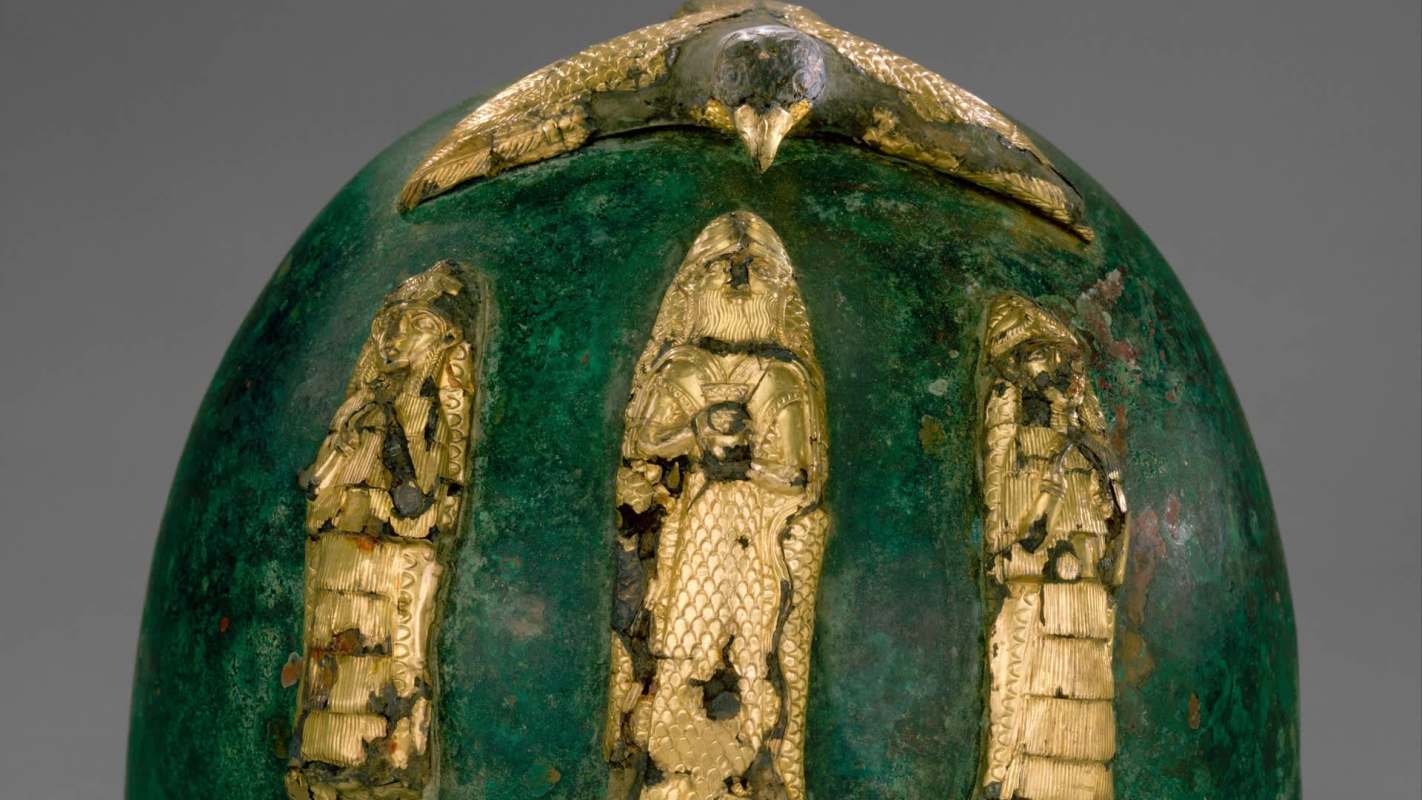
A bronze helmet from ancient Iran is giving researchers an unusually vivid glimpse into how warfare, power, and religion overlapped during the Bronze Age.
More than simple protection, the artifact appears to have been created to convey rank and symbolism in combat through its gold-covered figures and striking bird-of-prey imagery.
What happened?
According to Live Science, the artifact is now part of the Metropolitan Museum of Art's collection and is associated with the Elamite culture, a civilization that spanned close to 3,000 years, in what is now southwestern Iran.
The helmet is about 8.5 inches across and shaped into a dome, with a front section cut away to sit above the eyebrows. It once included a projection to shield the nose, and a bronze tube at the back may have held a plume made of feathers or hair.
Across the front are three gold deities, one male and two female, with a large raptor positioned above them as if swooping downward.
Because the male figure carries a vessel, researchers think he may be an Elamite water god.
TCD Picks » Quince Spotlight
💡These best-sellers from Quince deliver affordable, sustainable luxury for all




The object was probably made for a very high-status wearer, perhaps a warrior king, and seems to have joined physical defense with religious significance.
Why does it matter?
Artifacts like this help fill gaps in human history, especially for civilizations that may be less familiar to many people than ancient Egypt, Greece, or Rome.
The Elamites were an early civilization of the ancient Near East that often fought Mesopotamian powers such as Ur and Babylon. Objects like this helmet offer a rare window into how those societies expressed military authority and divine favor at the same time.
The piece also suggests that armor could carry meanings beyond battlefield use alone. The deities may have been intended to spiritually protect the wearer, while the bird of prey may have signaled to enemies the ferocity associated with war.
When museums conserve and study pieces like this, they make it possible for the public to better understand the long arc of human civilization.
What's being done?
The helmet has been maintained in the Met's collection, where experts have been able to study its design, materials, and symbolism over time.
Scholars including archaeologist Oscar White Muscarella and Charles K. Wilkinson, curator emeritus of Near Eastern art at the Met, have helped interpret what the helmet may have meant in its original context, from its battlefield role to its possible spiritual purpose. This research helps place ancient objects in their original context rather than treating them as static display pieces.
Muscarella described the helmet as "a masterpiece of ancient art" that "has no parallels in either the representative art of the ancient Near East or from excavations," an extraordinary legacy for a piece of armor built for war.

Get TCD's free newsletters for easy tips, smart advice, and a chance to earn $5,000 toward home upgrades. To see more stories like this one, change your Google preferences here.






