


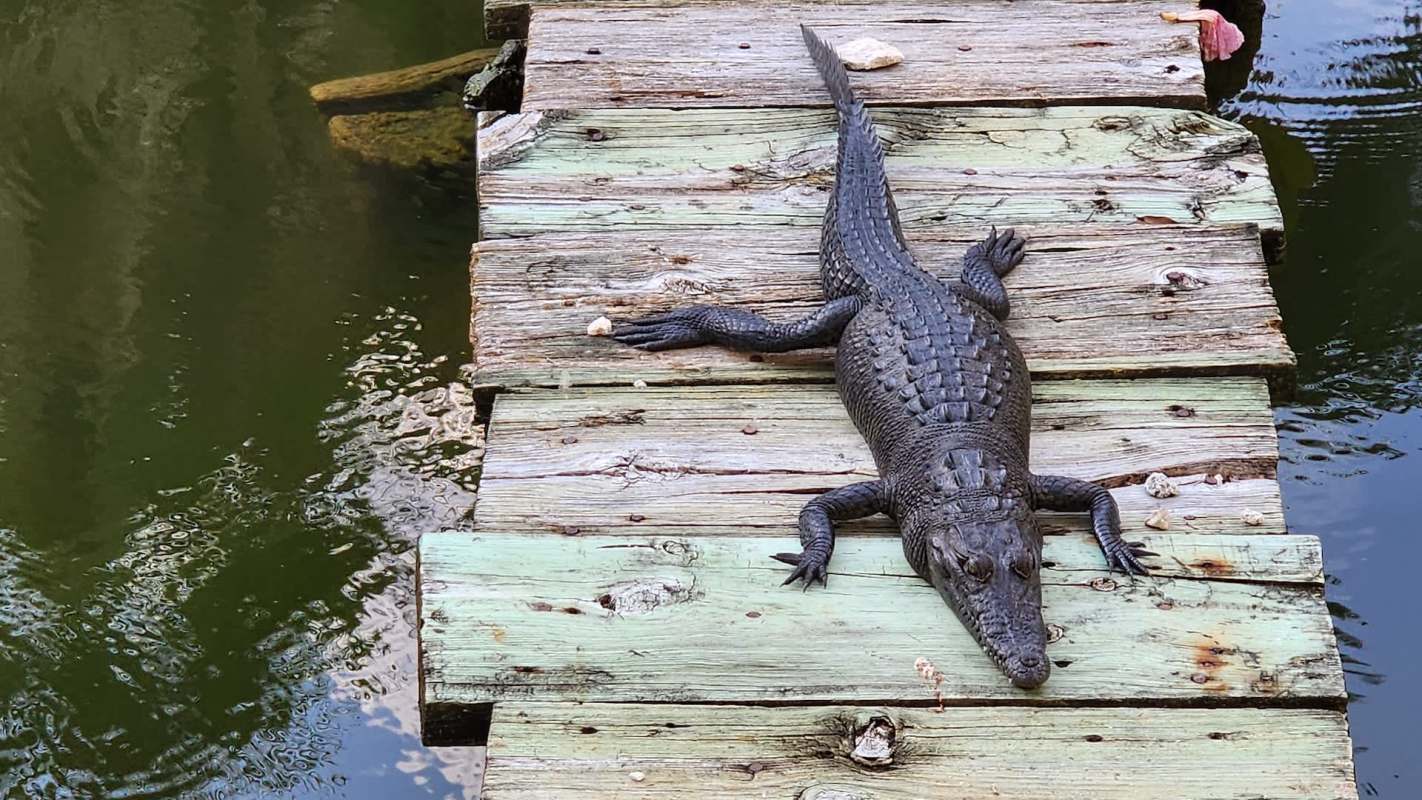
Florida's American crocodiles are showing up in unexpected places — stretched across floating docks, perched on jet skis, and even resting on paddleboards — as human development along South Florida's coast forces these threatened reptiles to adjust how and where they survive.
What's happening?
With natural banks in much of South Florida replaced by seawalls, American crocodiles have lost many easy haul-out areas for basking. That shortage is pushing some of them onto docks and other artificial surfaces instead.
A Florida Fish and Wildlife Conservation Commission study, "American crocodiles on jet skis: Conflict or coexistence," examined that behavior, journalist Kimberly Miller reported in the Tallahassee Democrat. Its authors argued that the species' willingness to use altered habitats beyond protected areas may be one reason its recovery has continued.
Sightings range from kayaks and jet skis in Broward County to a pool shelf in Monroe County and marina platforms in Everglades National Park. Miller reported that these encounters have accompanied a major rebound in Florida's American crocodile population, from several hundred animals in 1975 to about 2,000.
Miller also quoted West Palm Beach reptile expert Ryan Gradney of Scales Exotics, who said, "If a crocodile is in a canal with seawalls, the only place for them to go is a dock, or the back of a jet ski. It's not like they are seeking these items out, that's their only option."
Why does it matter?
Human construction can reshape animal behavior, pushing species to adapt in ways that bring them into closer contact with people.
TCD Picks » Quince Spotlight
💡These best-sellers from Quince deliver affordable, sustainable luxury for all




Even when they show up closer to people, American crocodiles are usually timid. The FWC has recorded just two attacks on humans, one in 2014 and another in 2024, and neither was fatal. Some people also confuse them with the much larger saltwater crocodiles known for attacks in Australia.
That makes crocodile behavior different from the alligator patterns many Floridians know better. Because crocodiles can excrete excess salt, they are better suited to brackish habitats, while alligators tend to have more freshwater places to bask and spread out. So when southern coastlines are hardened, crocodiles may be left with fewer alternatives.
What's being done?
The species is still protected in Florida. Miller reported that American crocodiles were first listed as endangered in 1975 and later reclassified as threatened in 2007, reflecting major conservation progress. Many still live in places such as Everglades National Park, Florida Bay, Biscayne Bay, and Florida Power & Light's Turkey Point cooling canals.
Researchers and wildlife officials are also trying to define what coexistence means in heavily developed areas. The FWC paper says sightings of crocodiles on docks and jet skis can offer insight into how they persist in landscapes that people have already transformed.
Officials advise following posted swimming restrictions, giving crocodiles plenty of space, and never feeding them. Keeping pets away from canal edges and marinas can also help reduce risky encounters.

Get TCD's free newsletters for easy tips, smart advice, and a chance to earn $5,000 toward home upgrades. To see more stories like this one, change your Google preferences here.






