


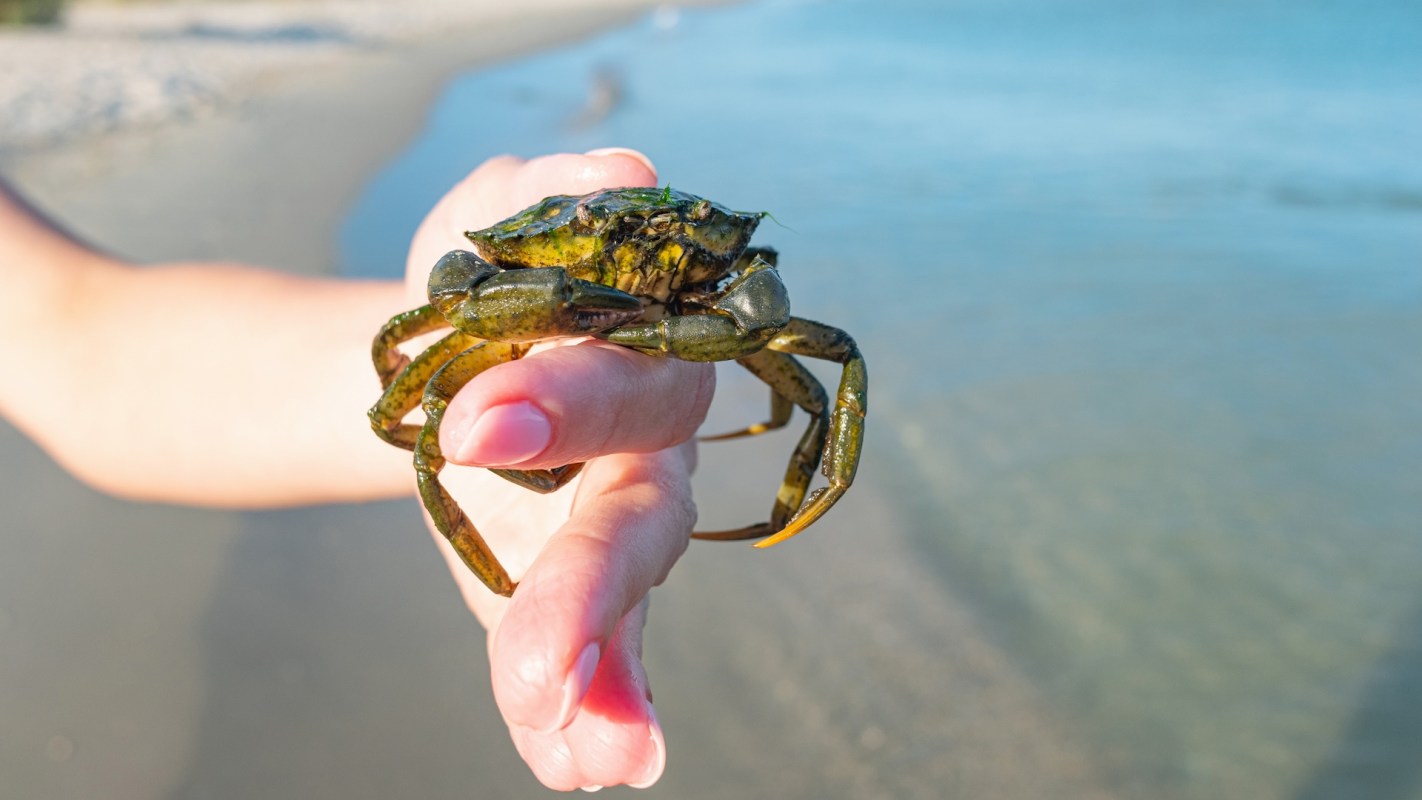
Alaska's fight against European green crabs is growing more urgent as the invasive species pushes farther north, heightening concern for coastal communities that depend on healthy fisheries, beaches, and subsistence harvesting.
What's happening?
State officials are urging residents to watch for one telltale sign they have encountered a European green crab: a distinctive "5-3-5" pattern.
According to Alaska Native News, the Alaska Department of Fish and Game has said that the crabs have expanded their range about 90 miles beyond where they were first detected in the state in 2022 on Annette Island.
Their numbers appear to be increasing, too. Trap counts are now more than 50 times higher than they were when Alaska first identified the species.
The northernmost sign of the crabs was seen on Etolin Island, just south of Wrangell, last fall. The species was also detected on Gravina and Prince of Wales islands in 2024 and in Ketchikan in spring 2025, according to the publication.
Why does it matter?
Their spread could affect dinner tables, local harvesting traditions, and coastal economies.
TCD Picks » Quince Spotlight
💡These best-sellers from Quince deliver affordable, sustainable luxury for all




European green crabs can thrive in very different coastal environments, making containment difficult, according to Alaska Native News. They can live along rocky shorelines, mudflats, and tidal marshes, giving them multiple ways to spread throughout coastal ecosystems.
One major concern is Alaska's eelgrass, which the crabs have degraded. The eelgrass serves as a nursery habitat for juvenile salmon, Pacific cod, and other fish and shellfish.
If these species decline due to damaged habitats, the effects would ripple through the ecosystem and threaten fisheries that many Alaskans rely on.
The green crabs eat small clams and can crowd out species such as Dungeness crab.
What can I do?
Because Alaska classifies European green crabs as a banned invasive species, people may not keep or move them without a permit, according to Alaska Native News.
"The advance of these crabs is rapid, but it's by no means inevitable," said Tammy Davis, ADF&G's Invasive Species Program coordinator, per the outlet. "We need Alaskans to look out for '5-3-5' to help us understand the spread of these harmful invasives."
Anyone who believes they have found one should document it carefully. ADF&G asks residents to record how many crabs they saw and the location, then photograph them from several angles next to an everyday item for scale, such as a pencil, key, or credit card.
Reports can then be submitted by phone or email, and anyone interested in joining volunteer searches can call 1-877-INVASIV for more information.
Alaska Sea Grant is also offering free stickers to help with identification.

Get TCD's free newsletters for easy tips, smart advice, and a chance to earn $5,000 toward home upgrades. To see more stories like this one, change your Google preferences here.






