


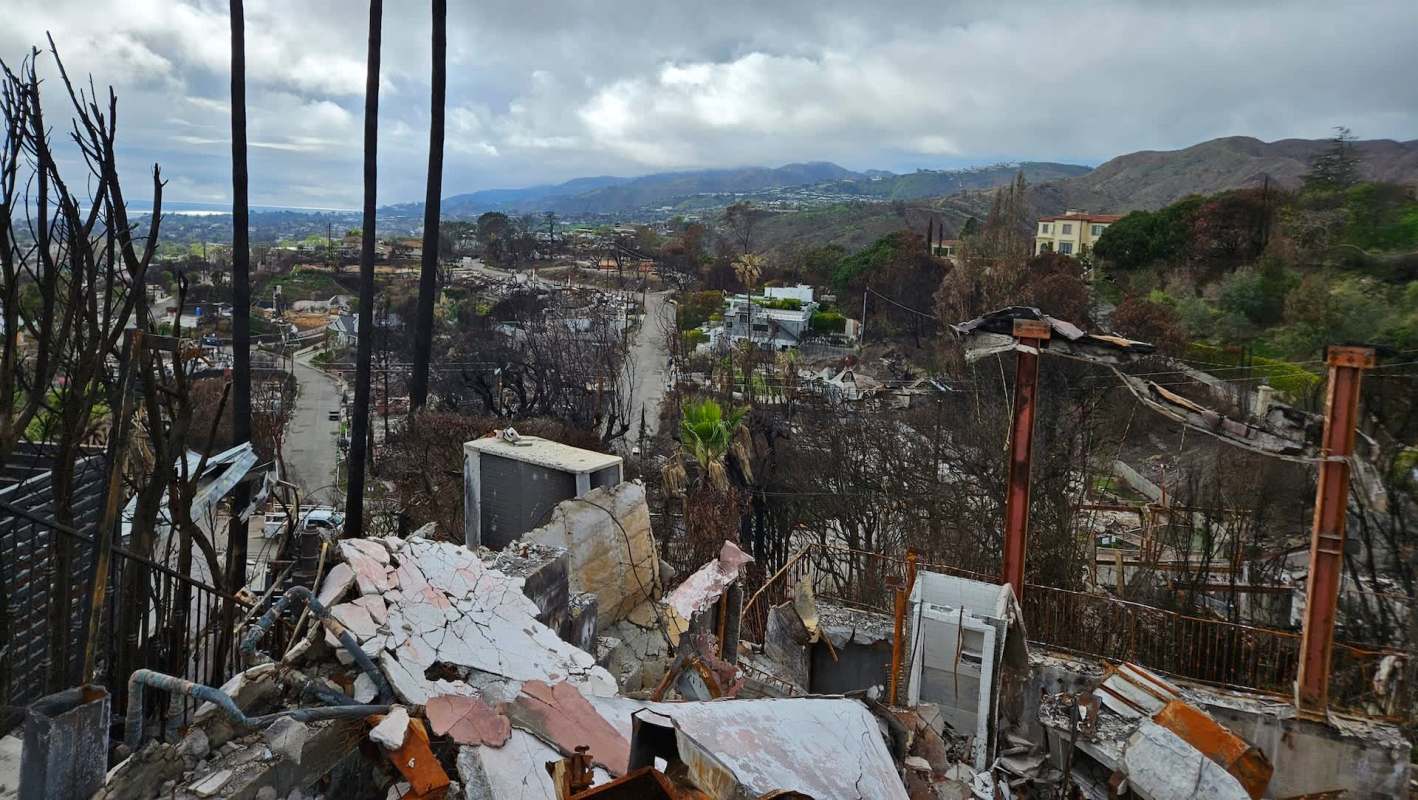
Months after the 2025 Los Angeles County wildfires were extinguished, researchers found that a dangerous metal linked to lung disease and cancer was still present in the air near cleanup zones.
The team found the particles may have traveled well beyond the burn areas. Their modeling suggested the metal-laden nanoparticles may have moved as far as six to nine miles downwind, potentially affecting millions of residents.
A newly published study by researchers at the University of California, Davis and University of California, Los Angeles found airborne hexavalent chromium, or chromium-6, near Los Angeles wildfire cleanup zones roughly two months after the fires. The peer-reviewed paper appeared in Nature Communications Earth & Environment and was released early so communities and scientists could review the findings while final revisions continue.
The chromium was largely in its carcinogenic +6 state and averaged 13.7 nanograms per cubic meter. That is below the National Institute for Occupational Safety and Health workplace exposure limit of 200 nanograms per cubic meter, but above the U.S. Environmental Protection Agency's screening levels for indoor air.
The particles were especially small — less than one-thousandth the width of a human hair. UCLA professor Michael Jerrett said the nanoparticles were small enough to quickly enter the circulatory system and may have exposed roughly 3.3 million people to levels "hundreds of times" above what is normally seen in Los Angeles air.
Using wind-transport modeling, the researchers estimated the particles could have reached communities including Beverly Hills, West Hollywood, and the southern San Fernando Valley.
TCD Picks » Quince Spotlight
💡These best-sellers from Quince deliver affordable, sustainable luxury for all




Chromium-6 has been linked to asthma, bronchitis, and lung cancer. The findings add to growing evidence that wildfire danger does not necessarily end when the flames are out, especially when fires move through urban areas filled with buildings, vehicles, and industrial materials.
The risk can continue during recovery and debris removal, when hazardous particles may remain airborne long after visible smoke has cleared.
The study also showed how different safety benchmarks can point to different concerns. A reading may fall below a federal workplace limit while still exceeding screening thresholds meant to flag possible risks in homes and among vulnerable populations.
Chromium-6 levels fell over time and returned near background levels by about eight months after the fire, likely because the material transformed into the less toxic chromium-3 form.
The authors said continued monitoring near wildfire cleanup zones is important to determine whether contamination is returning to normal. Releasing the study early was part of that effort, giving communities more time to respond while recovery continues.
"This research is significant given the increasing number of blazes, including the especially devastating Los Angeles County wildfires, that begin in open space and cross into urban areas," said co-author Christopher D. Cappa. "Unfortunately, given continued expansion of wildland-urban interface areas worldwide alongside increasing wildfire risk, we are likely to see more and more of these sorts of fires — and to deal with their impacts — in the future."
Jerrett added: "Residents living adjacent to wildfire cleanup zones should take steps to reduce their exposure by using indoor air filters and limiting outdoor exercise in the fire zones until conditions return to safe levels."

Get TCD's free newsletters for easy tips, smart advice, and a chance to earn $5,000 toward home upgrades. To see more stories like this one, change your Google preferences here.






