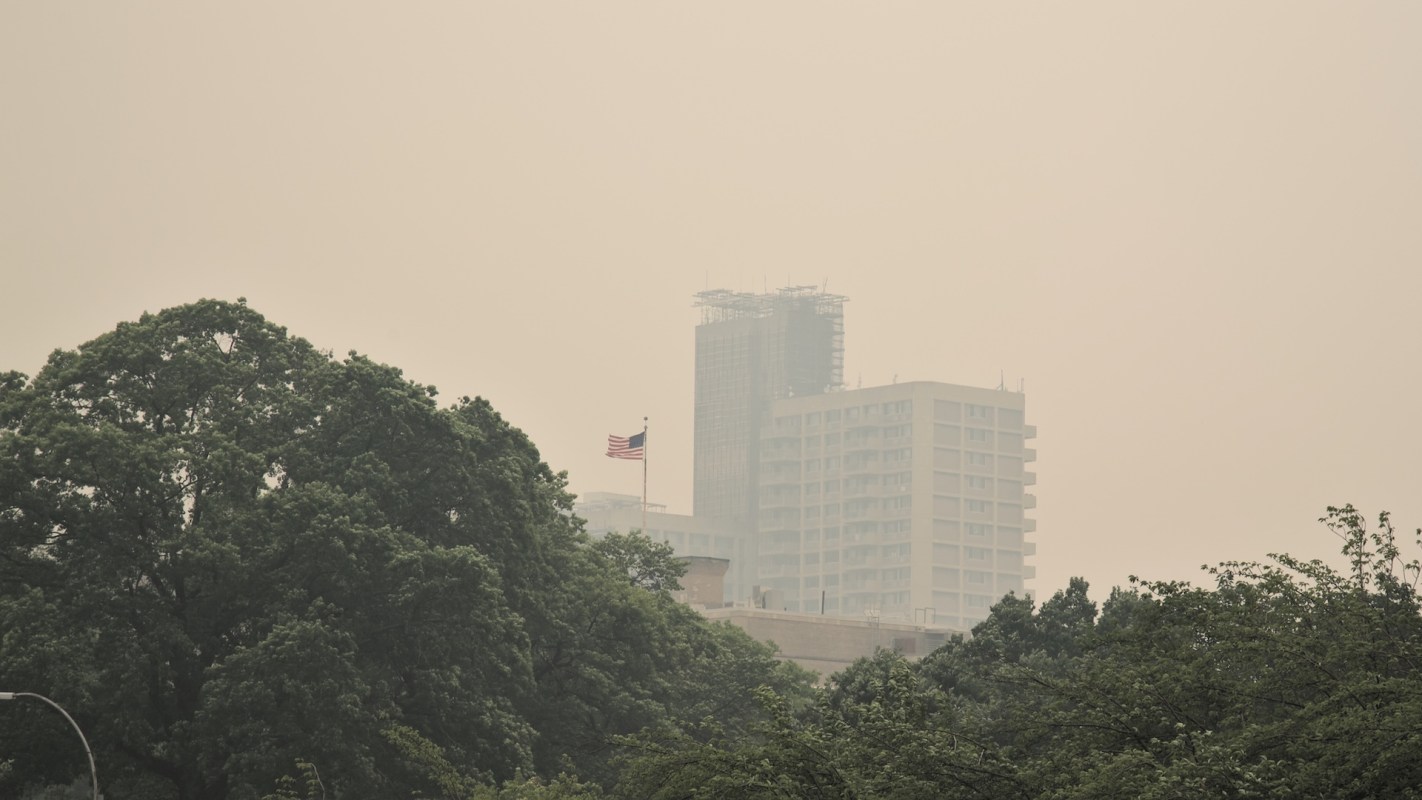
More than 152 million Americans now live in places with failing air quality grades, according to the latest "State of the Air" report from the American Lung Association.
The findings show that, even after decades of cleanup efforts, ozone pollution is worsening for millions of people across the country.
The 2026 edition found that 44% of people in the United States — about 152.3 million Americans — live in counties with failing grades for unhealthy levels of ozone or particle pollution. The report analyzes official air-monitoring data from 2022, 2023, and 2024.
Nearly half of U.S. children — 33.5 million people under 18 — live in counties with a failing grade for at least one air pollution measure. About 7.3 million children live in counties that failed all three measures tracked in the report.
The report focuses on two major pollutants: ozone, often called smog, and fine particle pollution. While particle pollution improved somewhat after a recent worsening trend, ozone affected more people than in any of the previous five reports.
Some of the worst metro areas remained unchanged. Los Angeles again ranked as the worst city in the nation for ozone pollution, while Bakersfield, California, remained the worst for year-round particle pollution. Fairbanks, Alaska, held the top spot for short-term particle pollution.
Enjoy your best summer vacation yet with 15% off your next stay With Hilton, you can find a hotel that matches your mood — whether you’re recharging at the beach, exploring natural beauty, or traveling with your crew. Enjoy vibrant summers in Hawaii, weekend trips in major cities, and even extended itineraries at adventurous sites like Moab’s desert canyons. Plus, save up to 15% during Hilton’s summer sale until June 1st. |

Infants, children, and teens are particularly vulnerable because their lungs are still developing and they often spend more time outside.
The report also points to widening inequality in who bears the risk. Although people of color make up 42.1% of the U.S. population, they account for 54.2% of those living in counties with at least one failing grade. A person of color is 2.42 times as likely as a white person to live in a community with a failing grade for all three pollution measures, and Hispanic people are 3.2 times as likely.
These patterns can determine whether it is safe to exercise outside, let kids play outdoors, or open windows on hot days. They also affect families managing asthma, diabetes, or heart disease. The report says climate-related extremes are making those gains harder to hold onto, with heat pushing ozone higher and wildfire smoke contributing to spikes in ozone and particle pollution.
The report says air quality has improved over time because of policies such as the Clean Air Act, which helped reduce pollution from transportation, power plants, and manufacturing. Those gains are one reason air pollution today is lower than it was decades ago, even if recent trends are moving in the wrong direction in some places.
TCD Picks » Quince Spotlight
💡These best-sellers from Quince deliver affordable, sustainable luxury for all




Air pollution is tracked through official monitoring sites run by federal, state, local, and Tribal governments, and the annual report uses those data to assign county grades and rank metro areas. That monitoring helps public agencies identify where pollution is worsening and where targeted local action is needed.
Regional and local efforts to cut pollution sources are still needed, especially as ozone worsens in parts of the Southwest and particle pollution rises in some Southern states.

Get TCD's free newsletters for easy tips, smart advice, and a chance to earn $5,000 toward home upgrades. To see more stories like this one, change your Google preferences here.
Cool Picks