


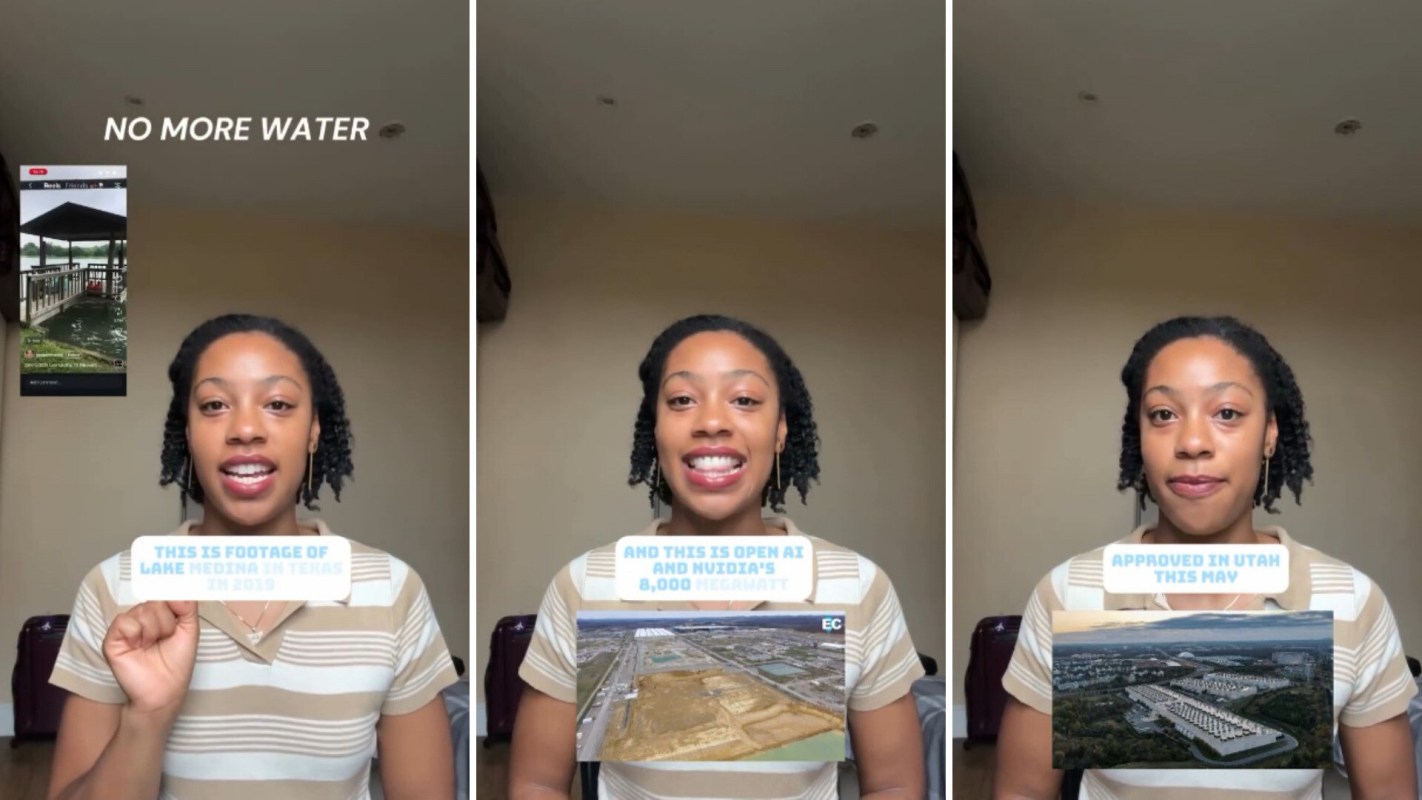
An Instagram creator's recent reel explained that water scarcity is not only about dwindling resources.
The creator urged viewers to learn what legal safeguards exist in their states as AI and data centers place mounting strain on water supplies.
Here's what to know
In a post shared on Aug. 19, Instagram creator Ayana Gray (@ayana.g123) addressed the growing tension between public water supplies and the AI data center boom.
Gray linked shrinking water supplies to several pressures, including "increased heat, general human industrial activity, and of course, data centers and AI."
"The water crisis is already happening, and this is just the beginning," she warned.
Data centers support everything from chatbots to cloud storage, but they require large amounts of electricity and their cooling systems often depend on significant water use, especially in hot or drought-prone regions.
TCD Picks » Quince Spotlight
💡These best-sellers from Quince deliver affordable, sustainable luxury for all




Rather than focusing solely on expansion and permitting, the post emphasized legal rights related to environmental conditions.
"What most people don't know is that access to water and a healthful environment is a right! It's a right we must protect," Gray wrote.
The poster also asked followers to name their states in the comments so she could respond with information about local laws.
"For more information on your state's position on the right to a healthful environment, respond with the name of your state and I will reply to you about your state's laws!" she said.
More background
Concern over AI's environmental footprint goes beyond water alone.
These tools run on energy-intensive chips housed in data centers, placing new demand on the power grid, which is already being asked to handle rising cooling demand, electric vehicles, and industrial expansion.
AI can help utilities balance electricity demand, improve building efficiency, accelerate clean energy planning, and support more accurate forecasting for solar and wind.
However, those potential benefits exist alongside real risks, including high electricity and cooling needs, cybersecurity concerns, misuse, and higher utility costs if infrastructure expands faster than cleaner power supplies do.
When large industrial users move into a community, residents often worry about whether local water supplies will remain dependable during hotter, drier periods and whether the burdens and benefits are being shared fairly.
What can be done?
States vary widely in how they approach environmental rights, water protections, and industrial permitting.
Gray's invitation for people to comment with their state names exposed a worrisome truth: Many people do not know what legal protections exist where they live.
Public hearings, water-use plans, energy-sourcing disclosures, and utility filings can reveal whether a project is expected to rely heavily on local water supplies or strain the grid.
Policymakers and utilities can require greater transparency around how AI infrastructure uses power and water.
Stronger reporting, more efficient cooling systems, cleaner electricity procurement, and better planning can help reduce some of the pressure these facilities place on communities.

Get TCD's free newsletters for easy tips, smart advice, and a chance to earn $5,000 toward home upgrades. To see more stories like this one, change your Google preferences here.






