


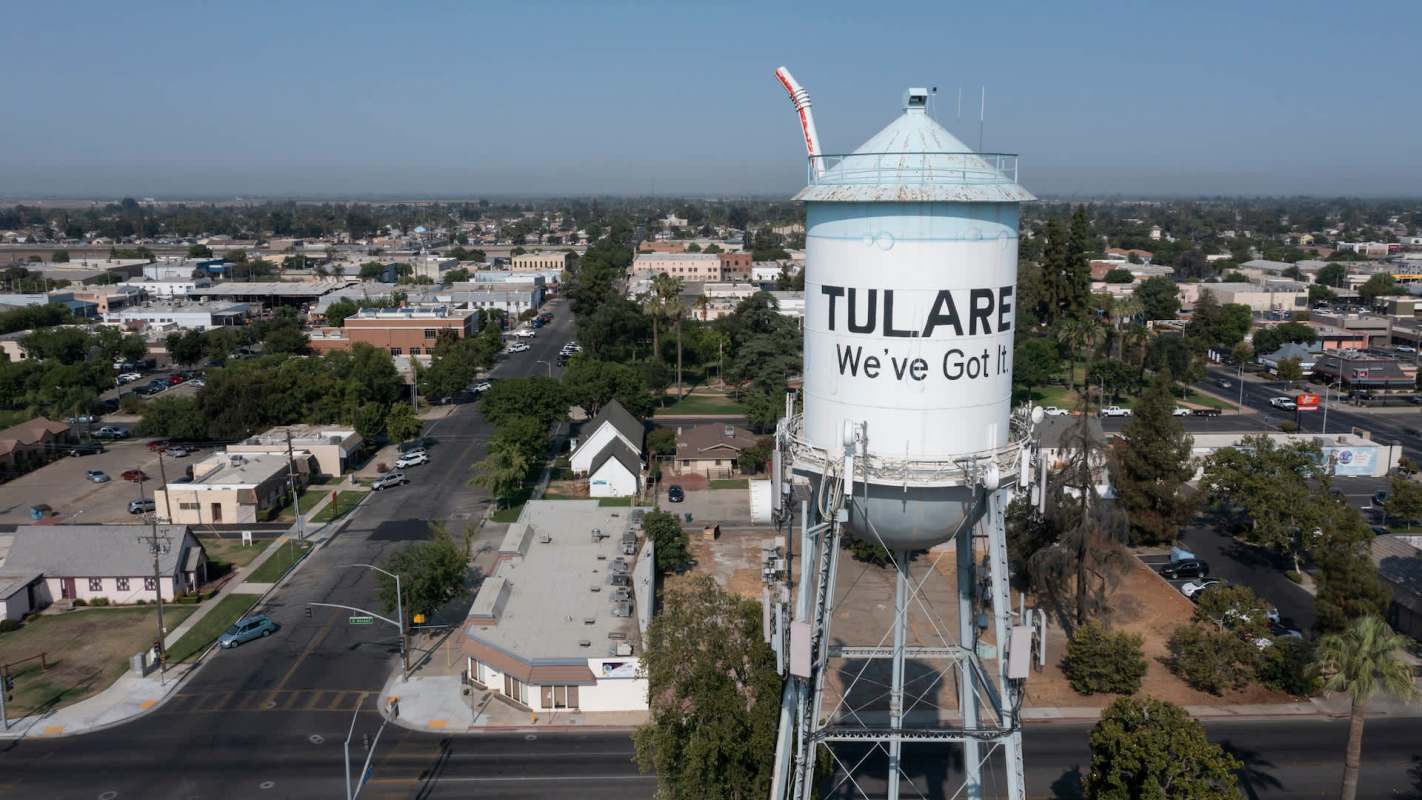
In California's San Joaquin Valley, people focused on two proposed data centers in Tulare and Kings counties want to know whether the projects could draw on already stressed groundwater and power systems.
Here's what to know
After Global Stack USA proposed edge-node AI data centers at the Tulare and Kings county fairgrounds, public meetings drew large crowds, according to SJV Water. The fairgrounds function as separate jurisdictions, so the projects would not go through the county's normal permitting system, leaving open questions about who would oversee any water use.
"We're gonna need to know what they're pumping, whether it's in a formal way or we force our way in to find out," said Aaron Fukuda, manager of the Mid-Kaweah Groundwater Sustainability Agency.
For context, a 2021 Nature study put annual water use for a typical 1-megawatt data center at 18.6 acre-feet. Tulare County officials adopted an interim ordinance on Tuesday, Aug. 18, for a 45-day moratorium on data center development in any unincorporated part of the county, with the possibility of extending it up to a year, the Fresno Bee reported.
More background
AI is deeply tied to the energy grid because training and operating models can require enormous amounts of electricity, and many facilities also rely on water-based cooling systems.
Predictive AI, as opposed to generative AI, can offer benefits like improving electric grid reliability and optimizing clean energy systems. But the rapid expansion of data centers can also strain utilities, raise bills, and create security, misuse, and environmental concerns.
TCD Picks » Quince Spotlight
💡These best-sellers from Quince deliver affordable, sustainable luxury for all




That tension is heightened in the San Joaquin Valley, where farms and communities already vie for limited water. In July, more than 100 residents came to Hanford City Council chambers even after Mayor Mark Kairis said the city had no authority over the fairgrounds, SJV Water reported.
Global Stack USA has said its proposed projects would be far smaller than the sprawling hyperscale campuses often associated with major tech companies. The company said the units are about the size of shipping containers, use closed-loop cooling, and "do not require a connection to a municipal or community water supply for routine operations."
Tulare County Fairgrounds and Kings Fair CEO Dena Rizzardo said the fairgrounds and Global Stack USA have signed only a memorandum of understanding, which she described as a feasibility step rather than a final contract. She also said the edge node units are not expected to be on the agenda for at least six months.
What's being done?
After Gov. Gavin Newsom vetoed similar legislation, state lawmakers came back with AB 2469 and AB 2619, which would require more detailed reporting on AI data center water use.
Local governments are also taking temporary steps as they sort through the issue. Aaron Bock, the assistant director of economic development and planning at the Tulare County Resource Management Agency, said staff wants time to draft land-use regulations.
"Their requirements are far beyond any of our typical energy usage and far beyond any of our typical water usage," Bock said, as SJV Water relayed.
Other California communities have moved in a similar direction. Patterson imposed a 45-day moratorium on data center proposals. Imperial County rescinded approval for a 950,000-square-foot AI facility after public backlash before it announced its own 45-day pause.
Local meetings, public comment periods, and state transparency bills may shape how regulators decide who is ultimately responsible for tracking water and power use.
Officials say the Valley is still trying to understand what AI development could mean in practice.
"We are just getting way out ahead of this issue," Bock said.

Get TCD's free newsletters for easy tips, smart advice, and a chance to earn $5,000 toward home upgrades. To see more stories like this one, change your Google preferences here.






