


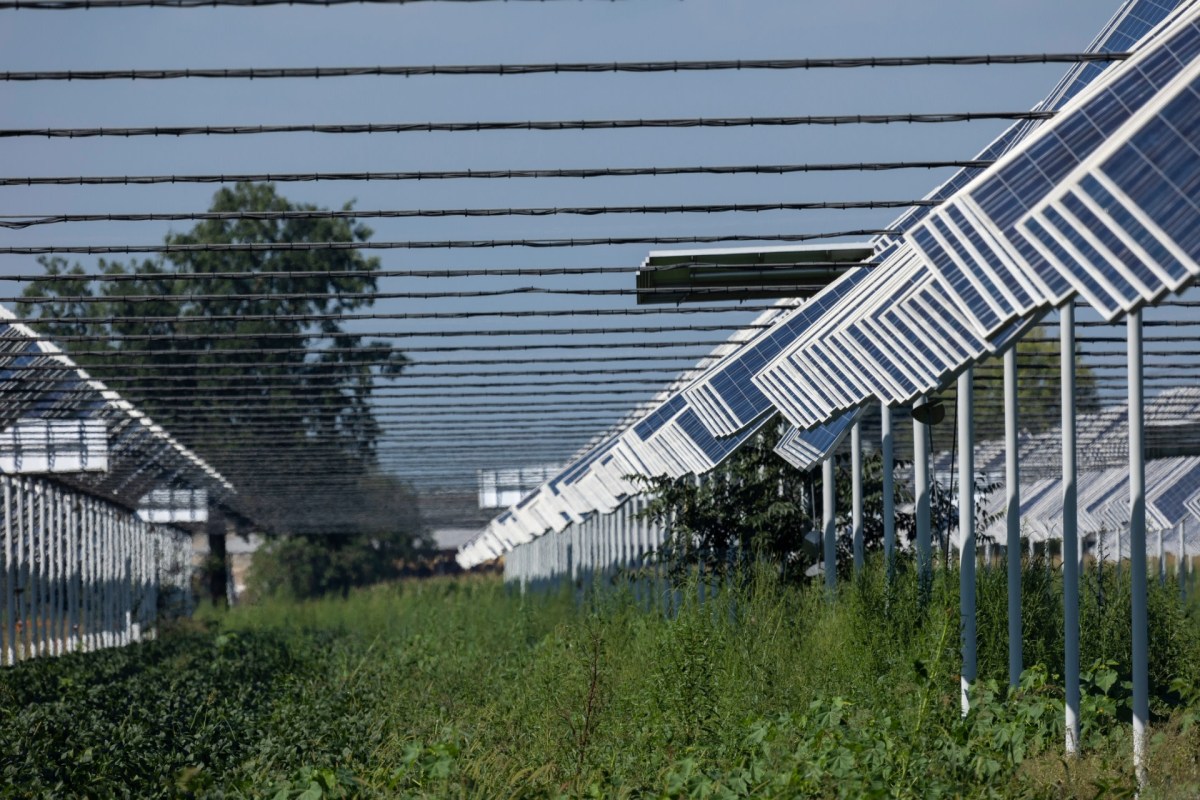
A new initiative in northern Michigan is exploring the possibilities of harnessing solar energy to make agriculture more sustainable.
Michigan State University is working with farmers to test solar arrays in apple orchards in Oceana County. According to reporting by UpNorthLive, the overall aim of the project is to use it as a starting point for future projects in the emerging field of agrivoltaics. Researchers are looking for answers to three questions: whether enough power can be generated, how the trees will react, and if the design can be used for other crops at scale.
According to the U.S. Department of Energy, agrivoltaics is a way of co-locating solar arrays on farmland for the benefit of both industries. The idea is to place crops or livestock underneath or alongside solar panels. The department points out that to increase solar capacity by a terawatt by 2035, almost 6 million acres of land are needed. Adding arrays to existing farmland is one way to reach this goal. For the farmers, it's a win-win situation.
John Dindia, co-owner of Lakeview Hill Farm in Grand Traverse County, described the panels he installed in 2018 as "probably the highest profit-making piece on this farm." He noted that, thanks to federal and state grants, the panels paid for themselves in just 2.5 years. "So that's essentially 17.5 years of free electricity producing well over 10,000 dollars' worth a year."
The story is just one example of using cutting-edge technology to make agriculture more sustainable.
For example, vertical farming, which uses far less water and land, is starting to take off in Mexico. India is using its vibrant tech sector to harness artificial intelligence and usher in a new era of sustainable farming. "Smart farming" is being utilized to reduce harmful run-off into the Mississippi River.
|
How do you feel about public transportation options near you? Click your choice to see results and speak your mind. |
 Fantastic 😎
 As important as these efforts may prove to be, there's plenty we can all do to reduce the environmental impact of industrial agriculture.
Growing your own food is sustainable, saves money, and is healthier. Similarly, incorporating more plant-based options into your diet will help mitigate the impact of factory farming and open up some delicious and nutritious dinner possibilities.

Join our free newsletter for weekly updates on the latest innovations improving our lives and shaping our future, and don't miss this cool list of easy ways to help yourself while helping the planet.
Cool Picks





