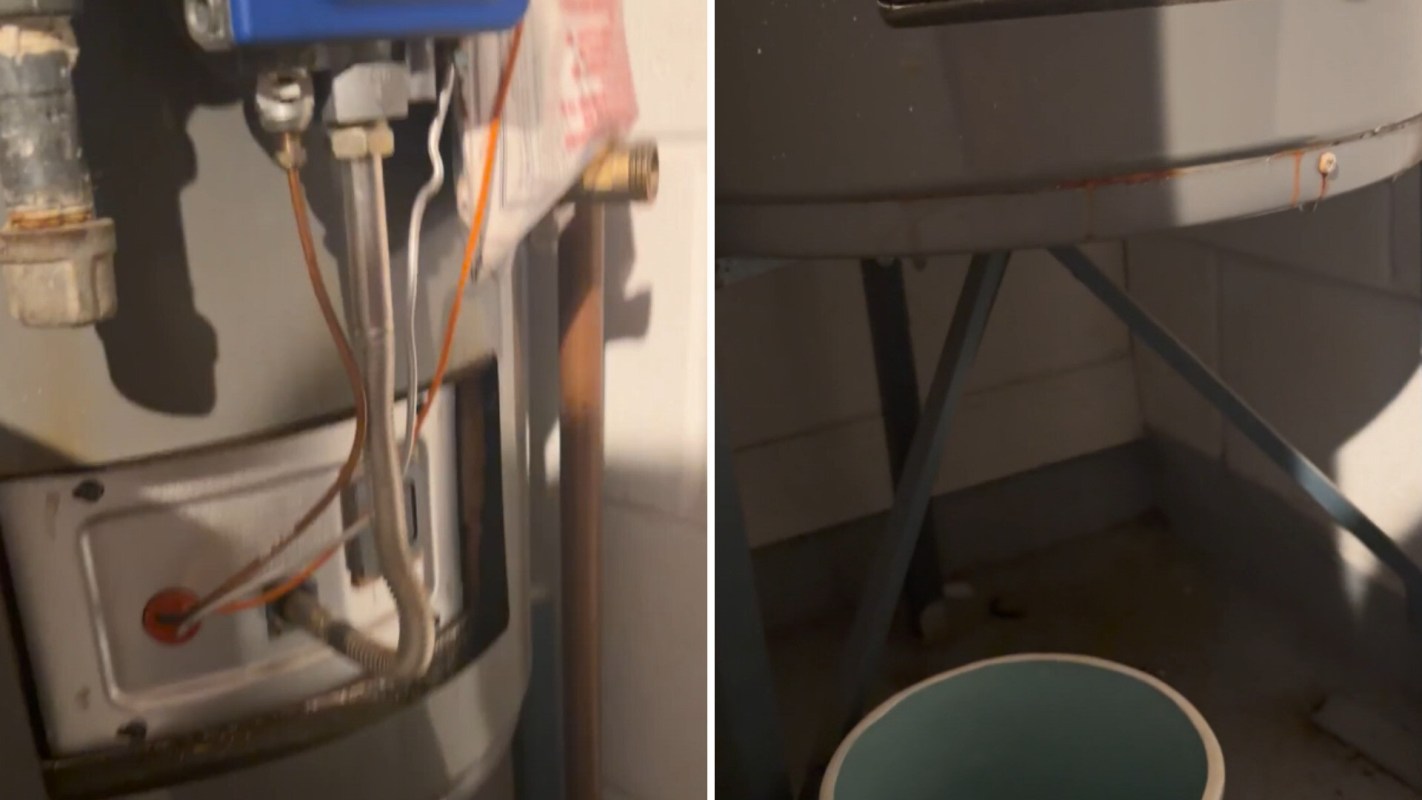
A slow drip from the base of a water heater can quickly turn into full-blown homeowner panic, especially when it starts after hours and the shutoff valves are anyone's guess. That is the situation one Florida homeowner described in a Reddit thread after noticing water coming from the bottom of a 10-year-old gas unit and wondering whether it was safe to leave alone.
Here's what to know
After spotting the leak, the homeowner said it was "a slow steady drip from the base." They said a Roto-Rooter visit ended with the water and gas still on. "They said I'd be fine overnight before replacement," they wrote. "... But am I actually OK overnight? Do I need to figure out how to turn off the main? Do catastrophic leaks usually happen?"
(Click here if the embedded video does not appear.)
People in the thread identified the usual shutoff locations, including the cold-water supply valve and gas valve.
A dramatic rupture is not guaranteed every time a tank starts leaking, but water coming from the base is generally a sign that the heater is at or near the end of its service life. Leaving it for a limited time may sometimes be workable, though the downside is that any growth in the leak can lead to significant water damage.
More background
When corrosion has eaten through the tank itself, the usual outcome is replacement rather than repair.
Water-heating equipment has a major effect on monthly bills. Old gas and electric resistance tanks keep reheating water inefficiently throughout the day, even when no one is using it.
Replacement can also be a chance to do more than just stop a leak. Choosing a more efficient model can cut utility costs, reduce wasted energy, and lower the odds of another emergency call in the near future.
Installation space, local fuel costs, maintenance needs, and available rebates can all affect which replacement makes the most financial sense.
Save $10,000 on solar panels without even sharing your phone number Want to go solar but not sure who to trust? EnergySage has your back with free and transparent quotes from fully vetted providers in your area. To get started, just answer a few questions about your home — no phone number required. Within a day or two, EnergySage will email you the best options for your needs, and their expert advisers can help you compare quotes and pick a winner. Solar panels can save you more than $50k over their 25-year lifespan, and EnergySage can help you save as much as $10k on installation. Which begs the question — isn't that worth an email or two? |

What can be done?
With a possible tank failure, the goal is to keep the situation from causing damage. Homeowners who feel comfortable doing so can turn off the cold-water supply and follow the manufacturer's instructions for the gas controls while they wait for a licensed plumber.
Heat pump water heaters are typically far more efficient than standard tanks, and incentives can soften the upfront cost.
Cala is one company offering a more advanced option in that category. Its customizable smart heat pump water heaters help homeowners decrease their energy bills by heating water exactly when it's needed. The systems are designed to tailor heating around household demand instead of warming water the same way all day, which can reduce wasted energy.
For shoppers comparing options after a failure, that kind of control could make a replacement feel more like an upgrade. It is one more reason to weigh efficiency, operating costs, and smart features before settling on a tank from the nearest big-box store or from Cala.
In the comments, users had advice for the homeowner.
"Should be fine. If you want to turn it off, there should be a valve on the cold water inlet side on top the heater. There should also be a valve on the gas line," one said.
Another wrote, "It'll be fine until tomorrow, but you're going to need a new hot water heater."

Get TCD's free newsletters for easy tips, smart advice, and a chance to earn $5,000 toward home upgrades. To see more stories like this one, change your Google preferences here.