


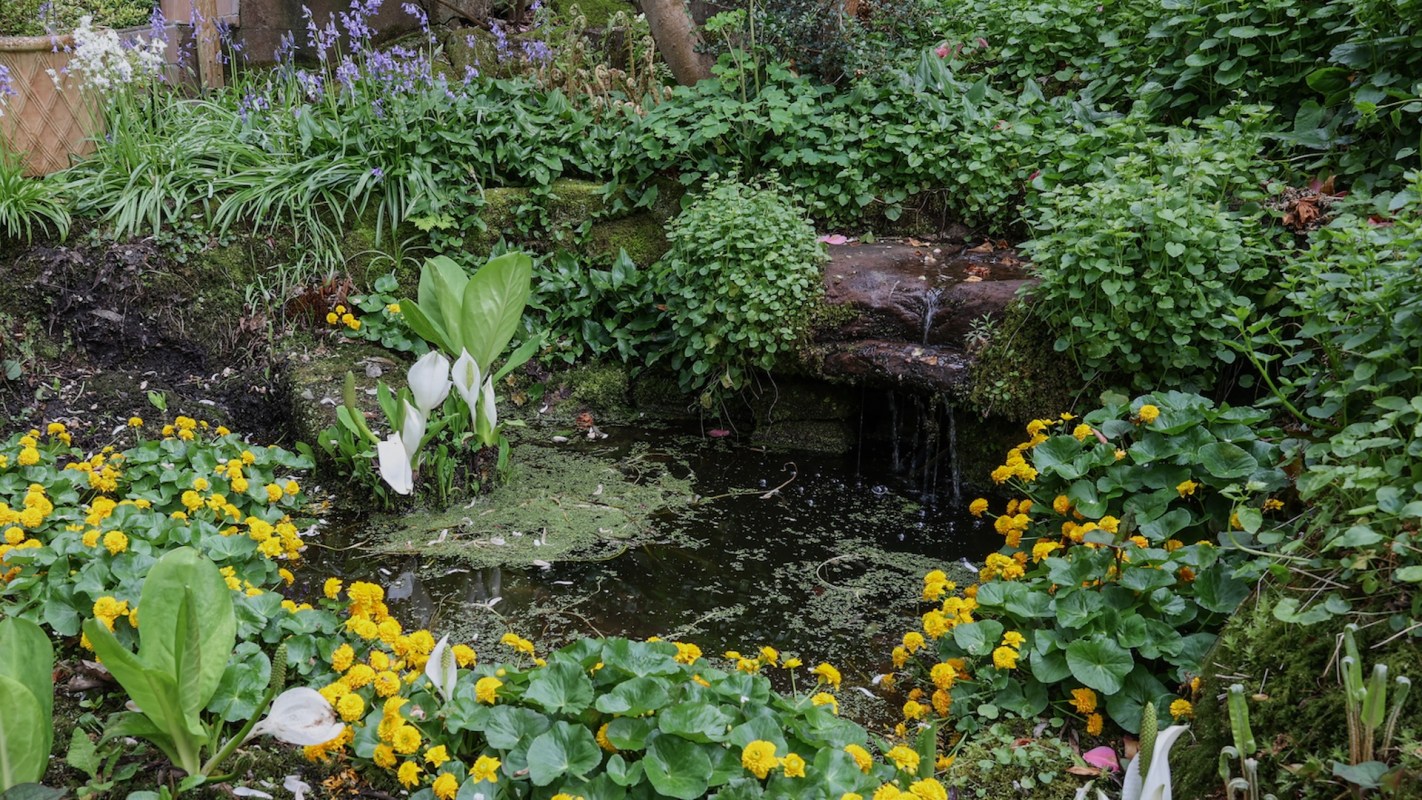
One homeowner made a simple change in their yard that simultaneously reduced its maintenance needs and massively increased its usefulness to local species as a shelter and food source, Econews reported.
The homeowner had an ordinary lawn with pines growing at its back and a ditch running along one edge. The space was inhospitable to local wildlife, which could not find food or shelter there.
The homeowner made a simple change: They dug a hole. Specifically, they dug a shallow pond, 2 feet at its deepest point, which connected to the ditch to naturally fill itself, then used the soil that they removed to build up the lower bank. They didn't need to plant anything; they simply threw in some dead leaves and sticks and let it be. For a finishing touch, they added some bat boxes to the trees behind it.
This simple pond became a vernal pool: a small body of water that fills up in the spring and vanishes in the summer. Often naturally occurring, these temporary ponds can't house fish because they don't last year-round. That might sound like a bad thing, but it makes them not only acceptable but also ideal breeding grounds for amphibians, which would normally have their eggs eaten by fish in a permanent pond.
The homeowner was rewarded with five egg masses from wild frogs that found the pond. Bugs moved in naturally, providing a food source for the frogs and tadpoles, as well as for the bats that took up residence in the bat boxes. Swallows began using the mud around the bank of the pond to build nests.
The once-barren backyard lawn was soon a thriving part of the local ecosystem — and since the pond is meant to fill and empty naturally and is no longer covered with grass to mow, it requires less maintenance than before.
A move like this can really help wild amphibian populations, which are suffering from habitat loss and disease, especially the widespread chytrid fungus. With amphibian populations declining at 4% per year, every little bit helps. You can also plant native plants to support local wildlife and reduce your maintenance needs even further.
|
Which of these savings plans for rooftop solar panels would be most appealing for you?
Click your choice to see results and earn rewards to spend on home upgrades. |
 Save $1,000 this year 💸
Get TCD's free newsletters for easy tips to save more, waste less, and make smarter choices — and earn up to $5,000 toward clean upgrades in TCD's exclusive Rewards Club.
Cool Picks






