


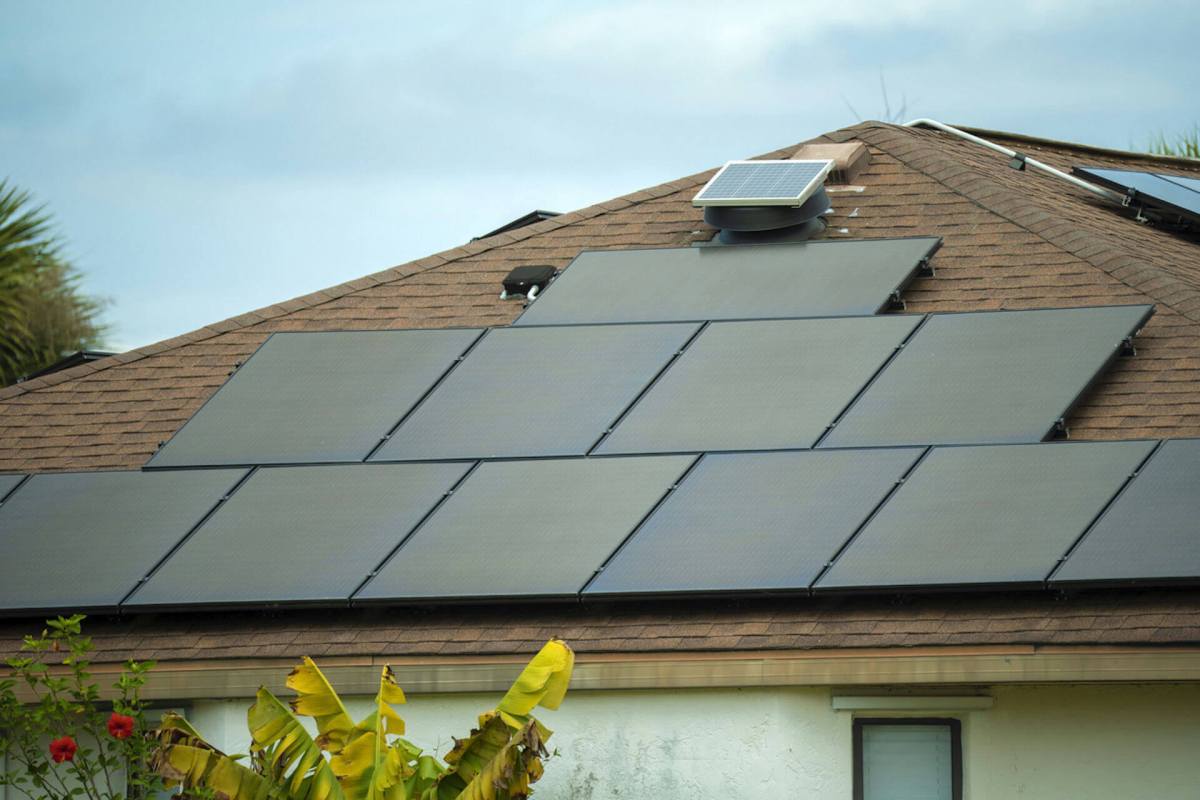
Many homeowners still believe that solar panels don't work on cloudy days, but energy expert James Fenton explained, "That's not really true."
"Even on a very cloudy or rainy day, you'll get some electricity," Fenton, director of the Florida Solar Energy Center, told CNET. "But on real cloudy days, you might only get half as much electricity as you would on a sunny day."
The reality is that solar panels continue producing power even when the sun isn't shining brightly. While performance drops without direct sunlight, panels don't just shut off when skies turn gray.
Interest in using solar energy is growing fast, according to the Solar Energy Industries Association, as solar accounted for 66% of new U.S. electricity-generating capacity in 2024.
If you're solar-curious, a smart place to start is by using EnergySage's free tools to get instant estimates and compare quotes from trustworthy installers.
Solar panels use photovoltaic cells to turn sunlight into electricity, and they don't require full sun to do it.
"The panel is always working," Fenton said. He added that the amount of electricity generated is based on how much light it can utilize to produce it.
While output drops to near zero at night, even small amounts of ambient light can sometimes generate trace energy. To power your home after the sun has set, solar users can add a battery system or stay connected to the grid and use net metering to offset costs.
Save $10,000 on solar panels without even sharing your phone number Want to go solar but not sure who to trust? EnergySage has your back with free and transparent quotes from fully vetted providers that can help you save as much as $10k on installation. To get started, just answer a few questions about your home — no phone number required. Within a day or two, EnergySage will email you the best local options for your needs, and their expert advisers can help you compare quotes and pick a winner. |

Going solar can be one of the best ways to lower monthly energy bills while also cutting down on planet-overheating pollution. With solar panels on your roof, your home can run more cleanly and efficiently, helping reduce your reliance on dirty energy.
Another reason to act soon is to take advantage of the Federal Investment Tax Credit, which allows homeowners to deduct 30% of the cost of installing a solar system for their home. Upon the passing of the Big Beautiful Bill, though, this incentive is set to expire on December 31, 2025.
|
What would it take for you to get rid of your gas stove?
Click your choice to see results and speak your mind. |
 I'd pay for it myself 💪
 According to EnergySage, the average solar customer can secure up to $10,000 in savings by claiming the ITC and other incentives.
To make the most of those benefits, EnergySage also offers a state-by-state mapping tool that breaks down the average cost of solar panels in your area and shows exactly which local and federal incentives may be available to you.
More From EnergySage
💡Go deep on the latest news and trends shaping the residential solar landscape



The bottom line is that installing solar panels is an energy hack that can drive your electricity bill close to zero.

Join our free newsletter for easy tips to save more and waste less, and don't miss this cool list of easy ways to help yourself while helping the planet.
Cool Picks




