With high electricity bills, homeowners are looking for ways to increase efficiency and save money. One homeowner has stirred up a lively debate about heat pumps, their potential benefits, and the myths that are swirling around about them.
Heat pumps are an HVAC system that heats and cools your home by moving heat around the home, drawing heat from the inside to the outside, or vice versa. They are an efficient source of heating because they use less energy than other heat sources, such as natural gas furnaces.
Popular HVAC brands like Mitsubishi offer a variety of heat pump solutions — including highly cost-effective mini-split systems — that make it easy for homeowners to maximize savings and comfort with the best fit for their situation.
In a thread in the subreddit r/HVACadvice, a Redditor posed the question of heat pumps: "Why are they not more common?"
The OP listed a few questions and points, including the environmental benefits of using electricity as opposed to gas for heating your home, the up-front and overall costs, and the comfortability of the system.
"I do want to be supportive of heat pump adoption," they wrote, "because I hear so many great things about the environmental benefits, but there are just these points I really want to understand, because they are just not clicking for me."
"We are in a long, long transition from gas to electric," one commenter wrote. "Just as we transitioned from coal to oil and gas we will eventually transition to reversible heat pumps."
"I think a lot of people just assume that heat pumps don't function well in cold weather, which isn't helped by sellers and installers saying things like 'they won't heat below about 35 degrees,'" commented another user.
Stay warm all winter long with the Apple of intelligent space heaters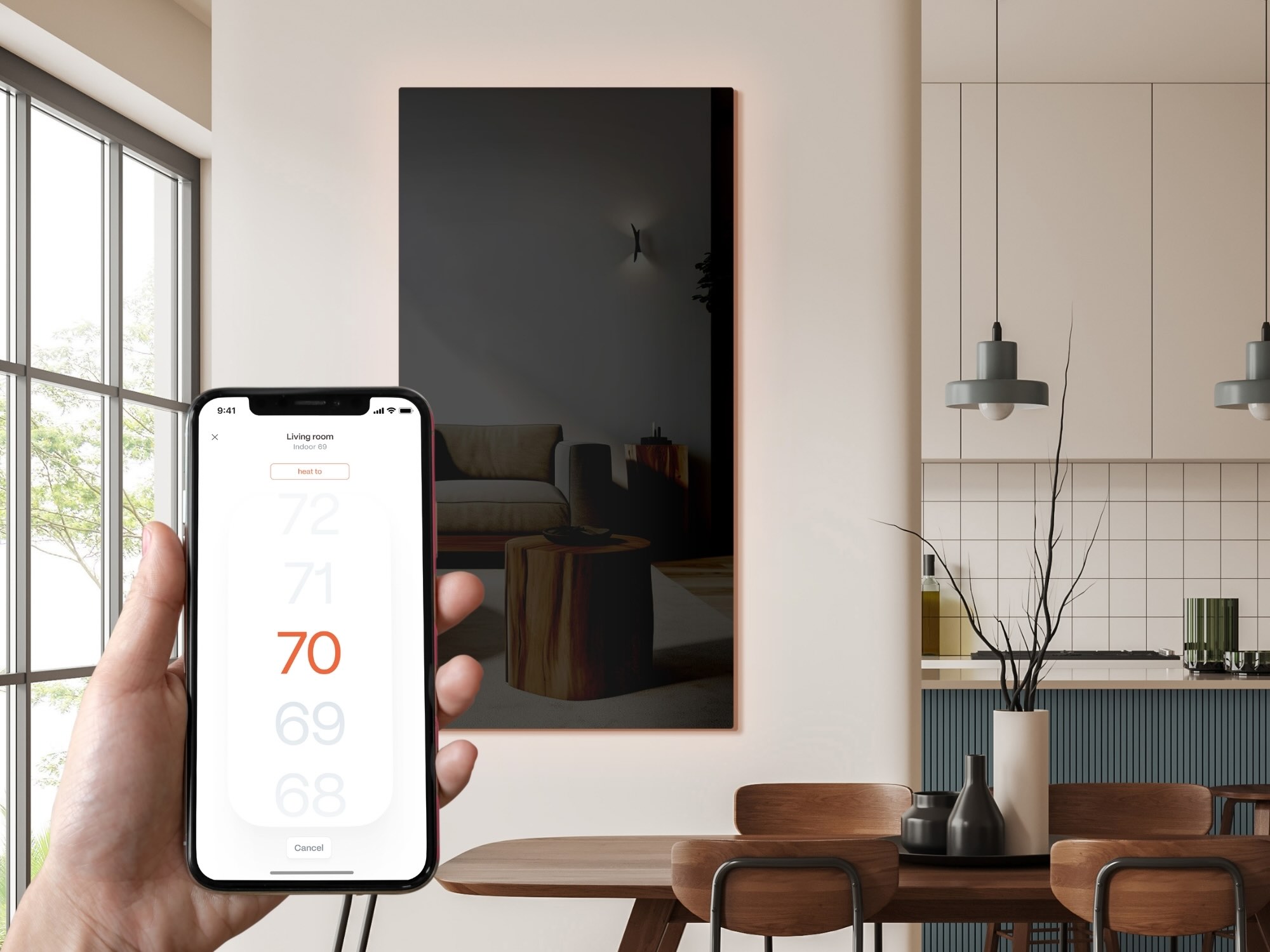 Kelvin is the Apple of space heaters, designed for energy efficiency and maximum comfort. It's completely silent and intelligently controlled, with setup taking just 5 minutes. Built from premium materials like aluminum and glass, Kelvin works beautifully as a full-home heating system or as the perfect solution for that one room that never feels warm enough. |

It is a common myth that heat pumps don't work in all climates, which has deterred potential homeowners from adopting them. However, researchers found that heat pumps will work even at very low temperatures, even if there is a drop in efficiency, but modern models can handle minus-15 degrees Fahrenheit without problems. Anyone expecting colder temperatures could still supplement with another heat source.
Other fears of adopting heat pumps are the costs. While heat pumps can have larger up-front costs, from $4,000 to $8,000 or more, the savings over time can be large. According to Canary Media, at least 65 million homes can save money with heat pumps.
Alternatively, mini-split systems can cost less upfront and maximize long-term savings by allowing homeowners to target specific rooms and zones. And with the Inflation Reduction Act, you can get up to $2,000 in tax credits for installing a qualified heat pump through the end of 2025.
🗣️ Do you think home heating costs are higher than they should be?
🔘 Definitely 👍
🔘 Depends on the season ☃️
🔘 Depends where you live 🗺️
🔘 No 👎
🗳️ Click your choice to see results and speak your mind
Many families can benefit from the savings of heat pumps as opposed to other heating solutions, like furnaces that use natural gas.
"I'm in central tx and it turns out I have one of those furnaces that is ... get this ... ONLY heat strips," one commenter wrote, lamenting that they do not have a proper heat pump for colder weather, especially since they can work backward as AC units in the heat. "... Can confirm, uses an ungodly amount of power."
Heat pumps are outperforming traditional HVAC units, which can waste up to 44% of the energy they generate (at least for older units). Heat pumps work in all climates, and, with the money saved from tax credits and long-term energy generated, families can reap the benefits of this environmentally friendly system.
To start saving money, check out Mitsubishi's free tool to connect with local installers. You can find the best deals for heat pumps and navigate the available tax credits and rebate options.
And to maximize your savings, you can consider pairing a heat pump with rooftop solar panels to bring your heating and cooling costs down to almost nothing. If you're ready to explore your solar options, platforms like EnergySage can help you save up to $10,000 on installation by making it easy to find and compare competitive quotes from vetted installers in your area.
Cool Picks