


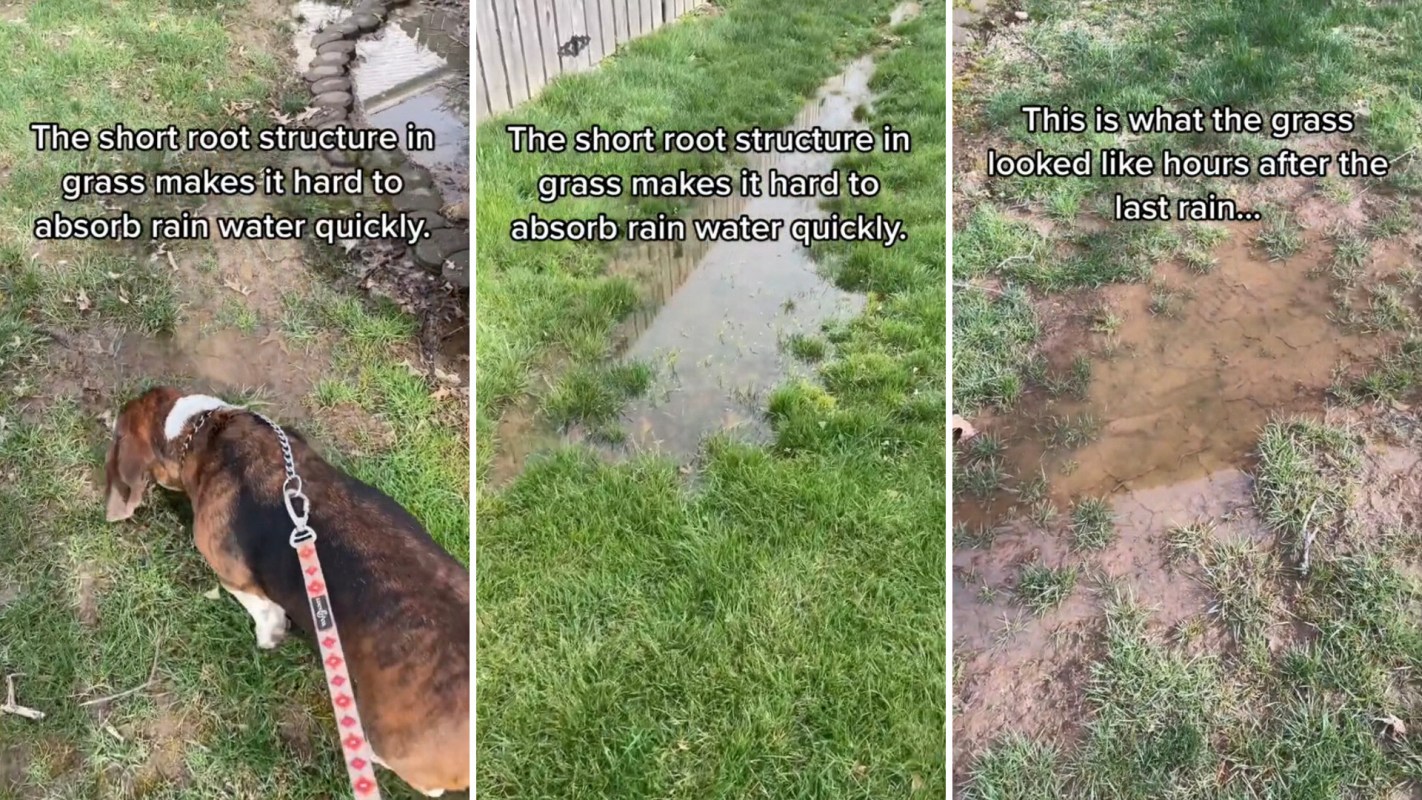
If your lawn tends to produce large pools of standing water after rainfall, your yard has a drainage problem. Fortunately, you can modify these areas of your lawn to efficiently reroute the water it catches.
Sustainable-living TikToker Alyssa Barber (@newlifestyleabb) shows viewers how rain gardens help move water through the yard while keeping your lawn's plants happy.
@newlifestyleabb Literally me while making this TikTok to tell you that rain gardens rule and turf grass lawns drool: 🐜🦟🐜🦟🐜🦟🐜🦟 #grasslawn #lawntok #lawntiktok #mosslawn #plantlawn #nativeplants #raingarden #ecofriendly #ecofriendlyliving #sustainable #sustainability #sustainableliving ♬ original sound - Alyssa Barber
She explains that traditional American lawns, which usually consist of invasive grass species, have shorter root systems compared to native plants, making it hard for the grass to absorb rainwater quickly. This leads to pooling water.
Natural depressions in the land also cause water to pool and can become a hotspot for disease-transmitting mosquitoes.
The solution Barber proposes? Rain gardens.
Rain gardens are shallow gardens designed to collect and absorb rainwater, resulting in more efficient water usage.
According to Barber, rain gardens "[utilize] native plants," possess "long root systems [that] absorb stormwater quickly," and "[add] aesthetic, ecological, and social value."
The creator presents various pictures of rain gardens for inspiration and includes a visual representation of rain gardens, illustrating how they function.
The depression is filled with compost and sand, which is piled one to two feet tall. On top of the soil mix is a layer of mulch, which helps suppress weeds without the use of harmful chemicals. Finally, the top layer is covered with native plants, which have deep root systems that help them suck up excess water.
Rain gardens are designed to temporarily hold or pool rainwater as the soil and deep root systems absorb it into the ground. This prevents large pools of standing water on your lawn, which can attract pests and cause property damage. Containing the rainwater also prevents it from running off into storm drains, carrying with it fertilizer, dirt, oil, bacteria, and other pollutants that must be filtered out at water treatment facilities.
TCD Picks » Quince Spotlight
💡These best-sellers from Quince deliver affordable, sustainable luxury for all




|
What is the biggest reason you don't grow food at home? Click your choice to see results and speak your mind. |
 Not enough time ⏳
 The use of native plants helps support the local ecosystem, as they make it difficult for aggressive-growing, invasive plant species to take root. Native plants also support local wildlife by providing food and shelter, as well as attracting pollinators that contribute to plant reproduction efforts.
A native lawn is ideal for homeowners looking to save time and money on yard maintenance and water bills. Native plants are slower-growing and able to access groundwater with their deep root system, which means less frequent watering and mowing.
Replacing the invasive grass species on your lawn with native options like buffalo grass or clover may also improve your lawn's drainage system while offering similar savings on maintenance and water bills.
"How have I never heard of [this]," one user asked.
"Please make sure you research the right rain garden for your area or you will waste a lot of $$$," another commenter warned.
"I have several rain garden plans saved! I can't wait to see what works with my land!" a third user wrote.

Join our free newsletter for easy tips to save more and waste less, and don't miss this cool list of easy ways to help yourself while helping the planet.
Cool Picks






