


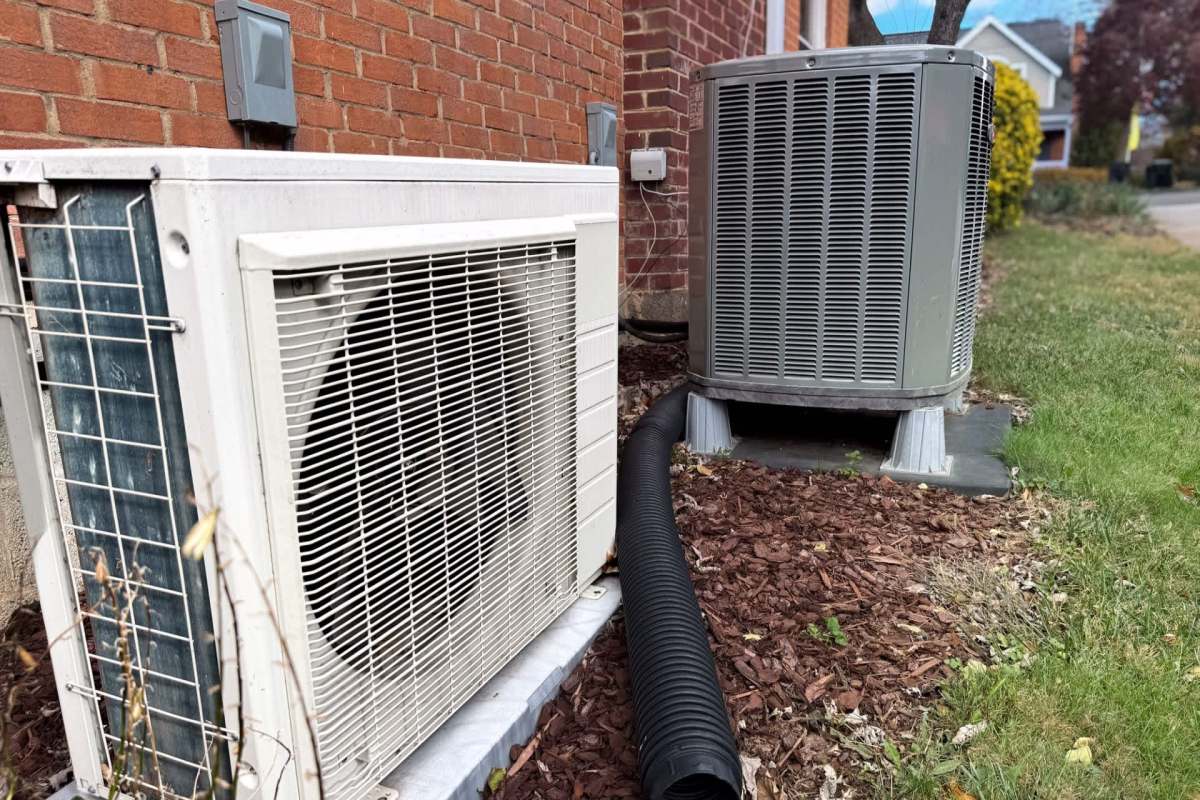
Cooling a home is often framed as a choice between options: radiators or air conditioning, heat pumps or window units. But a test in the U.K. suggests many households may get the cheapest and most comfortable results by combining radiant cooling with air conditioning instead.
Rather than forcing one system to do everything, the idea is to let each one handle what it does best: cooling the building, cooling the air, and reducing humidity when summer heat peaks.
What's happening?
In a video, Adam, a content creator with the U.K. heat-pump education company HeatGeek, said homeowners should view radiant cooling and air conditioning as "two different tools for two different problems," as HeatGeek explained.
The test follows an experiment in which Adam used an air-source heat pump with radiators and underfloor heating to cool his home.
The strongest case for radiant cooling was in older U.K. houses with lots of thermal mass, including brick walls and other solid materials, because those parts of the structure can hold stored "coolth" much like a thermal battery.
So if the house is cooled in advance, when outside air is less hot and humid, that stored cool can carry through the hottest part of the day.
TCD Picks » Quince Spotlight
💡These best-sellers from Quince deliver affordable, sustainable luxury for all




The catch is condensation: once radiators or pipework are driven too cold, moisture can form on them, which limits how far the system can be pushed.
One commenter offered a real-world example for the approach: "Been using cooling with Vaillant Arotherm Plus and radiators for 8 weeks. Coupled with blinds and keeping windows shut we have kept indoor temp between 21-23 degrees. It will not rapidly cool a hot house, but does help to keep the thermal mass cooler."
Why does it matter?
For homeowners, that could mean a more comfortable house without asking standard air conditioning to carry the whole load.
HeatGeek said the two methods work on different parts of the problem. Radiant cooling brings down the temperature of walls, floors, and other surfaces, while air-to-air cooling responds faster in the room air and removes moisture.
Used together, they may also lower energy consumption and hardware costs.
Because the building starts out cooler, Adam said, an AC system can still feel comfortable without forcing the air temperature as low: "Its efficiency goes up. Efficiency obviously translates to bills."
Homes that already have a compatible heat pump may be able to keep their existing radiators and pipework rather than fitting dedicated fan convectors throughout the house.
According to the video, purpose-built cooling radiators can add costs through extra power outlets, vapor-sealed pipework, and additional labor.
What can I do?
For people who already have an appropriate heat pump, cooling overnight, or before a hot spell fully arrives, gives high-thermal-mass homes more time to soak up heat later.
Humidity inside the home matters as much as temperature. Adam said showers, extra guests, and other moisture sources can push up the dew point and cut cooling performance.
Using blinds, keeping windows shut in hot weather, and moving heat-generating tasks out of the hottest hours can also make a difference.
For households that want to optimize further, controls that track dew point can hold radiator water temperatures above the condensation threshold while still preserving as much cooling as possible.
Adding small fans to radiators may be another way to increase output without redoing the whole system.
Adam described the combined approach as "the ultimate solution," adding: "Radiant and convected at the same time and the benefits of each."

Get TCD's free newsletters for easy tips, smart advice, and a chance to earn $5,000 toward home upgrades. To see more stories like this one, change your Google preferences here.






