


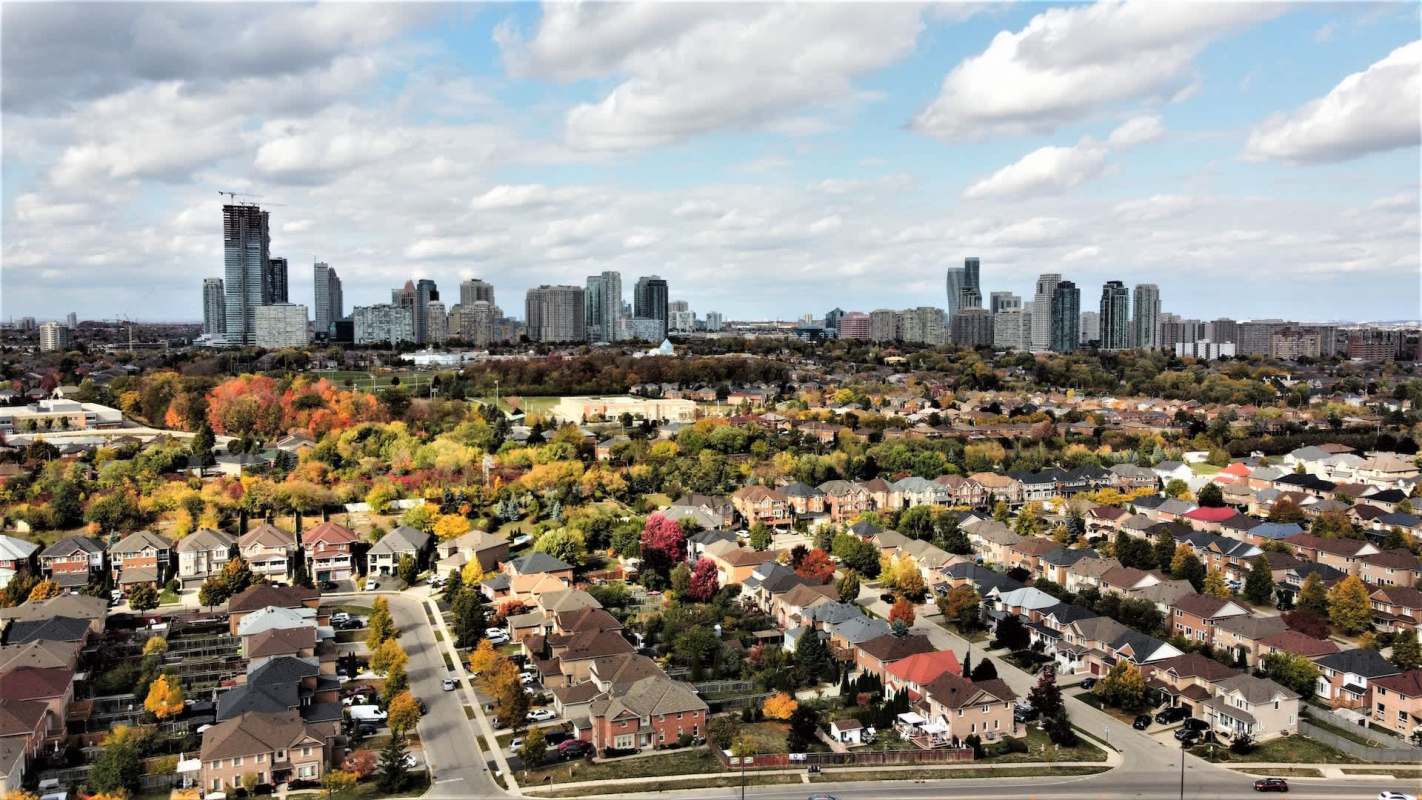
Harbinder Khangura has spent nearly 20 years in Mississauga's Black Walnut Trail area and assumed he would stay there for good. That expectation has been shaken by a proposed hyperscale data center a few miles from his property in Ontario, leaving him to consider whether he may need to move.
What's happening?
Prologis, a U.S.-based real estate firm, is asking for approval to build a two-story data center of roughly 220,000 square feet near Tenth Line West and Argentia Road in Mississauga. Ward 9 Councillor Martin Reid told The Pointer it would be among the largest facilities of its kind in the Greater Toronto Area.
The application remains under review, but it has already prompted strong pushback from nearby residents. They have raised concerns about noise, air pollution, water consumption, pressure on the power grid, and possible effects on property values.
Khangura, who moved to the area in 2008, told the outlet: "If I knew there was going to be a data centre, I wouldn't live close to one."
During a June 25 town hall, Prologis executives said the project would help power everyday digital services. They also said the site would use a closed-loop cooling system, with estimated maximum daily water use of about 530 gallons (2,000 liters) and an initial fill of roughly 72,000 gallons (275,000 liters).
Many people who attended said the meeting did not ease their concerns and that they left still looking for answers.
TCD Picks » Quince Spotlight
💡These best-sellers from Quince deliver affordable, sustainable luxury for all




Residents are also frustrated that Prologis has not secured a customer for the site. They say they are being asked to accept major impacts even though important details about the facility's eventual operations are still unknown.
Why does it matter?
Hyperscale data centers require large amounts of power, water, and space, and their presence can significantly affect nearby communities.
Similar developments have faced resistance in places such as Arizona and Hamilton, where residents have cited persistent noise, heavy water use, and harm to surrounding neighborhoods.
The Pointer cited a recent U.N.-backed report estimating that data centers used 448 terawatt-hours of electricity worldwide last year, with that total potentially climbing to more than double by 2030.
U.N. Secretary-General António Guterres summed up the concern plainly: "But AI is also hungry for land, water and power. The data centres behind it already consume more electricity than most nations."
Artificial intelligence can help with tasks such as improving efficiency, forecasting electricity demand, and supporting renewable energy systems. At the same time, the infrastructure behind AI can increase electricity and water use, strain local systems, and potentially leave households paying more for grid upgrades.
In fast-growing communities, housing, transit, and public services are already competing for limited utility capacity.
What's being done?
Mississauga staff have sent the proposal back for additional work, citing unresolved concerns regarding natural hazards, stormwater management, sanitary servicing, parking, cooling plans, and overall site design, according to The Pointer.
The city is also conducting a broader review of future data center regulation.
Reid, who at first supported the proposal in principle, has since changed his stance. According to The Pointer, he is expected to introduce a motion calling for a one-year pause on new data center applications while Mississauga develops a dedicated planning framework.
Some other local officials have also questioned whether the public could end up paying for infrastructure required by private data center projects.
The dispute has therefore grown beyond a standard zoning issue into a broader argument about who would benefit and who might bear the costs.
Khangura said, "I'm not against technology. I've worked in technology for over 25 years, but the effects of the choice of location is not something I agree with."
He added, "I just hope that Council shuts it down because it's not a good idea."

Get TCD's free newsletters for easy tips, smart advice, and a chance to earn $5,000 toward home upgrades. To see more stories like this one, change your Google preferences here.






