


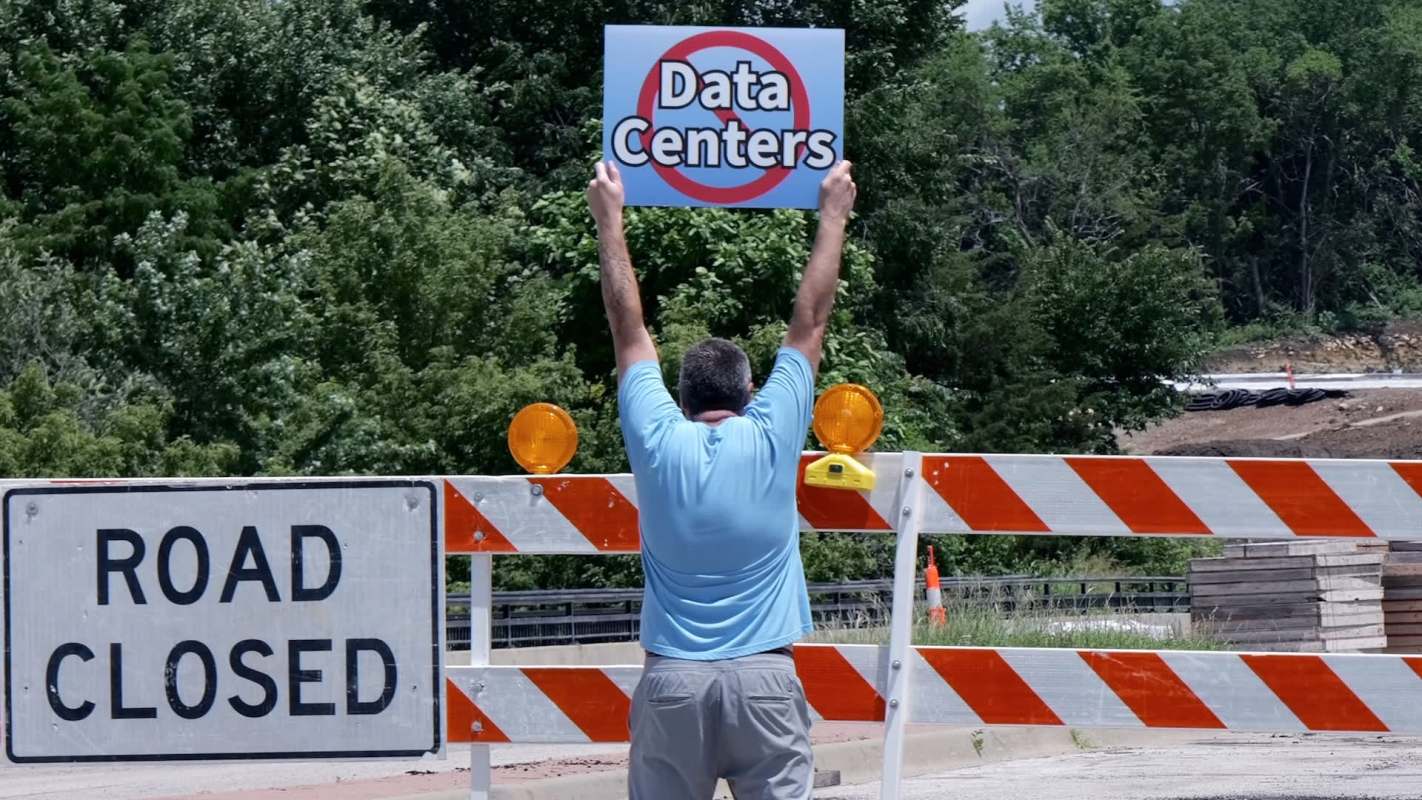
Rapid expansion in facilities that support artificial intelligence, cloud computing, and other digital services is turning data centers into a political issue far beyond local zoning boards. Fights over where and how they are built are increasingly landing in state legislatures across the country.
As proposals move closer to residential areas, people are focusing on everyday impacts rather than abstract technology policy. Noise, water demand, electricity costs, and whether the public gets meaningful input are all becoming major concerns in the debate that data centers do more harm than good.
What's happening?
Prism reported that 75% of Americans oppose having data center construction near their homes regardless of political affiliation, according to a Gallup poll. In addition, 63% said they are concerned that federal agencies may approve projects without taking care to review the environmental and public health impacts.
Lawmakers are beginning to respond to that sentiment. As Prism reported, the National Conference of State Legislatures identified 14 states where bills to pause data center development have been introduced, advanced, or rejected. South Dakota, Oklahoma, and Pennsylvania are considering moratoriums on new hyperscale projects, while a New York measure is still awaiting the governor's decision.
Some local governments and voters are moving even faster. In Monterey Park, California, voters approved a complete ban on data centers with 86.3% of the vote. North Carolina state Rep. Pricey Harrison said, "I would say this is the fastest I've ever seen [the legislature] move," and, as Prism reported, 30 municipalities in the state have considered or approved regulations and moratoriums.
Why does it matter?
Data centers play a major role in supporting the modern internet, and the growth of AI has made them even more significant. AI tools may help improve grid efficiency, forecast energy demand, and strengthen cleaner power systems.
TCD Picks » Quince Spotlight
💡These best-sellers from Quince deliver affordable, sustainable luxury for all




However, those same systems depend on energy-intensive computing facilities, some of which use enough electricity to power a medium-sized city and consume vast amounts of water for cooling their servers.
For communities near proposed sites, the consequences can be immediate and significant. Residents have raised objections over persistent noise, pressure on water supplies, pollution, habitat loss, and farmland being turned into industrial property. There are also worries that rising electricity demand could push utility bills higher.
Opponents say the way these projects get approved can be as troubling as the facilities themselves. Communities have criticized nondisclosure agreements, backroom negotiations, and reduced regulatory scrutiny that may leave residents learning about developments only after construction is already underway.
The economic case is also being examined more closely. Food & Water Watch research, as cited by Prism, estimated a $13 million investment per permanent data center job. Even with the large number of data centers currently in the U.S., fewer than 8,000 people are permanently employed by them.
Mitch Jones, managing director of policy and litigation at Food & Water Watch, said there may be as few as 23,000 people employed in data centers nationwide — a stark contrast to misconceptions that data centers always provide a massive boost in job opportunities.
What's being done?
Moratoriums are emerging as one of the main tools communities can use to slow development. Unlike a ban, a moratorium is a temporary pause utilized by local or state governments to give them time to study the impacts, establish safeguards, and determine where — or whether — these facilities should be built.
Jones told Prism that the strongest pauses are the ones that allow enough time for meaningful review. "The stronger moratoria are the ones that, one, last longer and thus give time; and two, require real detailed studies of the various impacts that data centers have in communities and states," he said.
Local organizing has already shown its influence in places such as Monterey Park and in Maine towns that began pursuing their own moratorium after a statewide effort was vetoed.
The debate is shifting away from whether AI infrastructure should expand and toward how quickly it should grow, who benefits from it, and who absorbs the costs.
"People are concerned, and legislators are hearing from their constituents all over, rural [and] urban," Harrison said, per Prism. Jones also warned: "We don't believe that these studies can be hurried, or we're going to get the policy wrong."

Get TCD's free newsletters for easy tips, smart advice, and a chance to earn $5,000 toward home upgrades. To see more stories like this one, change your Google preferences here.






