


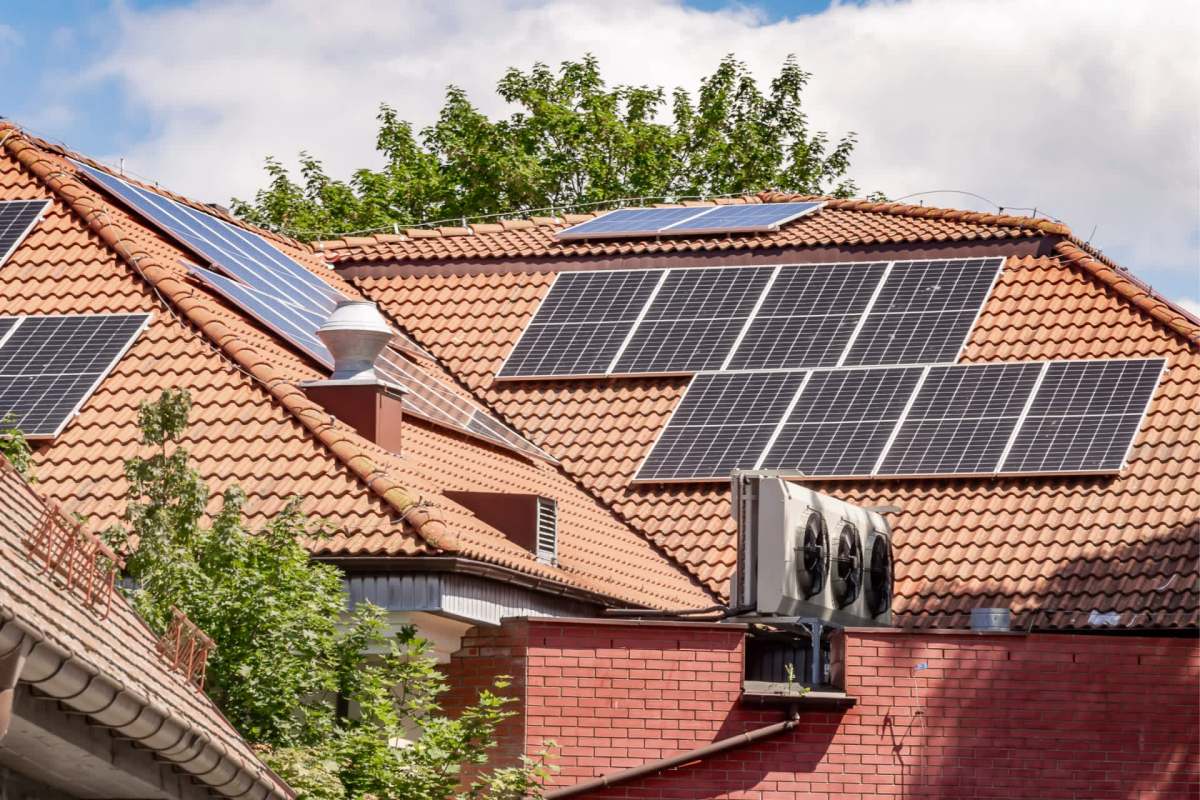
Utility customers who don't have solar won't have to worry about paying exorbitantly high energy bills to offset the costs associated with net metering — a billing system that compensates solar panel owners for excess electricity they send to the grid — according to a new government-backed study.
As pv magazine reported, the analysis initiated by the U.S. Department of Energy's National Renewable Energy Laboratory estimated that "net metering is unlikely to be associated with an increase in rates of more than $1 per month per customer without PV" in 38 of the 44 states that have mandated net metering programs. Even in states with higher solar adoption rates between 3-7% of households, researchers found that utility bill increases for non-solar customers wouldn't exceed $6 per month.
This is good news for both solar and non-solar households, as solar adopters will benefit from lower energy bills by generating their own electricity, and those without solar won't have to be saddled with an unfair cost burden. Net metering is considered controversial because critics say it shifts the fixed costs associated with maintaining and operating utility grids to non-solar customers, even though solar users are still benefiting from the grid's infrastructure.
The NREL reported that 12 states have replaced net metering with compensation structures in attempts to level the playing field, even though that reduces bill savings for solar owners and can discourage prospective customers from investing in a home system. But this study shows that with the right policies in place, going solar is one of the best ways to save on home energy while reducing planet-warming pollution associated with electricity generation.
If you're interested in installing a rooftop solar system, EnergySage can get you set up with its free tools that provide instant solar installation estimates from qualified contractors in your area. Many homeowners can save up to $10,000 on solar purchases and installations by using these services, and access even more benefits with a free mapping tool that shows the average cost of a home solar system, along with available incentives and rebates, on a state-by-state basis.
And if you pair a home solar system with other energy-efficient upgrades, such as heat pumps, you can further amplify your savings. Luckily, EnergySage makes it easy to find the right installer and heat pump system for your needs and budget with its free heat pump comparison tool, ensuring you can take care of all your home electric improvements in one place.
To maximize your savings, consider installing a home solar system and heat pump by the end of this year, as the 30% federal tax credits for each, offered through the Inflation Reduction Act, will expire on Dec. 31, per Canary Media.
As for the study, NREL found that net metering impacts varied by state depending on solar adoption, but explained that the billing method "explicitly supports residential PV adoption" and can help "achieve state clean energy goals."
Save $10,000 on solar panels without even sharing your phone number Want to go solar but not sure who to trust? EnergySage has your back with free and transparent quotes from fully vetted providers that can help you save as much as $10k on installation. To get started, just answer a few questions about your home — no phone number required. Within a day or two, EnergySage will email you the best local options for your needs, and their expert advisers can help you compare quotes and pick a winner. |

"The timing and nature of net metering revisions are ultimately policy decisions based on balancing state-level priorities and considerations and the potential costs and benefits of different rate structures," it said.
|
Which of these factors is the biggest obstacle preventing you from getting solar panels? Click your choice to see results and speak your mind. |
 The upfront cost 💰
Join our free newsletter for easy tips to save more and waste less, and don't miss this cool list of easy ways to help yourself while helping the planet.
Cool Picks




