


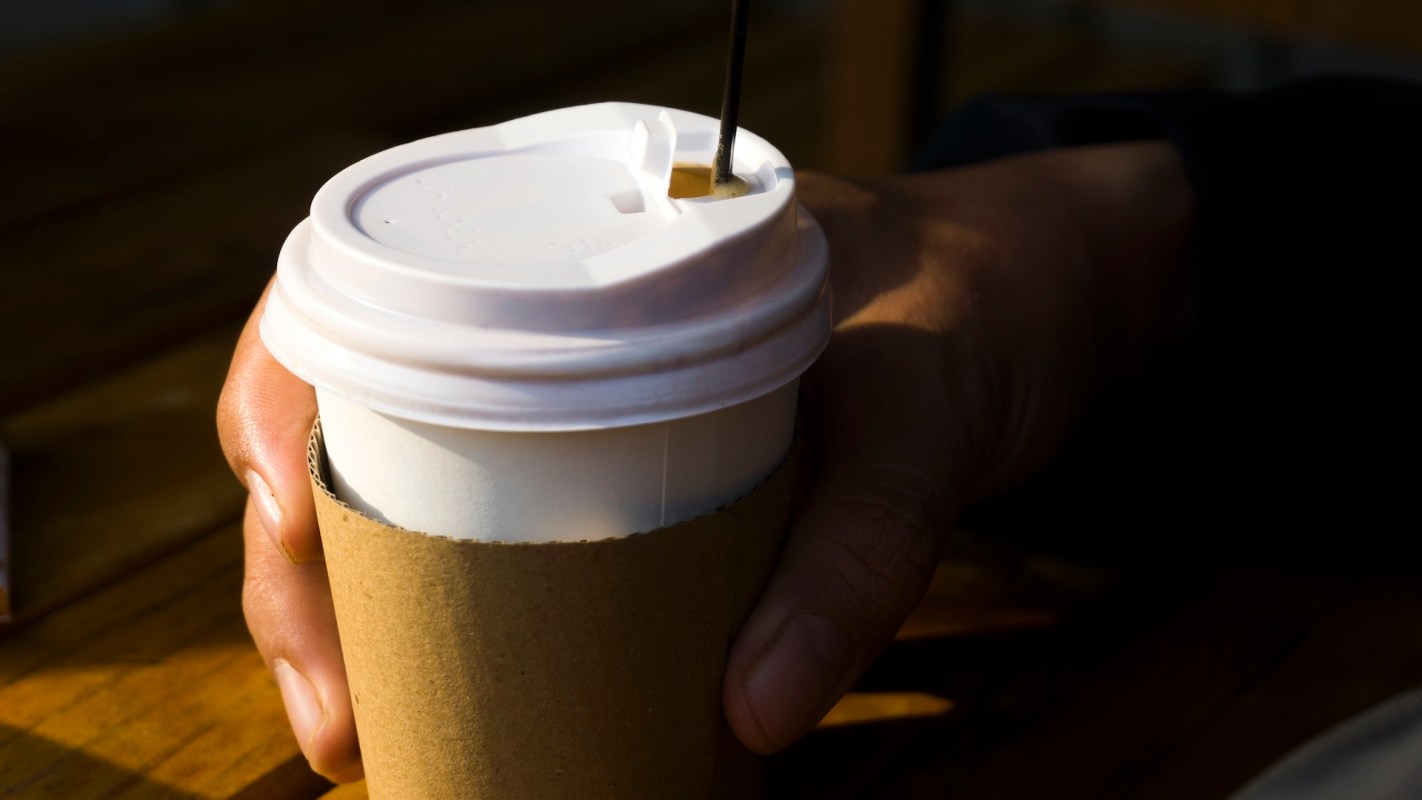
Experts interviewed by Pittsburgh's WPXI have bad news for drive-thru coffee lovers.
It turns out that paper cups often have linings that shed loads of harmful microplastics. It's part of growing health concerns stemming from many everyday products.
What's happening?
Microplastics are tiny particles that fall off larger plastics when clothes are washed, food is heated in certain containers, and as larger waste breaks down, which often takes decades or even centuries.
The tiny pieces are in our oceans, soil, and foods, and are even found in human bodies, according to University of Pittsburgh toxicologist Aaron Barchowsky, who was interviewed by WPXI. The particles are smaller in size than the width of a human hair.
"Seeing that there is accumulation of the nanoplastics and microplastics in placentas or brains or kidneys has really fueled a lot of the concern," Barchowsky said.
Why are the particles concerning?
Scientists are researching possible links between microplastics and certain diseases. Stanford Medicine reported that cell inflammation and organ damage are possible. Other studies are investigating brain damage.
WPXI's story reported that experts are finding more microplastics in diseased brains than healthy ones, but the correlation is unclear.
"We have a hard time measuring the amount of plastic that would cause a brain disease," Barchowsky said. "We haven't gotten to the point of knowing how much or what type of plastic is a problem."
Unfortunately, the report added that there is no way to remove microplastics from the body other than through natural processes. Avoiding their intake is the best medicine.
What's being done to help?
Taking a reusable ceramic, glass, or metal mug for coffee can avoid the problem on your morning java run. Using a wooden cutting board and keeping hot food away from plastic — certain chemicals can leach in greater amounts when heated — are good tips. Rinsing rice with filtered water can reduce microplastic concentrations by up to 40% as well, according to WPXI.
TCD Picks » Quince Spotlight
💡These best-sellers from Quince deliver affordable, sustainable luxury for all




|
Which of these savings plans for rooftop solar panels would be most appealing for you?
Click your choice to see results and earn rewards to spend on home upgrades. |
 Save $1,000 this year 💸
 Supporting brands that use plastic-free alternatives is another way to help. In Pittsburgh, Roxanne's Refillery offers healthier packaging solutions through bulk refills of soap, detergent, and food.
"There's no way this can be good for us," operator Amy Tokar told WPXI about throwaway plastics and nanoparticles. "And it's really really difficult to avoid it."
Nationally, Starbucks reintroduced ceramic mugs as a cozier, plastic-free alternative, though the chain has come under fire for using 8,000 paper cups a minute worldwide, according to Clean Water Action.

Get TCD's free newsletters for easy tips to save more, waste less, and make smarter choices — and earn up to $5,000 toward clean upgrades in TCD's exclusive Rewards Club.
Cool Picks






