


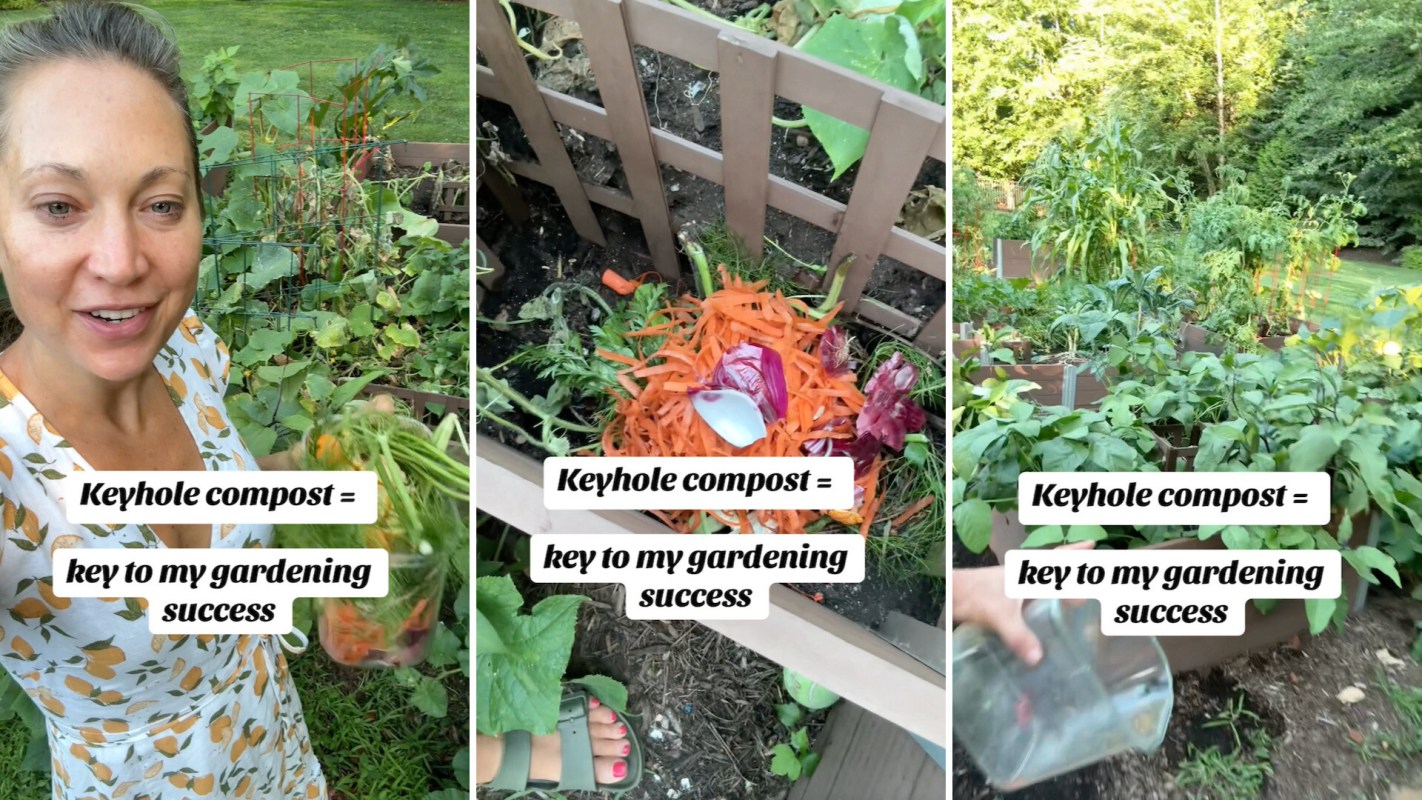
A kitchen-scrap compost pile might not sound like a water-saving gardening trick, but ABC chief meteorologist Ginger Zee (@GingerZee) says it has become one of her favorite tools in the yard.
In her garden, the setup helps feed plants, reduce watering, and eliminate the need for store-bought fertilizer.
What happened?
In a recent TikTok video, Zee walked viewers through her "keyhole" garden beds, where each planting area is built around a small compost center for food scraps.
@gingerzee Keyhole compost can cut watering by 1/3, I don't use feetiizer either! Other answers to questions you may ask: Dog helps keep squirrels and chipmunks at bay. I've never seen any other pests except ants here and there (early season). No deer because we are fenced. #garden #compost #keyholecompost #freshfood ♬ original sound - Ginger Zee
According to Zee, the biggest payoff is how much moisture the setup helps hold in the bed.
She called keyhole composting "one of my not so secret secrets to gardening" and wrote in the caption: "Keyhole compost can cut watering by 1/3, I don't use [fertilizer] either!"
Rather than tossing kitchen scraps in the trash, gardeners using this method put them into a central compost pocket so the nutrients and moisture released during decomposition stay near the plants.
TCD Picks » Quince Spotlight
💡These best-sellers from Quince deliver affordable, sustainable luxury for all




Her caption also addressed possible pest concerns.
Zee said deer are not a problem because the garden is fenced, wrote that she has "never seen any other pests except ants here and there (early season)," and noted that her dog helps keep squirrels and chipmunks away.
"Raccoons, flies, ants, skunks, opossum … been there done that. I love the theory, but in the suburbs it just calls in the vermin," one commenter complained.
"If you're worried about pests, burying [compost] helps," another wrote.
Why does it matter?
Water-saving garden strategies are especially appealing as many households look for ways to lower utility bills and keep plants alive in hotter, drier weather.
If a compost-centered bed really can reduce watering by a third, the savings in time and money could add up over the course of a growing season.
Composting food scraps at home can also help gardeners rely less on commercial products while keeping organic material out of landfills.
Gardening also comes with a range of benefits.
Growing herbs, greens, tomatoes, or other produce at home can cut grocery bills, often offers better flavor than produce shipped long distances, and can support mental and physical health through outdoor activity, stress relief, and a stronger connection to the food on your plate.
What can I do?
You do not need to redo your entire yard to reap the benefits Zee highlighted.
Starting with one raised bed or a small garden plot can be enough to test whether a compost-centered setup works in your space.
Keeping food scraps covered, avoiding meat and dairy, using fencing when needed, and monitoring conditions can help reduce unwanted visitors. Local wildlife pressure can vary significantly, so a system that works well in one yard may need adjustments in another.
As for growing your own food, even a modest home garden can provide fresher produce, lower food costs, and a useful outlet for compostable scraps that might otherwise be thrown away.
One commenter attested to the long-term viability of composting.
"My family started composting in the early 90s. My dad built a giant bin for it. They still use it today," they remarked.

Get TCD's free newsletters for easy tips, smart advice, and a chance to earn $5,000 toward home upgrades. To see more stories like this one, change your Google preferences here.






