


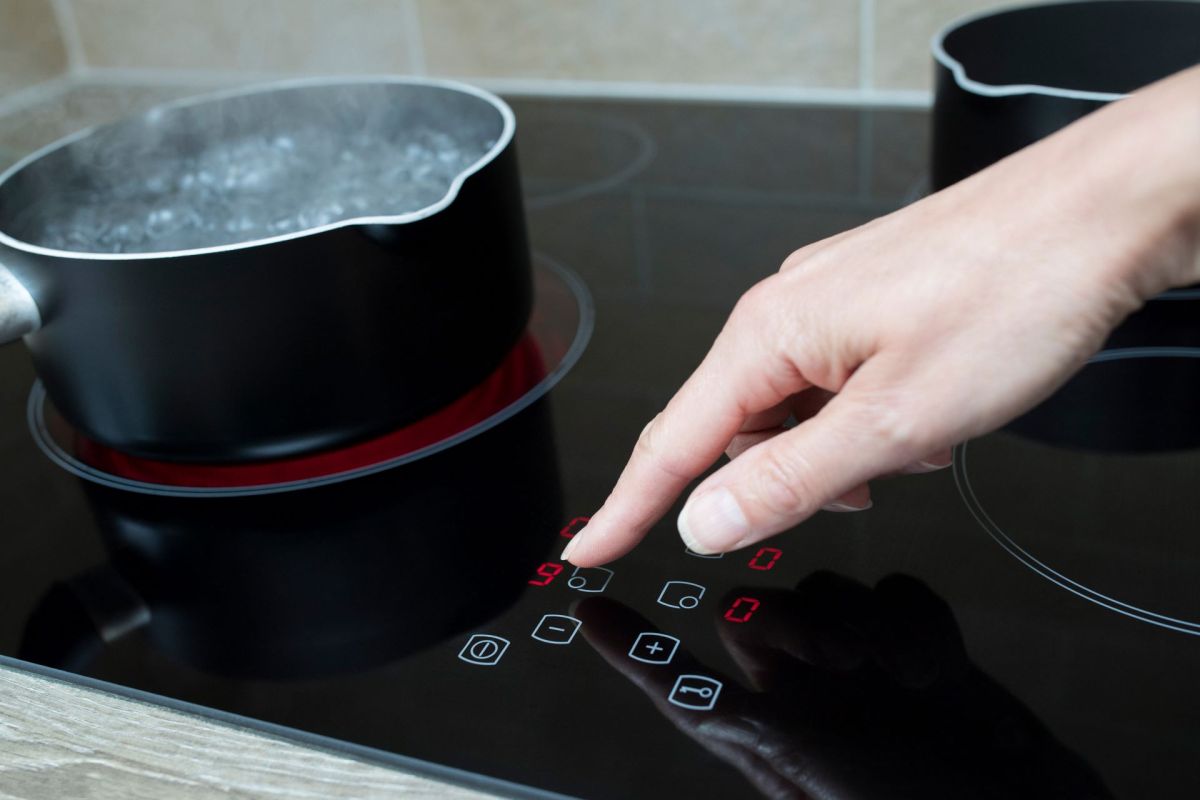
Induction stoves are becoming the hottest new appliance in the world of cooking, and for good reason.
Not only are they easier to control for precise temperatures and more energy-efficient than traditional gas stoves, but they also don't produce the same harmful fumes of gas stoves, which can have greater impacts on adults with asthma and increase risks of asthma in children. But how do induction stoves work?
How do induction stoves work?
Induction stoves use electromagnetic energy to heat up pots and pans directly rather than heating the cookware like other stoves do (through a combination of conduction, convection, and radiation).
Essentially, instead of waiting for a hot surface to transfer heat to your cookware, you heat the cookware itself through the power of electromagnetism. This allows for precise temperature control so you can perfectly cook your food.
It also means you'll waste less heat while cooking, making induction stoves far more energy-efficient than traditional gas stoves. So, your food will cook more quickly and at a lower cost.
Because induction stoves use electromagnetic energy rather than burn a fuel, they don't create the nasty indoor pollutants that traditional gas stoves do.
Will I need to get new pots and pans if I get an induction stove?
If you already have a set of pots and pans, you may or may not need to upgrade to an induction-ready set. This will ensure your pots and pans can gain heat on the induction stovetop.
Induction-ready cookware includes pots and pans that are made of ferromagnetic materials. Cast iron is an example of a ferromagnetic metal that works. Many stainless steel pots and pans should work too.
If you're concerned about whether or not your cookware will work with induction, try out a trick from Consumer Reports: Bring a magnet close to the pot or pan and see if it attracts. If it does, you're almost certainly in the clear.
The pieces of cookware that generally won't work on induction ranges are the nonstick aluminum ones.
TCD Picks » Quince Spotlight
💡These best-sellers from Quince deliver affordable, sustainable luxury for all




Buying new pots and pans on top of a new stove could be daunting. However, thanks to the Inflation Reduction Act, you could get up to $840 when you install the induction range, making the upgrade feel even better.

Join our free newsletter for easy tips to save more, waste less, and help yourself while helping the planet.
Cool Picks






