


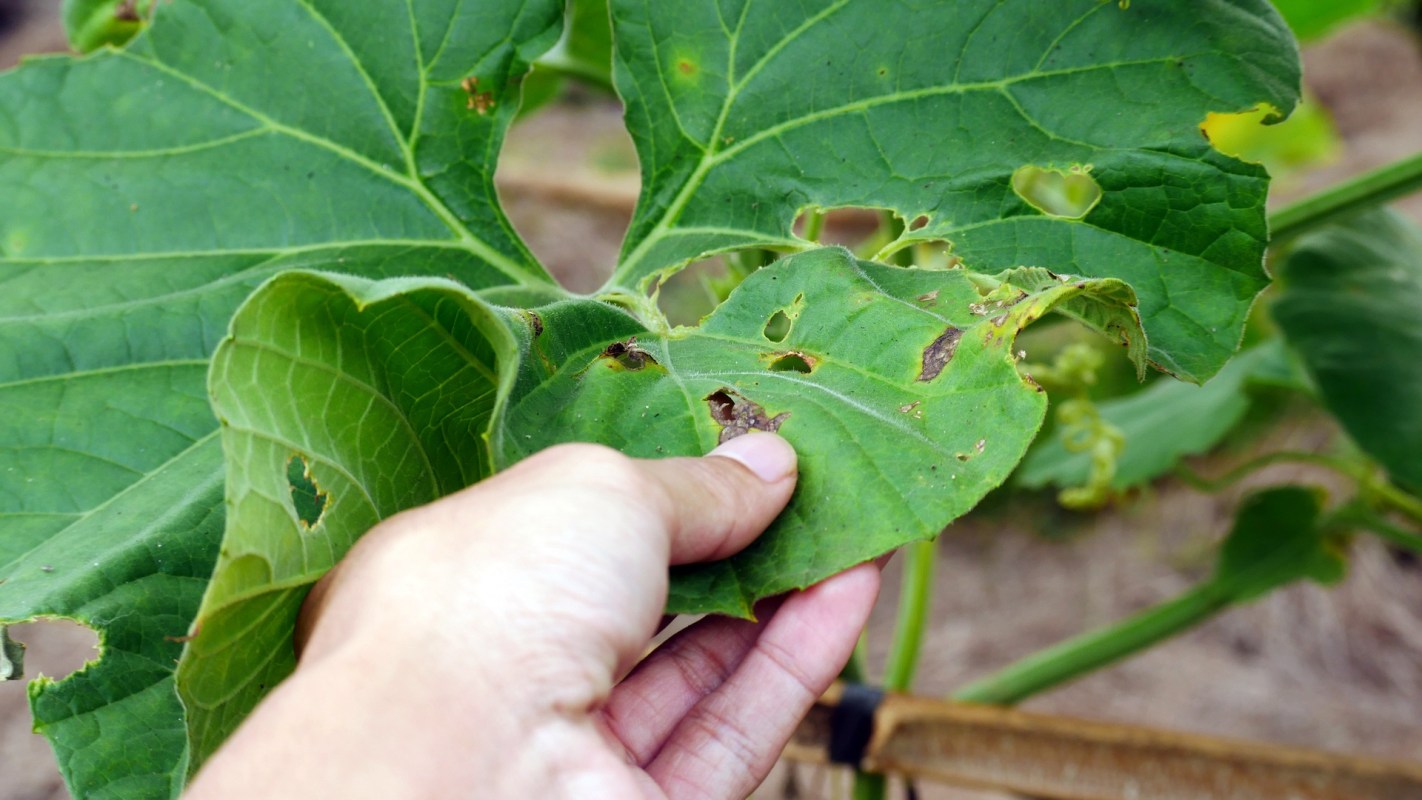
A productive summer vegetable garden can quickly become a buffet for pests, especially when high heat and dry conditions leave plants stressed.
What's happening?
Heat-stressed vegetables are more vulnerable to insect damage, according to Southern Living.
Rafia Khan, PhD — a Texas A&M AgriLife Research and Extension Center assistant professor and extension entomologist — explained the issue simply: "Plants are already heat stressed, and there also may be less rain."
A pest issue does not always announce itself with an obvious insect on the plant. Cory Tanner, an extension horticulturist at Clemson University, said gardeners may instead notice clues such as frass, chewed holes, sticky residue, sudden wilting, or plants that just seem unhealthy.
The list of likely offenders is long. Aphids can cluster on tender growth on peppers, tomatoes, basil, and leafy greens. Cucumber beetles can damage cucumbers, melons, pumpkins, and squash while also spreading bacterial wilt. Squash bugs, stink bugs, leaf-footed bugs, flea beetles, hornworms, and pickleworms are also active and can target crops ranging from eggplants and cabbage to tomatoes and pumpkins.
Handling a problem at the first sign of trouble is much easier than waiting until pest numbers climb.
TCD Picks » Quince Spotlight
💡These best-sellers from Quince deliver affordable, sustainable luxury for all




Why does it matter?
For many households, a home garden is about more than a hobby.
Growing food can help reduce grocery costs, particularly for expensive produce such as tomatoes, peppers, herbs, and greens. It can also provide access to fresher, often better-tasting fruits and vegetables harvested at peak ripeness.
Pests threaten all of those benefits by damaging fruit, reducing yields, and in some cases wiping out plants that took months to establish.
Some insect damage is mostly cosmetic, such as the misshapen fruit often caused by stink bugs and leaf-footed bugs. Other problems can be far more serious. Cucumber beetles can help spread a disease that causes plants to collapse, while hornworms can chew through leaves and fruit, and pickleworms can chew through blossoms and fruit at a rapid pace.
What can I do?
Frequent scouting is one of the most useful habits, especially if it happens at more than one point in the day.
Because insect activity changes over the course of the day, Tanner recommended checking plants in both the morning and the evening. Looking in regularly can help gardeners spot a developing problem before serious damage sets in.
Damage symptoms can be as revealing as the insects themselves. Pest activity may show up as holes in leaves, sticky honeydew, frass, yellowing foliage, unevenly ripening fruit, or blossoms and produce with entry holes. Flea beetles may also give themselves away by hopping when disturbed.
Before deciding how to respond, it is important to identify the pest correctly. The source notes that a local university cooperative extension service can help determine what is attacking a crop, and Khan said control is easier "when the pest population is small and easier to manage."
"The main thing is being observant," Tanner said.
Khan said, "Stressed plants are more likely to be attacked by pests."

Get TCD's free newsletters for easy tips, smart advice, and a chance to earn $5,000 toward home upgrades. To see more stories like this one, change your Google preferences here.






