


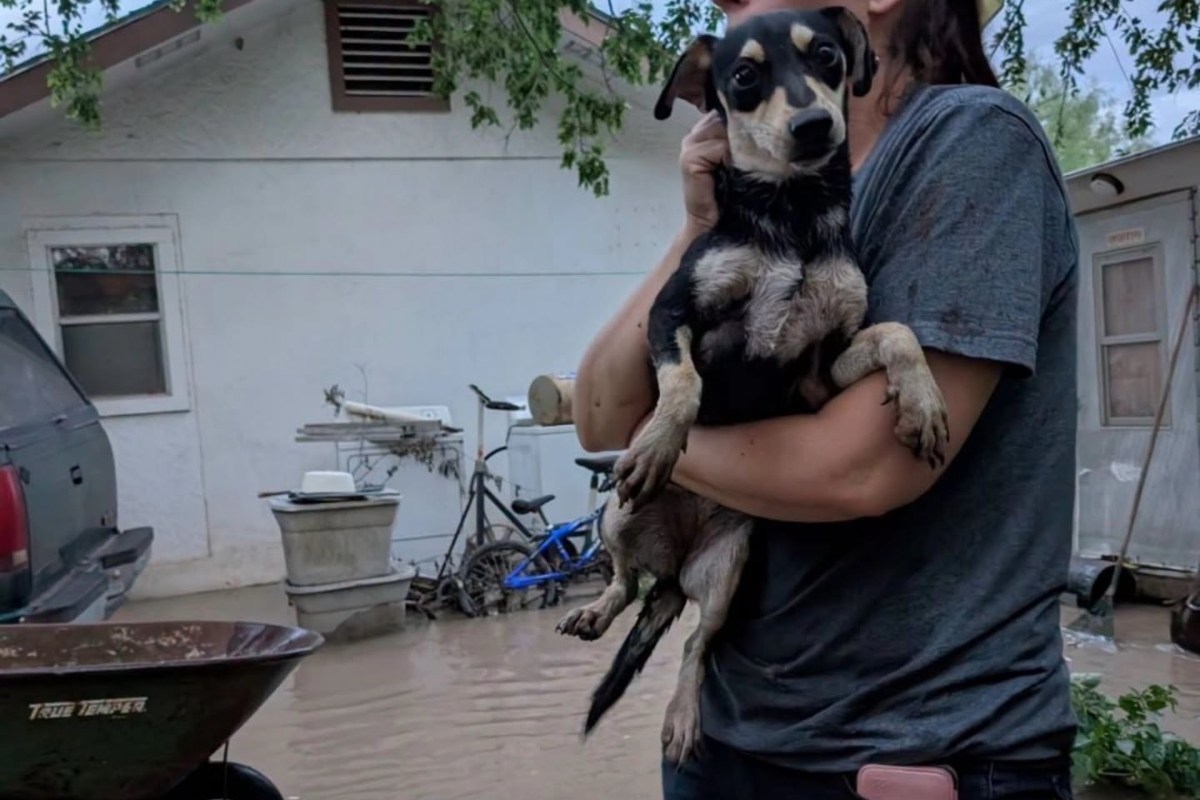
In South Texas, rising floodwaters made an evacuated neighborhood unreachable, leaving some residents separated from their pets. Rescue crews from Austin Pets Alive! worked late into the night to reach dogs trapped inside water-damaged homes and kennels that were partly underwater.
What happened?
Teams from Austin Pets Alive! were deployed across several flooded Texas communities — including Kerr County, Uvalde, and Batesville — during a four-day response effort, as reported by the Austin American-Statesman.
Near Crystal City, one initiative focused on a neighborhood stranded by floodwater. Austin Pets Alive! spokesperson Suzie Chase said rescuers spent roughly an hour trying to figure out how to get inside before the local fire department allowed them through.
By about 7 p.m., crews had begun bringing out the first animals. They then went from house to house, rescuing dogs in dangerous conditions — flooded houses and kennels where water was already covering parts of them. Chase said some shelters were "underwater or facing euthanasia due to overcrowding."
Rescues in the field continued until around 10 p.m., and crews remained until about 1 a.m. to provide care for pets left stranded in poor condition.
Why does it matter?
When floods force evacuations, pets can quickly become a major part of the crisis. Some owners cannot safely transport animals, while local shelters may be overwhelmed just as the need for help surges.
TCD Picks » Quince Spotlight
💡These best-sellers from Quince deliver affordable, sustainable luxury for all




Keeping displaced pets alive, treated, and housed nearby can improve the chances of reunification for families already dealing with property damage, displacement, and uncertainty.
A flooded neighborhood threatens more than homes — it can cut off access roads, strain fire departments, and push nearby shelters beyond capacity.
Extreme weather emergencies can create secondary crises that continue after the initial evacuation, especially for vulnerable animals and the people trying to find them.
What's being done?
Austin Pets Alive! has taken in more than 270 animals from flooded communities and has delivered pet food and other supplies to affected areas farther south.
The group is moving animals already housed in local shelters to make room for pets rescued from flood zones. That approach helps keep newly displaced animals closer to the communities where owners may still be searching for them.
The nonprofit is still seeking foster homes, donations, and supplies as rescue operations continue. For people who want to help after disasters like this, fostering can create space for more rescued animals while providing a loving environment for them to recover. Financial support can also help cover transport, medical care, and emergency sheltering.
Readers interested in broader ways to help communities facing climate-related disasters can also explore TCD's guide to donating money to climate causes.
"There are dozens and dozens of dogs in this neighborhood," one team member texted from the scene, Chase said. As the rescue effort expanded, Chase also wrote that the Crystal City shelter "was not even on our radar until yesterday," but quickly became part of the widening response.

Get TCD's free newsletters for easy tips, smart advice, and a chance to earn $5,000 toward home upgrades. To see more stories like this one, change your Google preferences here.






