


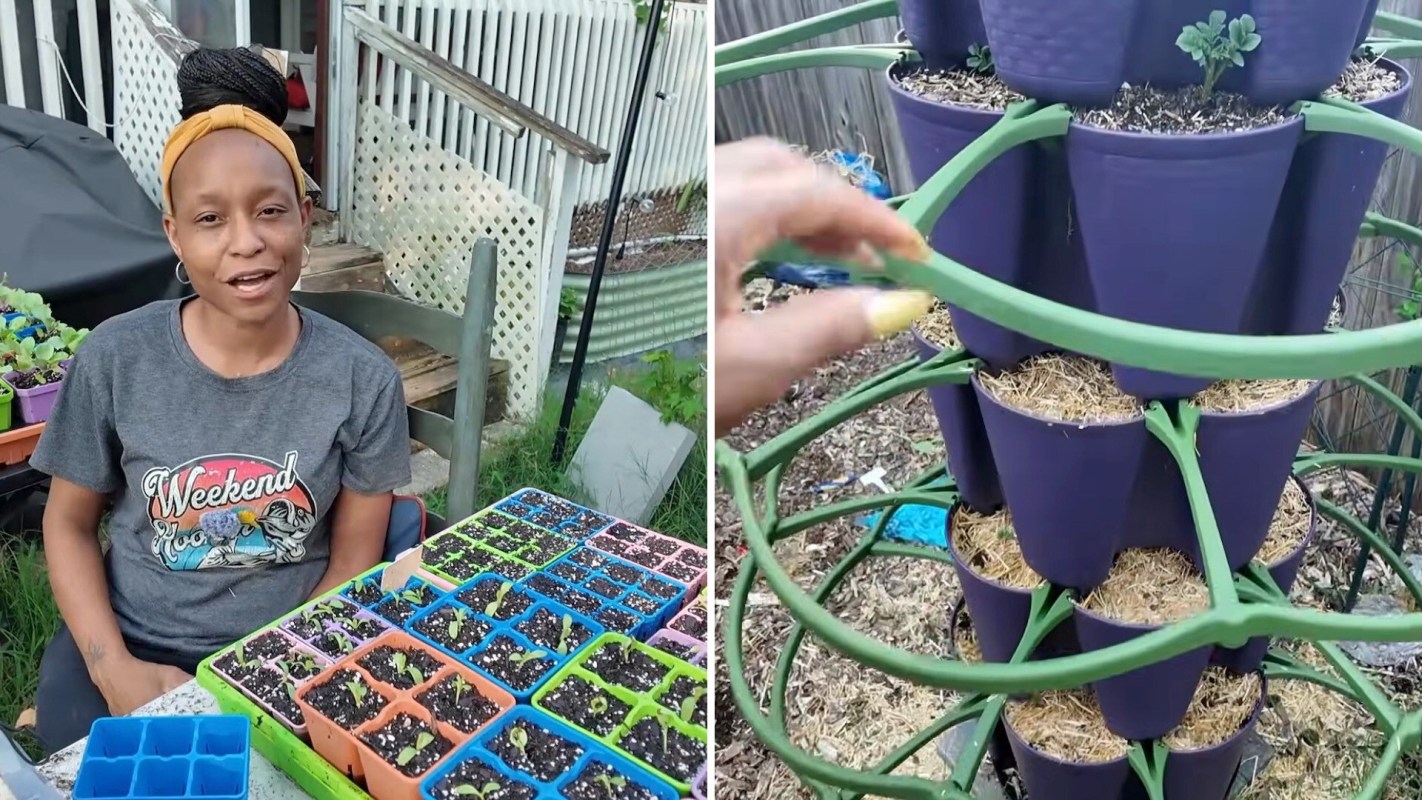
If you're wondering whether it's too late to plant a few more vegetables before the fall, one gardener has all the answers.
Here's what to know
Asia, the gardener behind Yellow Door Urban Homestead, posted a YouTube video to explain how she makes late-summer planting decisions. Gardening in Virginia's Zone 7B, she predicted she had 81 days left before her first frost and used that window to make her decisions.
"When you start gardening, the first thing you really want to look up if you are wanting to garden and you wanting to start seeds, even if you're not wanting to start seeds, it's a good idea to look up your first frost and your last frost," Asia said.
Rather than planting by month alone, she starts with the first frost date for her area, figures out how many growing days are left, and then checks the "days to maturity" on seed packets. She said she likes to choose varieties that should finish with some breathing room before frost arrives.
Using that approach, she pointed to crops that can still fit the season, including Swiss chard at 45 days, sunflowers at 50 days, beans in roughly 50 to 60 days, cucumbers in about 45 to 65 days, and some squash varieties at around 50 to 55 days. That simple calculation can help home growers squeeze in another harvest of their favorite produce.
Why does it matter?
Asia said many people discover gardening once summer is already well underway and assume they missed the window. So many gardeners ask, "Is it too late to plant this or is it too late to plant that?" Her answer was that it is not always too late.
TCD Picks » Quince Spotlight
💡These best-sellers from Quince deliver affordable, sustainable luxury for all




Late-summer planting can be especially helpful for people trying to stretch grocery budgets, since home gardens can reduce spending on produce while delivering fresher, better-tasting food. Gardening can also support mental and physical health by getting people outside, moving, and focused on a rewarding routine.
She said the same frost-date math matters for fall gardens too. Even crops that can handle colder weather — including kale, broccoli, cabbage, cilantro, and other cool-season choices — still need enough time to root and establish before frost sets in.
What can be done?
For anyone thinking about planting more before the end of the season, the starting point is a predicted first frost date for your zip code and the maturity timeline printed on the seed packet. Asia's approach also leaves extra room for setbacks such as pests or a surprise cold snap.
When the season is tightening, shorter-maturity crops may be the safest options. Asia recommended beans, cucumbers, squash, and quick greens, and said that for tomatoes, she would prefer a transplant — especially a cherry type — over starting from seed.

Get TCD's free newsletters for easy tips, smart advice, and a chance to earn $5,000 toward home upgrades. To see more stories like this one, change your Google preferences here.







