


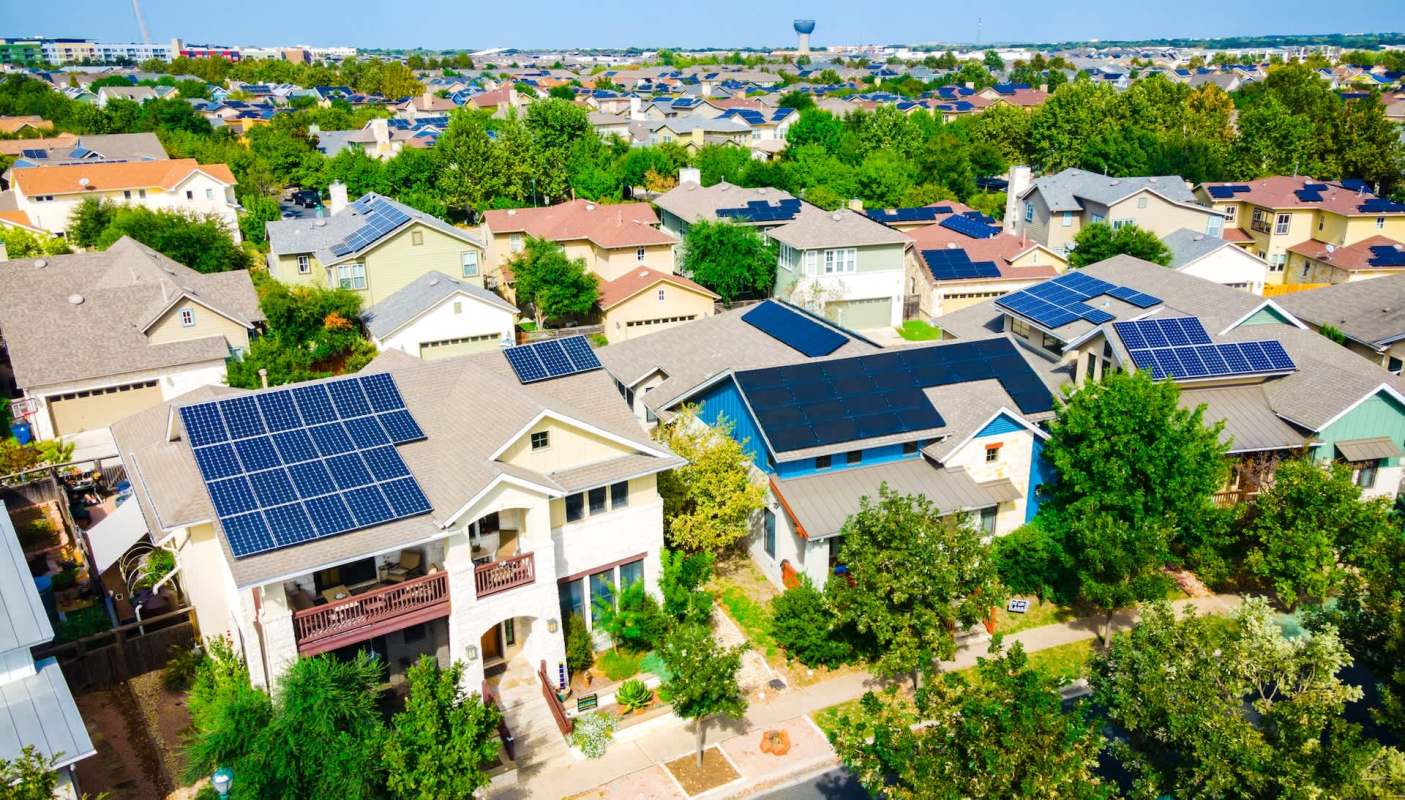
For low-income households in America, energy insecurity sets a stressful — and expensive — backdrop to daily life.
But one recent peer-reviewed study found that rooftop solar and battery systems could significantly alleviate the burden, PV Magazine reported.
Energy insecurity is defined as the inability to afford energy needs, such as heating, cooling, and electricity. And in response to this insecurity, many homes engage in energy-limiting behaviors that can actually put them at risk.
This could include setting temperatures that disrupt sleep and other behaviors, inadvertently creating environments prone to mold, and even forgoing food and medicine and other basic necessities in order to pay for energy.
"These households [are] struggling to pay their utility and living expenses," researchers wrote.
Their study, which was published in the journal Communications Earth & Environment, assessed how effective home solar arrays and battery storage systems could be at reducing energy insecurity, so that these risky behaviors could become irrelevant. The research was conducted by the Department of Energy's Pacific Northwest National Laboratory.
Home solar arrays have become increasingly popular in recent years, due to their ability to slash energy bills and reduce planet-heating pollution at the same time. And with plenty of free tools available to help homeowners get started — like the ones from EnergySage — it's never been easier to connect with trusted installers to start taking advantage of savings immediately.
And indeed, the researchers found that, while severe energy-limiting behavior offered 42% energy and utility bill savings on average, the renewable energy systems came close: They saved an average of 22% on energy use and 29% on energy bills.
Save $10,000 on solar panels without even sharing your phone number Want to go solar but not sure who to trust? EnergySage has your back with free and transparent quotes from fully vetted providers that can help you save as much as $10k on installation. To get started, just answer a few questions about your home — no phone number required. Within a day or two, EnergySage will email you the best local options for your needs, and their expert advisers can help you compare quotes and pick a winner. |

"While a system is therefore unlikely to be capable of completely alleviating a household's stress related to bill management, providing access to an alternative bill savings mechanism that does not require the household to ration or substantially curtail their energy use could enable struggling households to live in their homes with comfort and dignity," researchers wrote.
Even better, installing a home solar system doesn't have to break the bank when homeowners take advantage of the various incentives currently available. Acting fast will mean saving even more, as the 30% tax credit will be expiring after 2025. In fact, EnergySage estimates that installing sooner could mean an average difference of $10,000.
|
Should the government offer tax incentives for energy-saving home upgrades? Click your choice to see results and speak your mind. |
 Absolutely 👍
 It can be an intimidating process to begin, which is why EnergySage's mapping tool — which breaks down average costs and available incentives in each state — is a great place to start. EnergySage also offers free quote comparisons for both solar panels and other money-saving electric appliances, like heat pumps, in order to find a trusted installer.
Especially when combined, these energy upgrades are one of the most effective ways to drive down utility bills to near-zero and free up more budget for other life essentials.
More From EnergySage
💡Go deep on the latest news and trends shaping the residential solar landscape




Join our free newsletter for easy tips to save more and waste less, and don't miss this cool list of easy ways to help yourself while helping the planet.
Cool Picks




