


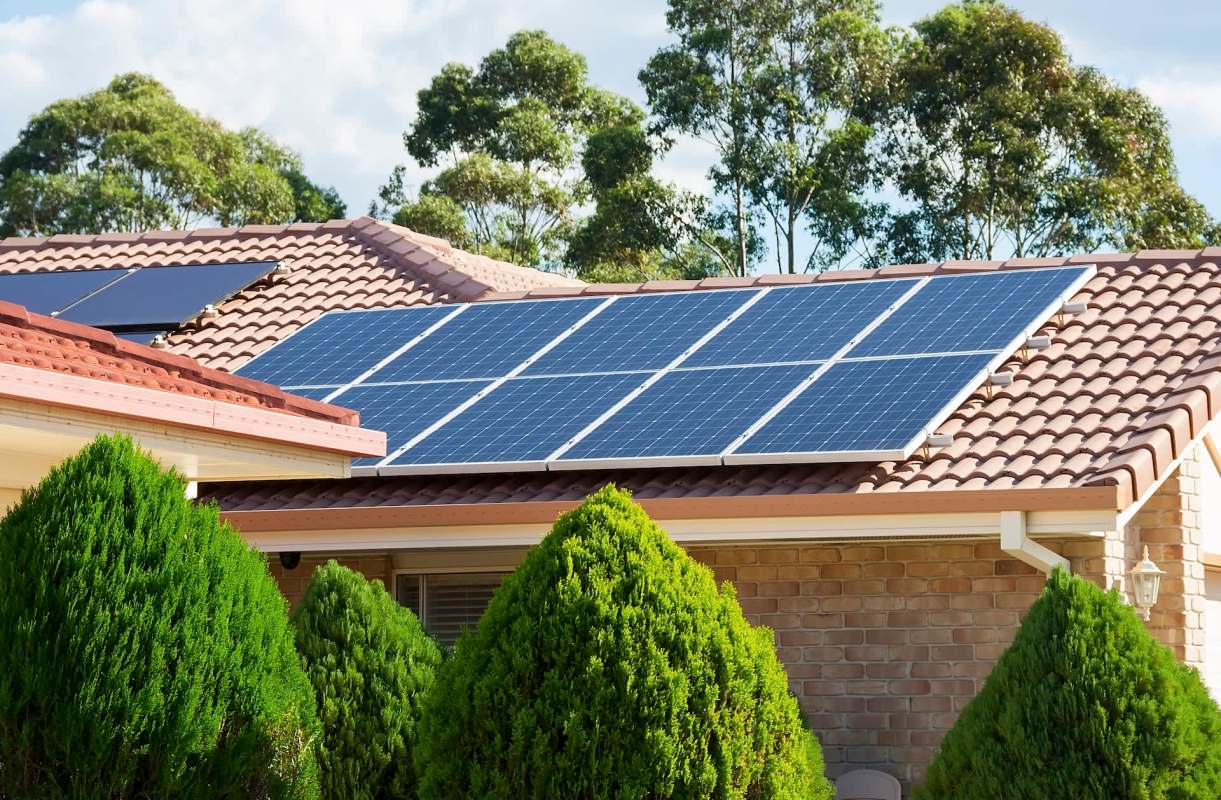
While solar isn't a cheap upfront investment, the cost has decreased over the years, making it a more affordable home improvement project. But does adding solar actually increase your home value, or is it just smoke and mirrors?
A Palmetto report found that adding an average-sized solar array can increase your home value by at least $15,000, according to data from the Office of Energy Efficiency and Renewable Energy.
On top of that, homes with solar sold for 4.1% more than homes without solar in 2019, according to a Zillow study. That percentage has since risen to 6.9%, translating to home values about $25,000 greater than non-solar homes.
The Palmetto report's authors suggest that solar increases home values by lowering monthly energy costs and increasing home energy independence. Adding solar also reduces households' carbon outputs, which helps lower planet-overheating pollution.
Crushed by your bills? See instant solar savings from vetted installers in just a few clicks With energy prices through the roof, there's never been a better time to go solar — and EasyHome can help you find the best prices from the best installers in your area. EasyHome takes the guesswork and headaches out of energy upgrades by showing you estimated savings from a network of vetted local partners. To get started, just enter your ZIP and share a few details about your home — seeing your estimate is really that easy. |

EnergySage helps homeowners find and compare the best quotes for new solar installation projects. Homeowners who have used EnergySage's marketplace have claimed up to $10,000 in savings on new projects. Meanwhile, Palmetto itself specializes in leasing and power purchase agreement plans to lower the upfront investment.
Solar is a particularly attractive home improvement feature for areas and states where energy costs are high. With EnergySage's free mapping tool, homeowners can find cost data on a state-by-state basis, pointing them to all available incentives to help lower the upfront cost of going solar.
The most common solar incentive available is the federal solar tax credit, which allows homeowners to deduct 30% of the cost of a qualified solar system purchase and installation. However, this tax credit will be eliminated at the end of 2025.
Homeowners need to complete any purchased solar installations by the end of the year to take full advantage, which EnergySage estimates to be worth up to around $10,000.
"Many people are willing to pay more for a home if it helps them do the right thing for the planet and the environment," the Palmetto report reads.
The data shows that solar generally increases home values. However, one realtor explained in the r/realtors subreddit that solar doesn't necessarily make your house worth more. "What it does do though, is help you justify your price over the next one," they said.
|
What single change would make the biggest dent in your personal food waste?
Click your choice to see results and speak your mind. |
 Not buying food I don't need 🧐

Join our free newsletter for easy tips to save more and waste less, and don't miss this cool list of easy ways to help yourself while helping the planet.






