


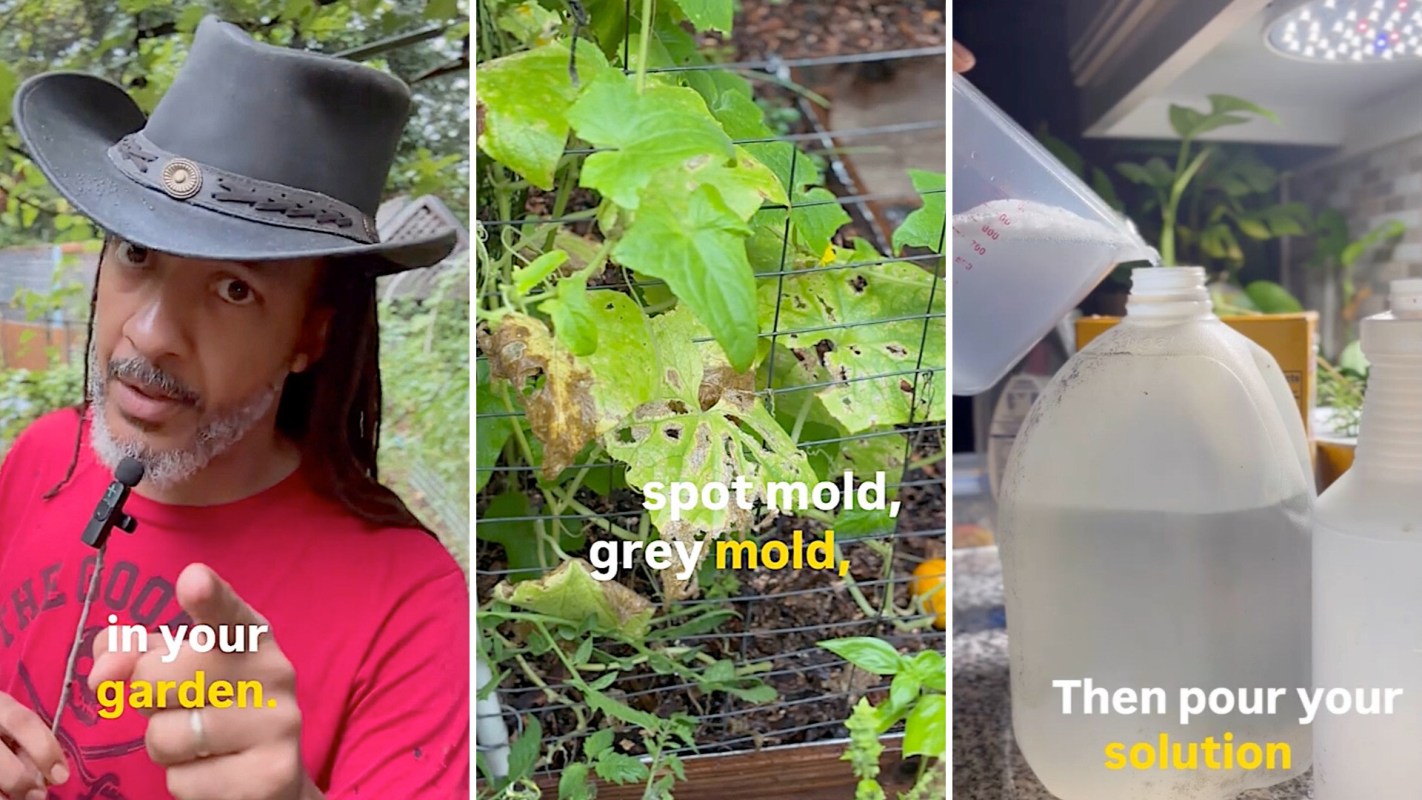
"I'm about to show you the most cost-effective way that you can combat mold in your garden," a helpful, seasoned gardener, Gray (@urbangardeningwithgray), explained at the start of a recent TikTok video.
He mentioned that with heavy rainfall, a fungal problem can ensue. This is identifiable by powdery mildew and leaf spot mold. Then, combined with humidity and moisture, it creates a perfect breeding ground for fungal spores to spread on leaves. As a solution, Gray shows his viewers a perfect, low-cost, DIY fungicidal spray to eliminate mold on their plants.
@urbangardeningwithgray 🌧 DIY Mild Fungicide for Plants🌿 Dallas's extra rain = mold party on your plants? Fight back with science! Baking Soda Spray (USDA & Texas A&M AgriLife Extension): 1 tbsp baking soda + 1 tsp mild soap + 1 gal water. Spray leaves weekly to stop powdery mildew in its tracks! Why it works: The soap helps it stick (but won't "glue" it—reapply after rain!), and baking soda alters leaf pH to discourage fungi. 💡 Pro tip: Improve airflow + water at the base to prevent future outbreaks. #PlantCare #DIYFungicide #ScienceBasedGardening #UrbanGardening #DallasGardener #gardenhacks #gardening ♬ original sound - urbangardeningwithgray
The scoop
To make the fungicidal spray, all one needs is three ingredients: a teaspoon of baking soda, a teaspoon of dish soap, and one cup of warm water. Stir this all together until it is dissolved, then pour the mixture into a combined total of one gallon of water.
Next, shake it all up until there is a nice distribution of all the ingredients. Pour the mixture into a spray bottle. Finally, spray it directly on both the tops and bottoms of your plant leaves. Gray explained that one should reapply every seven to 10 days or after a heavy rain.
How it's helping
Gray explained the exact reason why this mixture works so well. It changes the pH of the surface of the leaves, making fungal spores uninhabitable. The dish soap helps to make the solution stick to the leaves. He noted that if one observes the solution to be ineffective, they can step it up a bit by making the exact same formula, but using potassium bicarbonate instead of baking soda.
The method will keep you from needing to buy expensive, chemical-ridden, commercial fungicides. These can contain harsh chemicals that cause water and soil pollution. This is not a healthy mix, especially when used on vegetables and fruits, as ingestion of these chemicals causes more health hazards.
Further, it helps keep your garden chemical-free, aiding in a healthy ecosystem for pollinators and yourself.
What everyone's saying
TikTok viewers were pleased with the hack.
"Thanks for sharing!" wrote one. "Mold took my [Cantaloupes] out so fast. Wish I knew this then. Going to try it on my watermelon!"
Another stated, "This right here has been one of the best explanations on how to deal with leaf mold I have ever seen, thank you so much!"
TCD Picks » Quince Spotlight
💡These best-sellers from Quince deliver affordable, sustainable luxury for all




|
What is the biggest reason you don't grow food at home? Click your choice to see results and speak your mind. |
 Not enough time ⏳
Join our free newsletter for easy tips to save more and waste less, and don't miss this cool list of easy ways to help yourself while helping the planet.
Cool Picks






