


What appeared to be a serious AC problem turned out to have a far less expensive solution, according to a homeowner who sought another HVAC opinion after the system began blowing warm air.
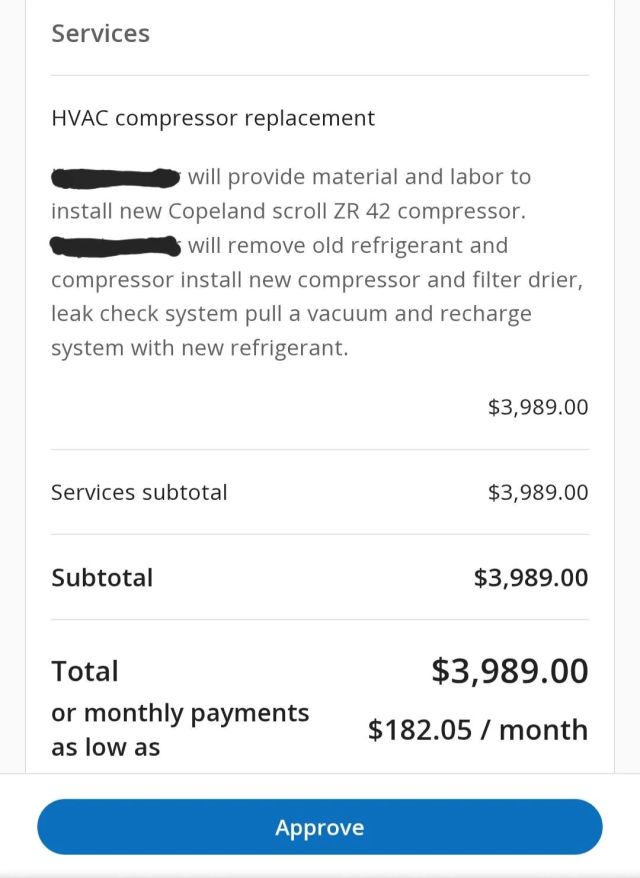
The competing recommendations were dramatically different: one was a roughly $4,000 compressor job, while the fix that got the unit working again cost $223.
Here's what to know
The story was shared on Reddit by someone whose 20-year-old Goodman unit had stopped cooling. They said the first technician recommended replacing the compressor for about $4,000 and indicated that older systems like theirs are where the company makes money through full replacements.
According to the poster, the next technician took a much different approach. "I got a second opinion and they replaced some bad terminals on the wiring, inspected the rest of the unit and got it back running for $223," they wrote.
The OP summed up the experience bluntly, writing that the first technician "wasn't a good salesman for saying he could just replace the compressor for $4K."
More background
Older HVAC systems often put homeowners in a difficult position. If a unit is 20 years old, some contractors may reasonably recommend replacement due to its age, reduced efficiency, or the risk of future breakdowns. Still, that does not automatically mean every diagnosis of a major component failure is accurate.
TCD Picks » Quince Spotlight
💡These best-sellers from Quince deliver affordable, sustainable luxury for all




In this case, the difference between a compressor replacement and a minor electrical repair was not just technical — it was financial, significantly so.
The OP also shared a personal rule of thumb, saying, "I read somewhere on reddit that companies that send you an invoice through email and offer financing are less trustworthy than guys that write you a paper invoice on site."
Financing and emailed invoices are common business practices and are not, by themselves, signs of dishonesty.
What can be done?
Getting a second opinion can help before approving any major HVAC repair or replacement, especially when the quote runs into the thousands of dollars.
It can also help to ask a technician to show the failed part, explain why that part is causing the problem, and clarify whether there are lower-cost fixes worth trying first. Written estimates from multiple companies can also make it easier to compare recommendations side by side.
If a system is older, consumers may also benefit from asking two separate questions: What is needed to get it running today, and what might replacement planning look like? That can help reduce the pressure of making a significant financial decision in the middle of a breakdown.
For the OP, the result was a working AC without the quoted $4,000 repair.
They ended the post with the question many frustrated customers might ask after a near-miss: "Should I give the first company a bad google review or just let sleeping dogs lie?"
"I think you ought to give a shout out to the second company that were honest and treated you right," one commenter said. "Name of the company in the city."

Get TCD's free newsletters for easy tips, smart advice, and a chance to earn $5,000 toward home upgrades. To see more stories like this one, change your Google preferences here.






