


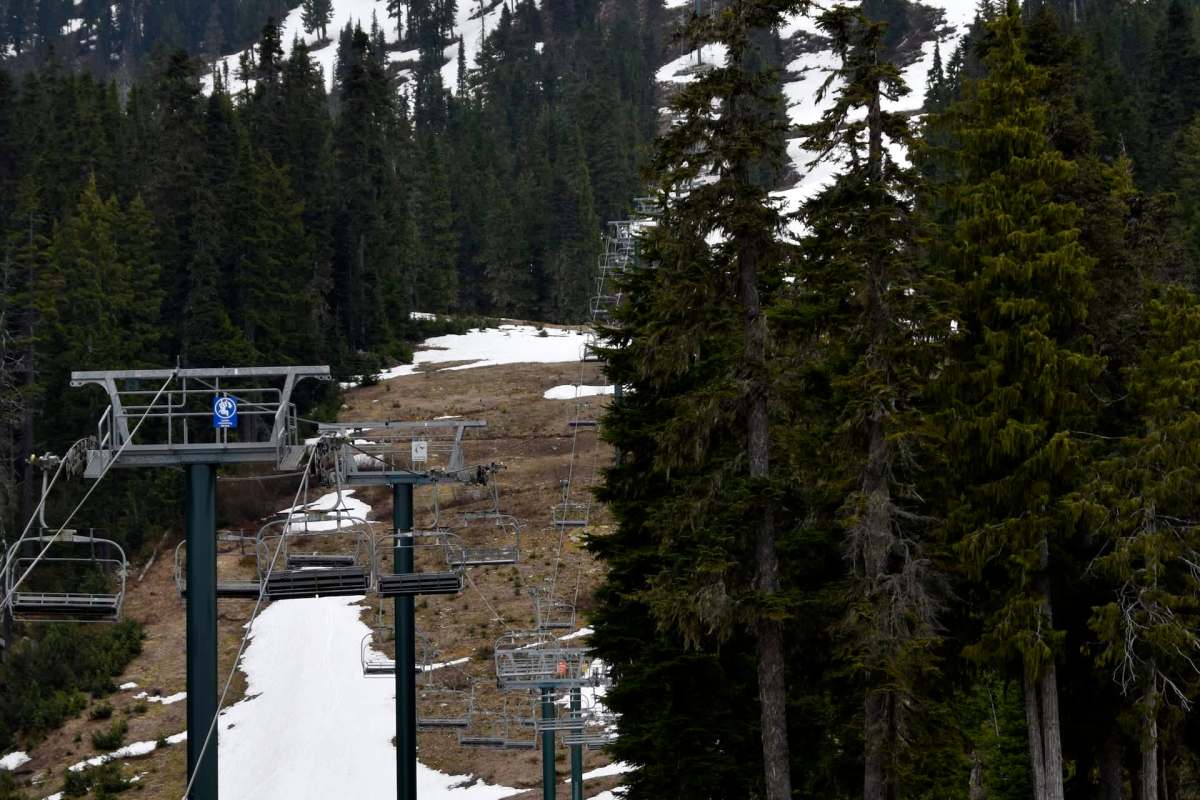
Ski resorts across Vancouver Island are being forced to rethink their winter plans as unusually warm, wet conditions leave some slopes bare — a growing challenge hitting small, community-run mountains especially hard.
What's happening?
Mount Cain, a volunteer-operated ski hill near Mount Washington, has paused operations after a warm, rainy start to winter left parts of the mountain bare, as the Times Colonist reported.
Known for its high elevation, backcountry terrain, and family-friendly vibe, the resort has shut down some chairlifts and limited access for safety reasons — even during what is typically the heart of the ski season.
Across British Columbia, the issue extends well beyond one mountain. Provincial data shows Vancouver Island's snowpack is hovering around 58% of normal for this time of year, with other nearby regions also well below average.
Environment and Climate Change Canada meteorologist Bobby Sekhon said snowfall could still arrive later in the season, telling the Times Colonist, "We can still get those snow events … winter's not over yet."
Still, he acknowledged growing unpredictability, adding, "Each winter is always a little bit different."
Similar challenges are playing out globally. Resorts in Australia's Alps have seen sharp snow declines, while Mount Terminillo in Italy has shortened seasons and reworked its business model — a sign this isn't a one-off bad winter.
Why is the snow shortage concerning?
A thin snowpack doesn't just frustrate skiers; it hits whole towns. Shortened seasons can leave resort workers with fewer hours, keep visitors away, and squeeze the small businesses that depend on winter crowds.
Unpredictable winter weather patterns also raise safety concerns. Rain-on-snow events can increase avalanche risk, strain emergency services, and damage infrastructure like roads and power lines.
Over the long term, scientists have observed that human-driven atmospheric warming is making winters harder to predict, with bigger swings — from snow droughts to sudden storms — complicating planning for resort operators and local governments.
TCD Picks » Quince Spotlight
💡These best-sellers from Quince deliver affordable, sustainable luxury for all




|
What's the most you'd pay per month to put solar panels on your roof if there was no down payment?
Click your choice to see results and speak your mind. |
 $200 or more 💰
 What's being done about it?
For now, Mount Cain staff have closed night skiing to focus on snowmaking. Other resorts are adjusting by investing in more efficient snowmaking, expanding year-round recreation, or conserving resources during low-snow periods.
For individuals, supporting local, community-run resorts when conditions allow can help protect jobs and local economies during increasingly erratic winters. Staying informed about how extreme weather affects everything from tourism to public safety can also make these changes feel more relevant.
For ski towns built around winter traditions, adapting may be difficult — but understanding what's changing can help communities plan for the future.

Get TCD's free newsletters for easy tips to save more, waste less, and make smarter choices — and earn up to $5,000 toward clean upgrades in TCD's exclusive Rewards Club.
Cool Picks




