


Researchers have made a surprising discovery linking the amount of time you spend driving with numerous health issues.
What's happening?
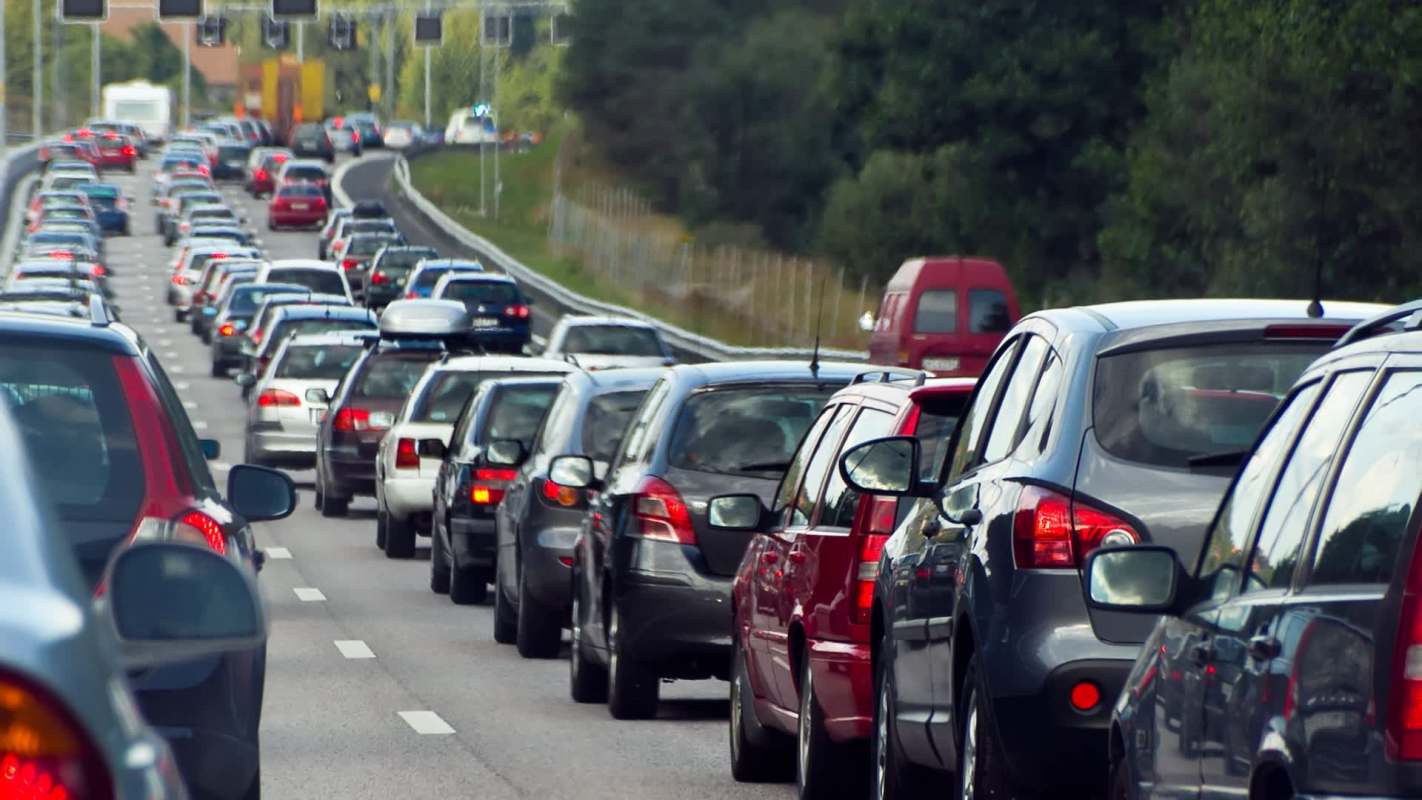
According to UC San Diego Today, researchers from the school have discovered a link between the amount of time spent driving and obesity, heart disease, and diabetes. Urban planner Dr. Lawrence Frank released a 2004 study finding that every additional hour spent in a car increased the risk of obesity, heart disease, and diabetes by 6%, and revisited it again this year. He found that despite the influx of electric vehicles and the cleaner atmosphere that results, the risk hasn't changed.
"You can spend just as much time sitting in an electric vehicle as you can in a gas one," said Frank, professor of urban studies and planning in the UC San Diego School of Social Sciences, per UC San Diego Today. "Every hour in a car will still be a 6% increase in the likelihood of obesity."
Why is this study important?
Studies like Dr. Frank's illustrate the importance of creating more walkable cities and neighborhoods. Reliance on cars as the primary means of travel in cities has long been seen as an environmental issue: the more you drive, the more carbon pollution you put into the atmosphere.
However, this study illustrates that the risk isn't just environmental; the more we drive and rely on driving-centric infrastructure, the greater impact we have on our physical health. Frank also points out that many transportation costs don't factor in the health costs of relying solely on the car.
"We are still driving blind," he said, per UC San Diego Today. "We're acting like these things don't exist, but they're so huge."
This is a big problem in the United States, where many cities have been explicitly designed to cater to cars, although that is slowly beginning to change.
What's being done about this?
Frank hopes that his research will help to drive home to other urban planners that designing cities to be walkable is crucial to human health. Frank and his collaborators are working on tools that put hard numbers on the impact of driving, in the hopes of encouraging people to walk more frequently. Low-income neighborhoods can see the most profound benefits from improvements such as sidewalks, trees, benches, shade, and safe street crossings.
"We've learned exactly how the built environment shapes behavior," Frank said, per UC San Diego Today. "Now it's time to put that knowledge to work – because every mile we walk instead of driving matters."
|
What's the most you'd pay per month to put solar panels on your roof if there was no down payment?
Click your choice to see results and speak your mind. |
 $200 or more 💰
Get TCD's free newsletters for easy tips to save more, waste less, and make smarter choices — and earn up to $5,000 toward clean upgrades in TCD's exclusive Rewards Club.
TCD Picks » Quince Spotlight
💡These best-sellers from Quince deliver affordable, sustainable luxury for all




Cool Picks




