


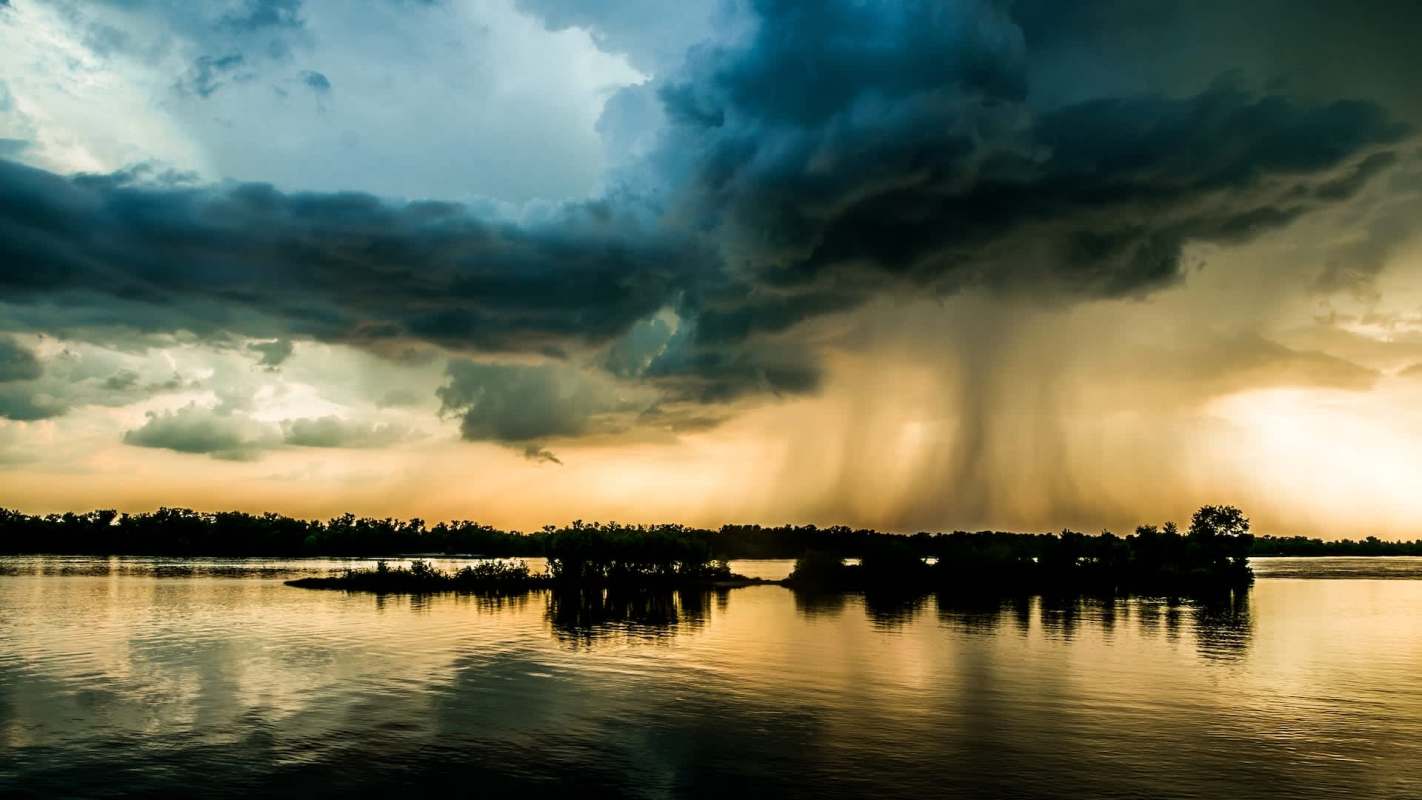
By mid-2025, extreme weather had already caused between $93 billion and $126 billion in damage across the U.S., according to various insurance firms cited by Live Science. That figure has more than doubled the previous record of $57 billion in 2023.
Stephen Strader, a professor of geography and the environment at Villanova University, told Live Science that a "two-headed monster" is the cause of the destruction. Those two heads are rising global temperatures and rapid urban development.
What is the "two-headed monster"?
The "two-headed monster" describes how the warming climate and expanding human development amplify one another. In turn, they cause record-setting disasters due to extreme weather. Live Science reported that rising global temperatures are making storms, floods, and wildfires more intense.
Daniel Swain, a climate scientist at the University of California, Los Angeles, said the U.S. is facing "a one-two or one-two-three punch" of extreme events fueled by unstable wet-dry cycles.
Strader added that the "expanding bull's-eye effect" — destructive expansion of land use — causes worse tornadoes and floods.
"We sort of have this two-headed monster going on in the world, which is our climate is changing; we're having [worse] extreme weather," Strader said.
Why is the 'two-headed monster' important?
The 2020s have already seen 115 billion-dollar disasters. Data from the National Oceanic and Atmospheric Administration cited by the report stated that there were only 33 in the 1980s.
"As long as we continue to warm the planet, we can expect extreme weather to grow more severe and more frequent," Kristina Dahl, vice president for science at Climate Central, said.
Taking local action and promoting collective adaptation helps prevent damage from a lack of preparation during extreme weather events.
For example, New York City raised subway entrances by elevating the sidewalk ventilation grates to prevent flooding in the subway. Similarly, governments across Canada are implementing the use of ham radios to ensure continued communication during extreme weather events.
TCD Picks » Quince Spotlight
💡These best-sellers from Quince deliver affordable, sustainable luxury for all




|
Do you think America does a good job of protecting its natural beauty? Click your choice to see results and speak your mind. |
 Definitely 👍
 How adaptation helps during extreme weather
Experts say updating building codes and taking action to mitigate extreme weather hazards saves lives, improves safety, and supports daily life.
Individuals can do their part by conserving energy, using renewable power, exploring critical climate issues, and supporting local initiatives whenever possible.

Join our free newsletter for good news and useful tips, and don't miss this cool list of easy ways to help yourself while helping the planet.
Cool Picks





