


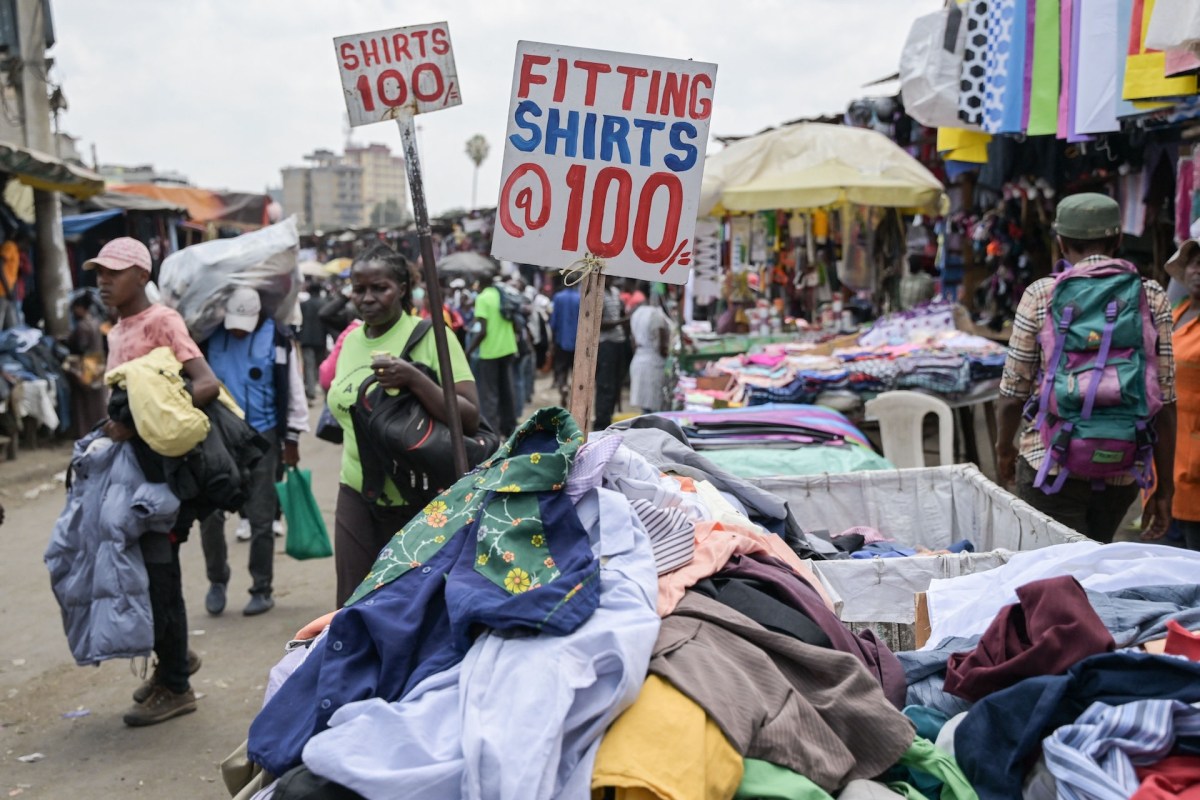
Kenya's decades-old secondhand clothing trade faces a troubling side effect: mountains of textile waste that can't be reused, polluting the environment and threatening public health, according to Le Monde.
What's happening?
Nairobi's Gikomba market — the largest secondhand clothing market in East Africa — relies on hundreds of containers of used clothing that arrive each month through the port of Mombasa.
In 2023 alone, Kenya imported nearly $298 million worth of used clothing, much of it donated or discarded in the U.S., Europe, and China. The trade supports roughly 2 million jobs, from wholesalers and porters to tailors and resellers.
"There's nothing we can do with them," Solomon Njoroge, head of a Kenyan waste-picker association, told Le Monde of the piles of waste at a Nairobi area landfill.
High-quality pieces, called cameras in Swahili, according to Le Monde, are quickly sorted and sold. But a large share of what arrives — especially cheaply made fast fashion — can't be reused. These unsellable garments pile up in dumps and open landfills, where they leach chemicals into soil and clog waterways.
Nonprofits like Africa Collect Textile (ACT) are trying to curb the waste by salvaging fabric to create new products and jobs. Even so, about 40% of imported textiles end up in landfills like Dandora, where thousands of waste pickers work daily amid toxic smoke and unsafe conditions.
Why is this textile waste important?
Discarded textiles pose serious environmental and health risks. Many fast-fashion garments contain plastics and harmful chemicals that don't break down. Open-air burning of these clothes releases hazardous fumes, worsening air quality and causing respiratory illnesses such as asthma among waste pickers.
Fires at Gikomba have destroyed property and, in past incidents, killed people. With an estimated 300 million synthetic garments entering Kenya each year, the environmental toll keeps growing.
What's being done about textile waste?
Local initiatives are offering some hope. ACT turns salvaged textiles into uniforms and other products. Co-founder Elmar Stroomer told Le Monde, "Thanks to the circular economy, we create jobs, preserve traditional crafts and fight textile waste."
Entrepreneurs such as Tatiana Teixeira, founder of AfroWema, are finding creative ways to repurpose denim and other fabrics, proving that old clothes can have new life.
TCD Picks » Quince Spotlight
💡These best-sellers from Quince deliver affordable, sustainable luxury for all




For everyday consumers, shopping secondhand and donating usable clothing can help. Thrifting keeps clothes out of landfills, saves money, and reduces the demand for fast fashion that drives this growing global problem.
|
What should the government do about the fast fashion industry?
Click your choice to see results and speak your mind. |
 Set strict regulations 🚫
Join our free newsletter for good news and useful tips, and don't miss this cool list of easy ways to help yourself while helping the planet.
Cool Picks





