


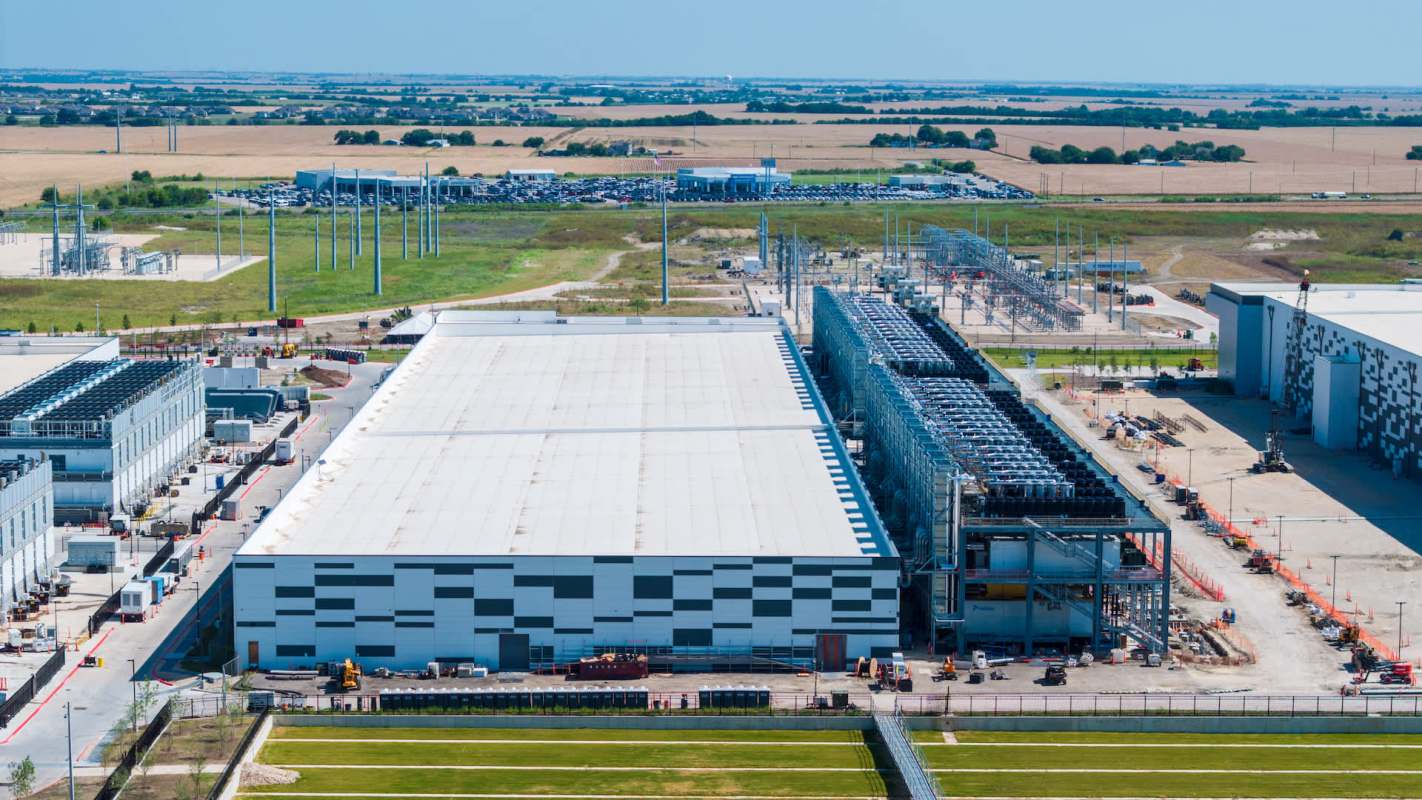
Texas Gov. Greg Abbott has ordered regulators to audit data centers seeking access to the state grid, signaling that even one of the country's most business-friendly states wants more scrutiny before massive new power demands come online.
Quartz reported that the order pauses the first step of the Electric Reliability Council of Texas' revised review system for large power customers.
ERCOT is weighing requests for 474 gigawatts of new demand, more than five times the state's record peak load, and Abbott said about 90% of those requests are from data centers.
Here's what to know
The Texas audit is part of a broader pushback against large-scale data center development across the U.S.
New York became the first state to halt the construction of new hyperscale data centers statewide, and local officials in places ranging from Minneapolis to rural Alabama have also approved temporary slowdowns.
That is especially notable in Texas, which has been one of the most enthusiastic states in attracting AI and tech investment.
TCD Picks » Quince Spotlight
💡These best-sellers from Quince deliver affordable, sustainable luxury for all




By stepping in, state officials are signaling concern that projects without solid preparation could jam the grid interconnection line and leave residents exposed to the costs or consequences.
ERCOT has also cautioned that some demand projections may be inflated, Quartz noted.
In some cases, companies have reserved positions at multiple sites as a hedge, while others appear to have done so before securing financing, land, or a workable electricity strategy.
The audit may not stop the biggest companies from building, but it could help thin out weaker or more speculative proposals that entered the process early and are not ready to move forward.
More background
Opposition to data centers has drawn rare support from across the political spectrum.
Quartz cited Gallup polling indicating that 70% of Americans do not want a data center built in their own area, with nearly half strongly opposed. A separate Data for Progress poll found that 63% of voters support pausing data center construction for at least a year.
Some of that concern is practical.
Massive data centers strain local power systems, consume large amounts of water for cooling, alter landscapes, and leave locals with higher utility bills.
In many places, residents see the AI buildout less as a local benefit and more as an industrial project being imposed on them.
AI and the power grid are innately interlinked.
AI tools can help forecast electricity demand, improve grid operations, and support cleaner energy systems, but the servers behind those tools also require enormous amounts of electricity and water.
As AI expands, communities are weighing its potential benefits against risks including resource strain, security concerns, misuse, and unintended social costs.
Political candidates have started responding to that anxiety.
In June, Rep. Alexandria Ocasio-Cortez introduced the House companion to a federal moratorium bill, saying Washington has "a moral obligation to stand with the American people and stop the expansion of these data centers."
What's being done?
In Texas, the initial step is the audit itself.
Regulators are trying to discern viable projects from ones that may simply be occupying space in the queue without a realistic path to construction.
That kind of filtering could make it easier for regulators to focus on projects that can actually move forward.
Elsewhere, some jurisdictions are slowing development through moratoriums or local pauses while they study land use, utility impacts, and environmental concerns.
In some markets, developers are now required to put down substantial amounts of money before securing a place in the power queue.
Those delays can make projects more expensive by increasing financing costs, threatening land deals, and creating openings for lenders or investors to pull back.
Even so, tighter screening could spare communities the costs of projects that were never likely to happen.
Data center developers are being asked to prove that their projects are worth the tradeoffs. Instead of assuming growth is automatically welcome, regulators and voters are pushing for clearer answers about power use, water demand, local pollution, and who ultimately pays.
The fight over data centers is increasingly about who bears the costs of the AI boom.
Tennessee state Rep. Justin Pearson captured that frustration by calling it "a computer being given more care and concern than a human."

Get TCD's free newsletters for easy tips, smart advice, and a chance to earn $5,000 toward home upgrades. To see more stories like this one, change your Google preferences here.






