


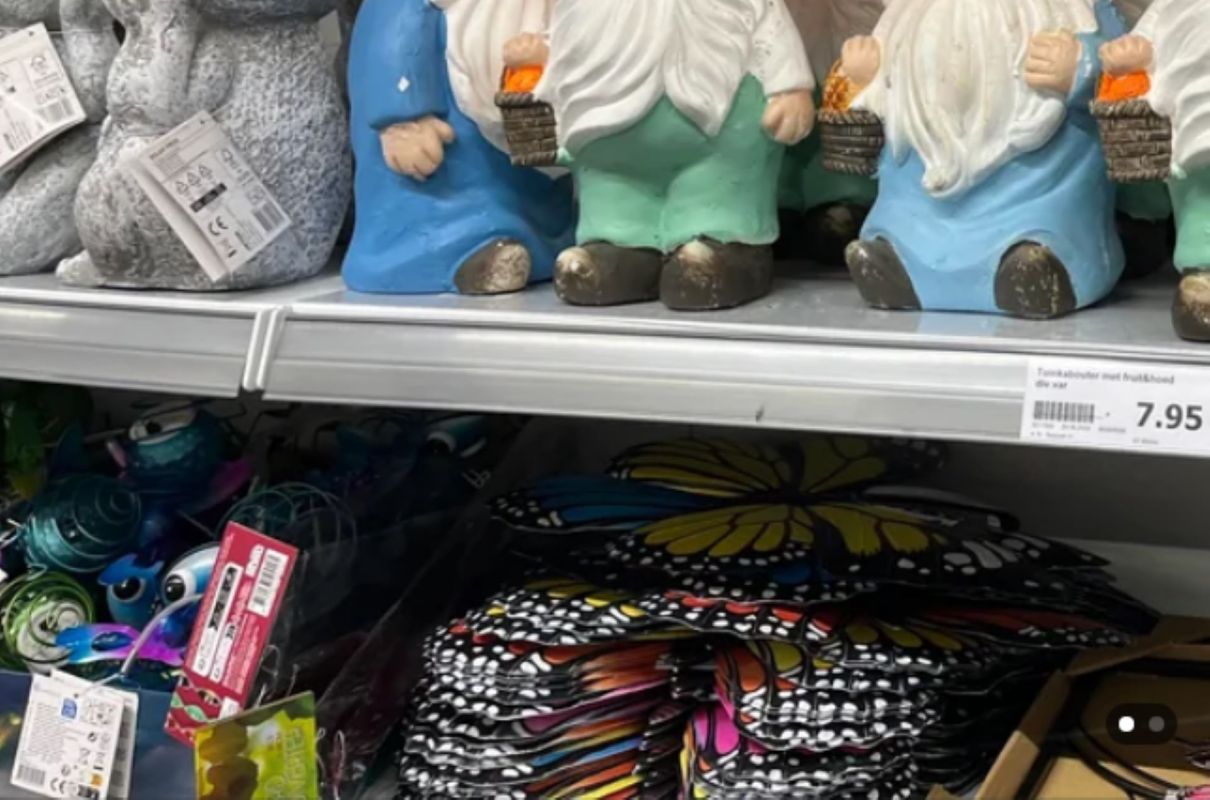
A Reddit user shared a photo of garden gnomes with interchangeable fruit heads with the r/Anticonsumption community.
What's happening?
The photo shows a store shelf stocked with garden gnomes that have removable fruit-shaped heads instead of hats.
Each gnome appears to be priced at 7.95 in the local currency, with a "seizoen" sign above them (Dutch for "season").


"Why?! Who ever needed this in their lives?" the original poster asked. "These are all summer fruits, so you know the people who actually buy these will want to swap them when the seasons change."
One commenter wrote, "It is no real surprise that when you go into a store, shoppers like you will encounter a lot of garbage."
Why is seasonal product waste concerning?
Seasonal decorations create a cycle of consumption and disposal.
When stores stock items designed for specific times of year, they often end up with excess inventory that gets thrown away rather than donated or repurposed.
This pattern creates overflowing landfills and unnecessary resource extraction. Manufacturing these products requires energy, raw materials, and transportation, all of which generate pollution. When seasonal items go unsold, those environmental costs become pointless.
The decorative gnomes are part of a broader problem with how retailers approach seasonal merchandise. Products made to be swapped out multiple times per year encourage shoppers to buy more while creating predictable waste streams each season.
Is the retailer doing anything about this?
While the specific retailer wasn't identified in the post, many stores struggle with seasonal inventory management.
TCD Picks » Quince Spotlight
💡These best-sellers from Quince deliver affordable, sustainable luxury for all




|
What is the biggest reason you don't grow food at home? Click your choice to see results and speak your mind. |
 Not enough time ⏳
 Some retailers donate unsold seasonal items to charities or offer high discounts to clear inventory rather than sending products to landfills.
What's being done about seasonal waste more broadly?
Some retailers sell "seasonless" decorations that work year-round. Others have implemented better inventory tracking systems to avoid over-ordering seasonal items.
Shoppers can help by choosing high-quality decorations that last multiple years rather than trendy items meant for single seasons. Buying secondhand seasonal decor from thrift stores keeps products in circulation longer.
When you do purchase new seasonal items, look for ones made from sustainable materials that can be recycled at the end of their lives.
Community swap events have also gained popularity, which allow neighbors to trade seasonal decorations instead of everyone buying new ones each year.

Join our free newsletter for good news and useful tips, and don't miss this cool list of easy ways to help yourself while helping the planet.
Cool Picks





