


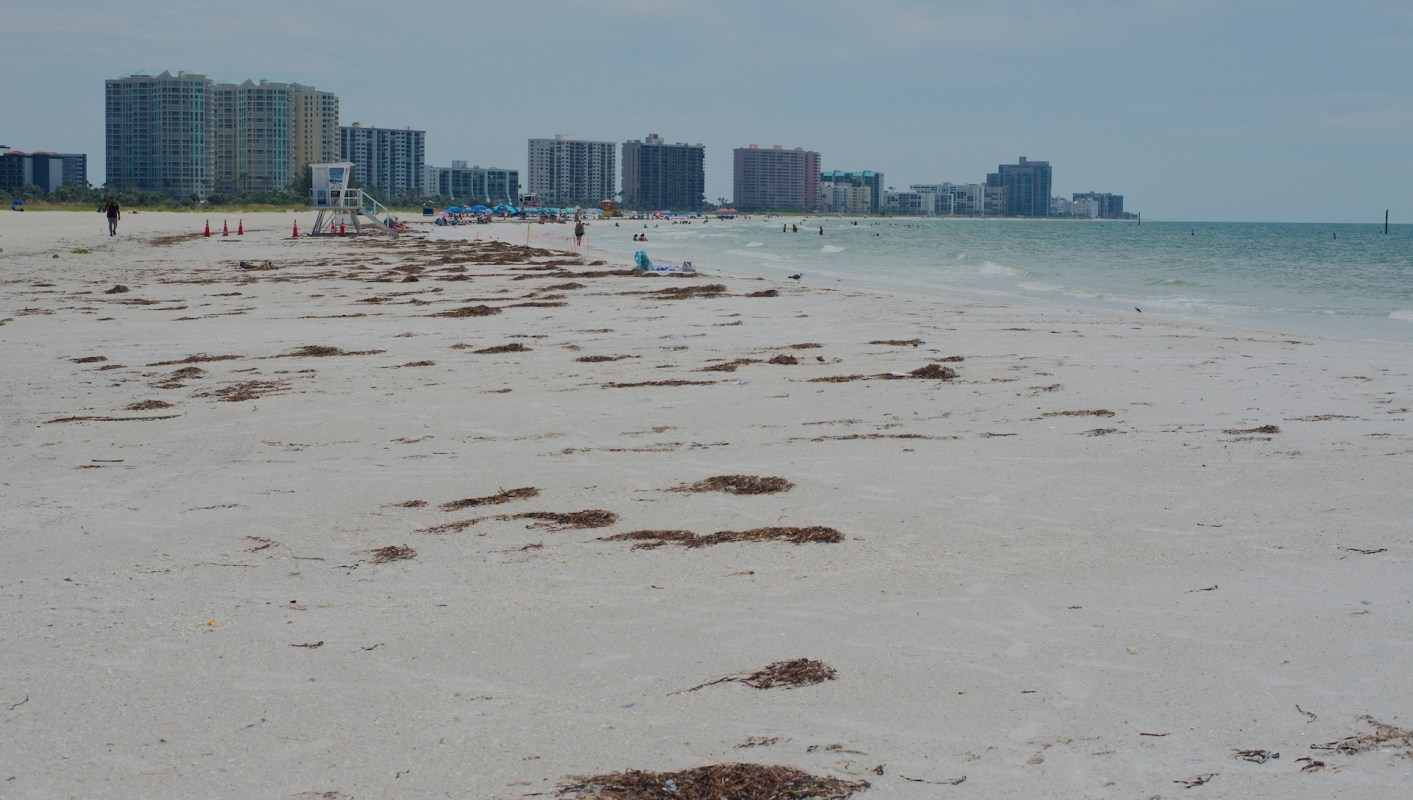
Florida's beaches are bracing for yet another intense sargassum season in 2026, and the economic stakes are high.
A recent scientific study by Woods Hole Oceanographic Institution found that recurring invasions of this brown seaweed may cost the Sunshine State billions of dollars in annual losses, threatening tourism, fishing, and local businesses if trends continue, as Florida Today reported.
What is sargassum?
Sargassum is a type of brown macroalga that naturally floats in the ocean and forms part of the Great Atlantic Sargassum Belt, which stretches thousands of miles across the tropical Atlantic. While sargassum plays an important role in offshore ocean ecosystems, it becomes a serious problem when large mats wash onto beaches.
When sargassum accumulates onshore, it decomposes and releases foul-smelling gases (often compared to rotten eggs), creating noxious odors that repel tourists and can impact respiratory health for residents and visitors alike.
Why does sargassum matter?
The study, published in the journal Harmful Algae, estimates that sargassum events may cost Florida's economy billions of dollars annually, affecting the tourism sector, fishing charters, restaurants, hotels, and other related jobs. Researchers found that the Southeast Florida region, which includes Palm Beach and Miami-Dade counties, experiences the largest losses, totaling more than $10 billion.
This year, the entire state could face $13.5 billion in lost revenue, per the study.
Experts warn that sargassum seasons are starting earlier and lasting longer, expanding the window of impact each year. What used to be a seasonal nuisance is becoming almost year-round pressure on coastal regions, fuelled by ocean conditions, warming waters, and nutrient flows that help algae thrive.
As Florida Today explained, sargassum blooms have worsened and become more frequent in the Caribbean, the Gulf of Mexico, and the tropical Atlantic since 2011. Rising ocean temperatures are bringing more seaweed ashore in Florida than ever before.
"This is really a recent phenomenon," Di Jin, a senior scientist at Woods Hole's Marine Policy Center, and the study's lead author, told the newspaper.
Beyond the economic impacts, sargassum poses health and environmental risks. As it breaks down, it releases hydrogen sulfide gas, which can aggravate asthma and other respiratory conditions. Thick mats can also smother marine habitats like seagrass beds and coral reefs, harming wildlife and biodiversity, as WUSF explained.
TCD Picks » Quince Spotlight
💡These best-sellers from Quince deliver affordable, sustainable luxury for all




|
What's the most you'd pay per month to put solar panels on your roof if there was no down payment?
Click your choice to see results and speak your mind. |
 $200 or more 💰
 What are Florida communities doing about it?
Jin said the study's findings can help governments improve monitoring and forecasting to better control sargassum. The University of Florida IFAS Extension and Florida Sea Grant are also exploring repurposing sargassum for seaweed aquaculture or as compost for landscape soil amendments.
Other Florida communities, like Miami-Dade County, work daily to remove seaweed using specialized tractors equipped with rear-mounted blades or barber rakes for the most severely impacted areas.
But since the main cause of sargassum blooms is a warming climate, the best way to reduce them is to move away from dirty fuels toward cleaner energy. Thankfully, society is well on its way to doing so, and individuals can play their part by making simple changes, such as cutting down on energy use, which also helps lower monthly bills.
Addressing rising temperatures is expensive, but it's far costlier to do nothing. The Climate Policy Initiative estimated the cost of climate inaction at a staggering $1,266 trillion, but it would cost only up to $11.7 trillion per year through 2030 to help stabilize global temperatures.

Get TCD's free newsletters for easy tips to save more, waste less, and make smarter choices — and earn up to $5,000 toward clean upgrades in TCD's exclusive Rewards Club.
Cool Picks




