


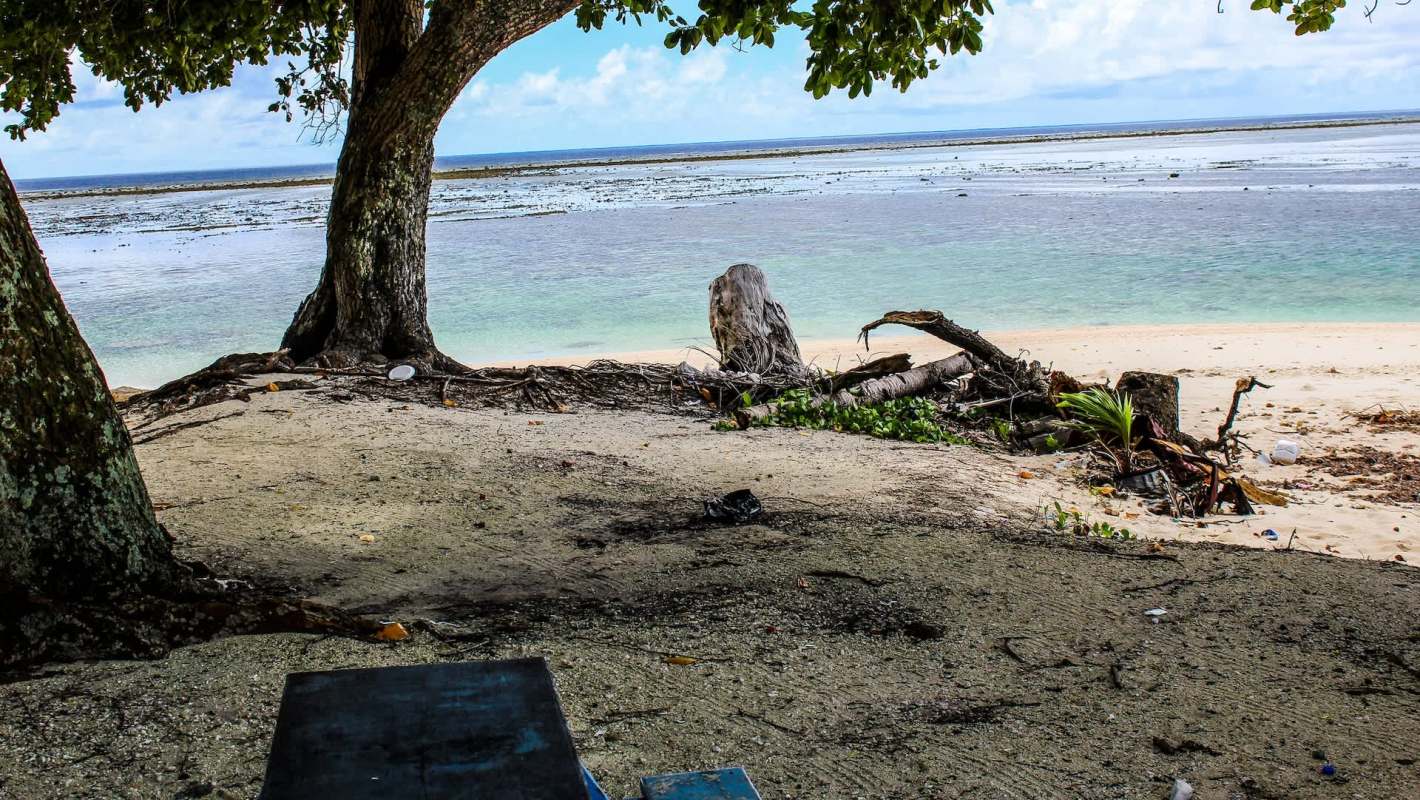
Ocean waters creeping higher each year are approaching a concrete dome filled with atomic remnants that was placed in the Marshall Islands, reported Kyodo News.
What's happening?
The United States tested 67 atomic bombs across the Marshall Islands between 1946 and 1958. After the tests ended, workers tasked with removal collected irradiated soil and rubble from the blast sites.
They dumped all of it into a pit on Runit Island that lacked any liner, then covered it with concrete. This structure, called the Runit Dome, now sits close to advancing waters.
Scientists project that ocean levels could climb roughly 2 meters (6.6 feet) by 2100. For this Pacific nation sitting just above sea level, that means extended periods underwater and beaches disappearing faster than before.
"It's scary, of course, but there's nothing we can do," said Kamje Kaisha, a carpenter who lives in the area, per Kyodo News.
About 100 of Enewetak Atoll's 200 residents have relocated to Majuro, the capital city, or Hawai'i, driven by flood risks and the need for better medical care.
Why is the nuclear and climate collision concerning?
Sen. Jack Ading of Enewetak has voiced concerns that radioactive material has been seeping into nearby waters for decades, with the dome lacking a liner beneath its base.
A 2024 report from the U.S. Department of Energy stated that any contact with radioactive material would stay minimal, posing no risk to public health, even if the dome crumbles by 2090. Local leaders are skeptical.
When the most recent United Nations Climate Change Conference convened in Brazil, Marshall Islands officials tied their nuclear burden to questions about who should bear responsibility for planetary warming. The U.S., which ranks second globally in carbon pollution, did not attend.
Nuclear energy carries both promise and peril. Atomic power plants generate large amounts of electricity with minimal carbon output. But waste storage, accident risks, high construction costs, and ties to weapons production make it a complicated part of the clean energy puzzle.
TCD Picks » Quince Spotlight
💡These best-sellers from Quince deliver affordable, sustainable luxury for all




|
Would you feel safe living close to a nuclear power plant? Click your choice to see results and speak your mind. |
 Absolutely ✅
 Kenneth Kedi, director of the Marshall Islands Nuclear Institute, said his country faces two connected crises. "There is no seawall in the middle of the ocean [that can prevent a nuclear hazard from spreading]," he warned, per Kyodo News.
What can I do about rising seas?
If you want to support communities like the Marshall Islands, shrinking your carbon footprint helps. If your utility offers it, switch to renewable energy. Cut back on air travel when possible. Choose plant-based meals more often.
Contact your elected officials to share your support for climate agreements that hold polluters accountable. Support organizations that advocate for the well-being of Pacific Island nations.

Get TCD's free newsletters for easy tips to save more, waste less, and make smarter choices — and earn up to $5,000 toward clean upgrades in TCD's exclusive Rewards Club.
Cool Picks





