


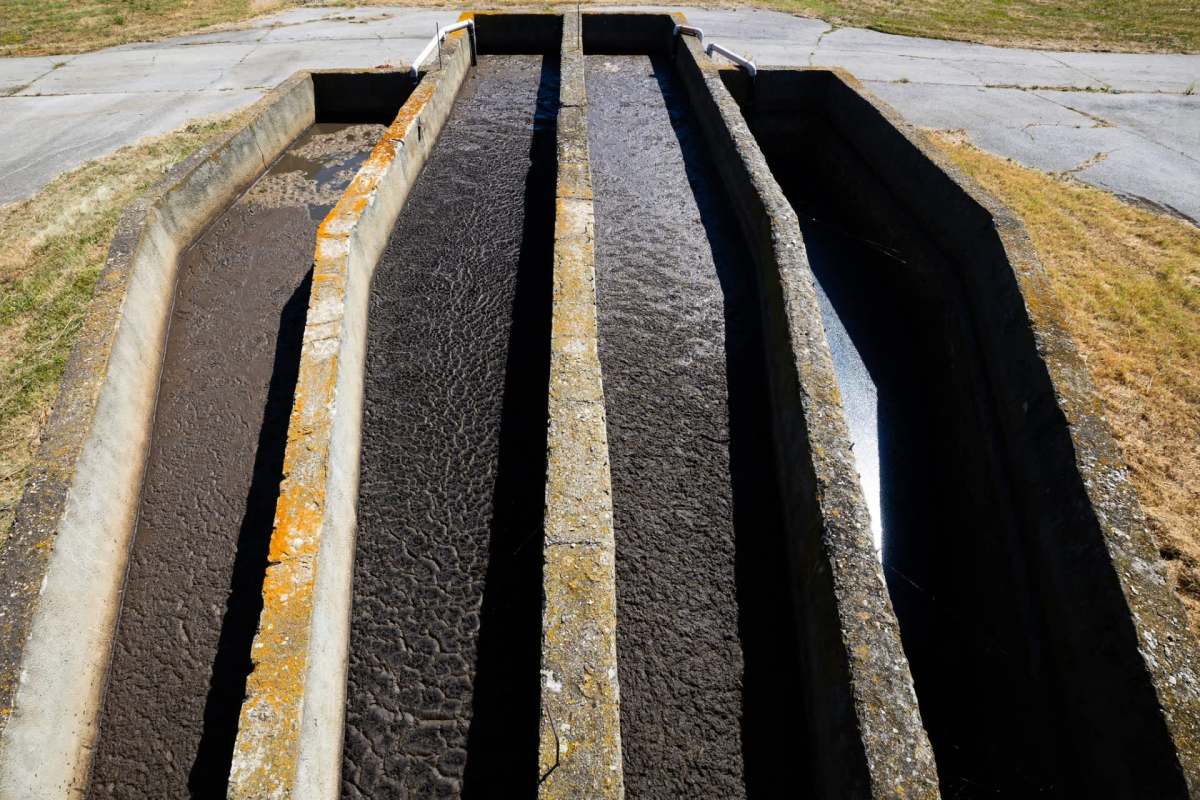
Some federal lawmakers are trying to shut down long-awaited regulations meant to protect farmers from toxic chemicals in sewage sludge used as fertilizer.
What's happening?
According to 2022 reporting from the Maine Monitor, the spreading of municipal and industrial sludge on farms and in forests originated as a plan to dispose of waste while also fertilizing lands at a low cost by reusing nitrogen-rich organic matter.
The practice has had its champions and its detractors — researchers at Cornell University, for example, encouraged New York to permanently ban agricultural sludge-spreading due to concerns over toxicity in 1981. In 1993, the United States Environmental Protection Agency finalized regulations for the land application of biosolids, which included some pathogen reduction and pollution limit requirements.
At the tail end of the Biden administration in mid-January 2025, the EPA proposed a new risk threshold, specifically regarding risks to farmers' health, for two "forever chemicals" now commonly found in the sludge. The proposed limit was just 1 part per billion of PFOS or PFOA — two kinds of per- and polyfluoroalkyl substances, also known as PFAS or "forever chemicals" for their persistence in environments and human bodies.
If the EPA's proposal were to be finalized, most sludge would no longer be approved as fertilizer, according to Inside Climate News, since that level is rarely met in real-world sludge applications. But before the limits could move forward, Republicans in the House added a rider to H.R. 4754 — an appropriations, or spending, bill — that would cut off funding to finalize or enforce them.
The rider appeared shortly after a June meeting between EPA officials and a trade group representing large sludge producers, Inside Climate News reported in July.
The bill itself won't be voted on by the full House until September at the earliest.
Why is PFAS-contaminated sludge a problem?
Close to 60 percent of the nation's sewage sludge is spread over farmland, according to Inside Climate News. While treated for pathogens, the sludge often contains high levels of PFAS — toxic chemicals linked to cancers, reproductive issues, and other serious health problems.
The Guardian reported in 2022 that some farmers have already seen their lands contaminated and livelihoods collapse, quoting one who said, "I don't know how we're going to survive."
These chemicals don't stay put either. They can move through soil, water, food, and livestock.
TCD Picks » Quince Spotlight
💡These best-sellers from Quince deliver affordable, sustainable luxury for all




|
Do you worry about having toxic forever chemicals in your home?
Click your choice to see results and speak your mind. |
 Majorly 😥
 Christy McGillivray, who recently worked on sludge issues with the Sierra Club Michigan, told Inside Climate News, "This just fits into the pattern of the Trump administration sticking its head in the sand and disregarding science."
U.S. Representative Chellie Pingree of Maine, formerly a farmer herself, said in a statement that farmers in her state, a notable site of the agricultural PFAS crisis, "have lost their entire livelihoods and their farms."
What's being done about it?
Public health advocates and some lawmakers are working to stop the rider from going through, saying it clashes with the Clean Water Act. The full House won't vote on H.R. 4754 until September at the earliest, so there's still time for residents to reach out to their elected officials with thoughts about the rider.
Separately, $15 million in funding for research into PFAS contamination on U.S. farmlands has recently been cut by the Trump administration.
But it's also worth noting that PFAS problems aren't limited to fertilizer or farms. Researchers have found these chemicals in a wide range of household products, including non-stick cookware, stain-resistant furniture, waterproof clothing, and food packaging.
Individuals can mitigate their exposure through purchasing choices, and the more consumers and policymakers push back, the more pressure may build to clean up wide-scale contamination from food systems and water sources — and prevent it in the first place.

Join our free newsletter for good news and useful tips, and don't miss this cool list of easy ways to help yourself while helping the planet.
Cool Picks






