


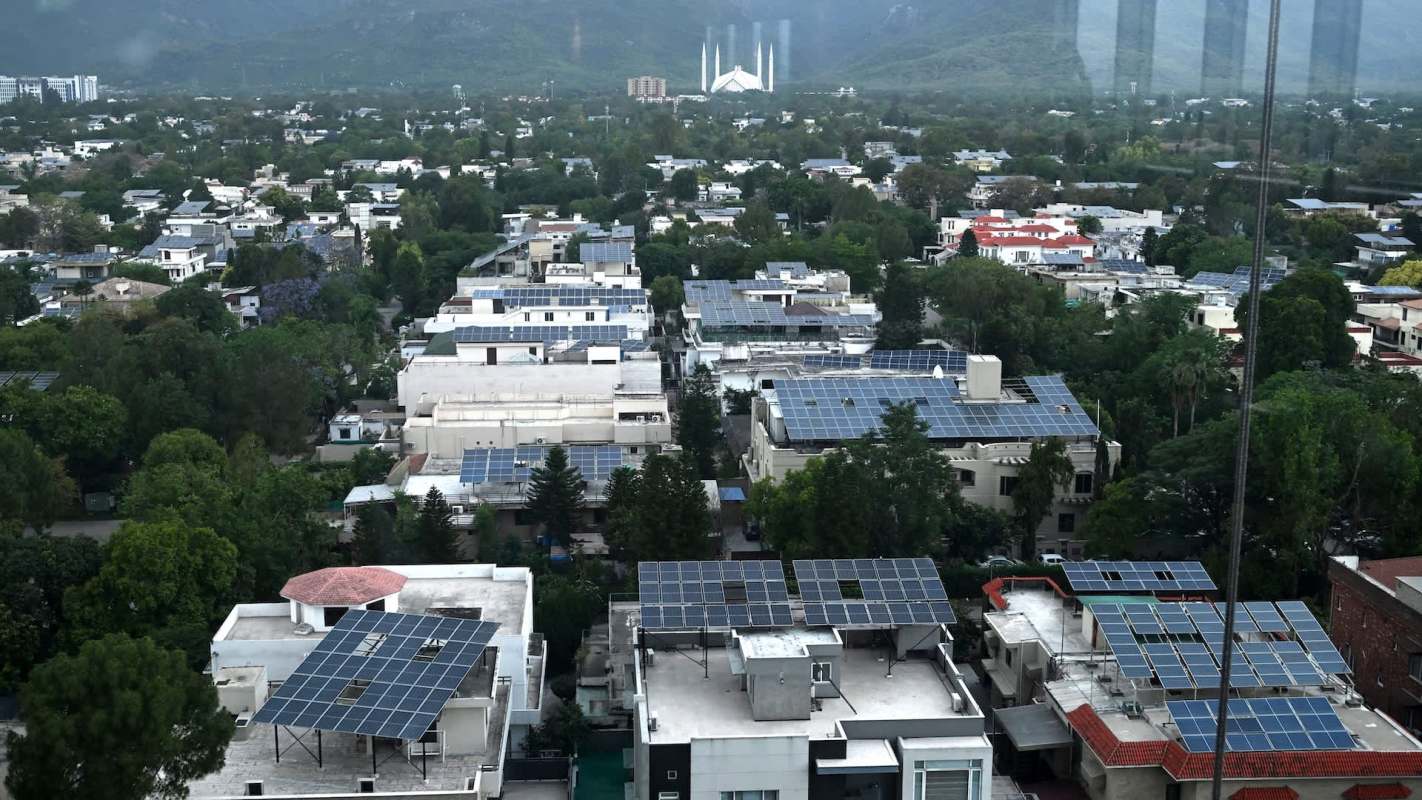
Pakistan's rooftop solar surge is doing more than lowering electricity bills. Analysis suggests it is also helping shield the country from major energy-market turmoil tied to disruptions around the Strait of Hormuz.
That consumer-driven buildout has already helped Pakistan avoid billions in fuel imports, and researchers say the savings could continue to increase this year.
As reported in Dawn, an analysis by Renewables First and the Centre for Research on Energy and Clean Air says Pakistan's fast-growing solar sector has reduced the country's exposure to oil- and gas-price shocks stemming from turmoil in the Middle East.
The analysis found Pakistan has sidestepped more than $12 billion in oil and gas imports since 2018. Using this year's expected market prices, researchers estimated that the country "could save a further $6.3 billion by the end of the year." The shift has been driven more by rooftop solar panels installed on homes, farms, and factories than by a top-down national buildout.
This analysis reports how much individuals adopting clean energy can impact national conversations around energy stability. When upgrading homes to solar, residents can see major savings on annual bills and help support aging and fragile energy grids.
To see how much you can save on electricity with solar, connect with the experts at EnergySage. EnergySage has free tools to get quick solar installation estimates from trusted local partners.
The report credited market demand and a government "zero-rated tax regime on solar PV imports" with helping imports rise from less than 1 gigawatt in 2018 to above 51 gigawatts by early 2026, Dawn noted.
Pakistan still relies heavily on fuel shipments that pass through Hormuz and ranks highly worldwide for dependence on both liquefied natural gas and oil moving through the strait. However, researchers said that reliance is falling as solar power reduces pressure on the grid and cuts the need for imported gas.
Save $10,000 on solar panels without even sharing your phone number Want to go solar but not sure who to trust? EnergySage has your back with free and transparent quotes from fully vetted providers that can help you save as much as $10k on installation. To get started, just answer a few questions about your home — no phone number required. Within a day or two, EnergySage will email you the best local options for your needs, and their expert advisers can help you compare quotes and pick a winner. |

This is a major reminder that clean energy can strengthen energy security as well as reduce pollution.
In Pakistan's case, rooftop solar has helped soften the impact of international supply disruptions that can quickly raise costs for households, businesses, and governments.
The analysis found that without this solar growth, officials may have needed to consider load shedding and other restrictions during peak demand. Instead, distributed solar is helping keep power flowing while reducing costly fuel imports.
That matters far beyond one country. When households and businesses generate more of their own electricity, they become less vulnerable to global fuel bottlenecks, geopolitical flare-ups, and utility price spikes.
More From EnergySage
💡Go deep on the latest news and trends shaping the residential solar landscape


For everyday people, that can mean more stable energy access, lower monthly bills, and less dependence on volatile fossil fuel markets.
If you're curious about a solar panel upgrade, connect with EnergySage experts to save up to $10,000 on installation and purchase costs.
EnergySage even has a helpful map to show you the average cost of solar in your area, as well as local rebates, ensuring you lock in the best price possible for your clean energy upgrade.
Homeowners looking to avoid frustrating blackouts, get off the grid, or save more on energy costs by dodging peak rates usually pair solar panels with battery backups.
To find the best system for your home and budget, check out EnergySage's free resources on backup batteries.

Get TCD's free newsletters for easy tips, smart advice, and a chance to earn $5,000 toward home upgrades. To see more stories like this one, change your Google preferences here.






