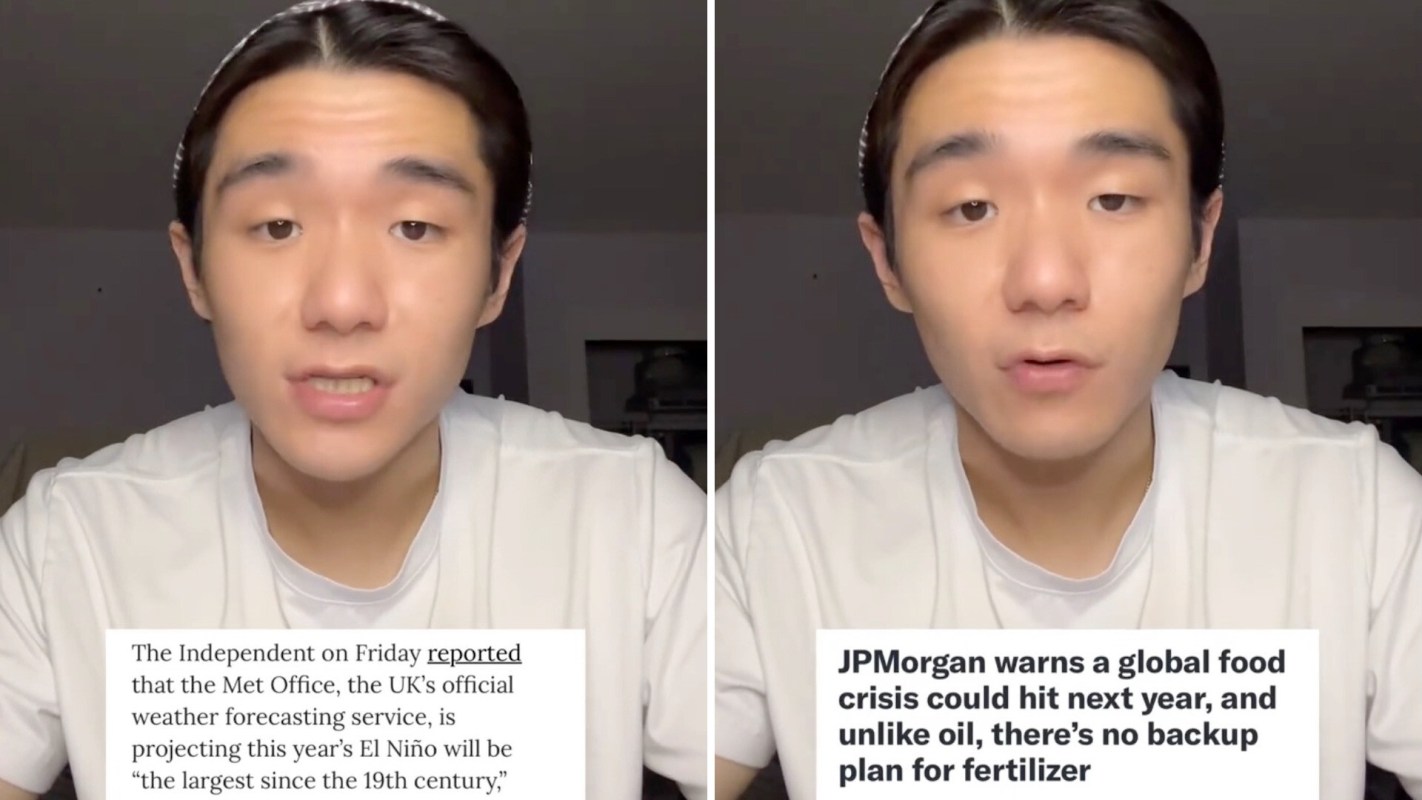
A BIS Oxford Economics projection suggests global food prices could rise by 12% by the end of 2026 and another 5% in 2027 — a potential double blow for households already worried about grocery inflation.
Here's what to know
In a TikTok video, Darren Francis News (@darrenfrancisnews) said the forecast reflects several risks hitting the food system at once. He pointed to harvest damage from droughts and heat waves in Europe, rising grain prices tied to the war in Ukraine, and fertilizer and natural gas shortages linked to the closure of the Strait of Hormuz.
@darrenfrancisnews 8/25: A study from BIS Oxford Economics just projected that Global Food Prices would rise 12% by the end of 2026, and another 5% for 2027. This comes just 1 week after JPMorgans warning of a Global Food Crisis. #foodshortage #economiccrisis #breakingnews #economy #inflation ♬ original sound - Darren Francis News💡
The creator described the situation as pressure coming from every direction, saying, "We seriously have the perfect storm for a food crisis, as farmers and harvest are just getting hit from every possible side."
He also said an unusually severe El Niño could add more strain by bringing drought to some regions and storms to others, further threatening harvests worldwide.
The post framed the projection as the latest in a series of warnings, noting that a JPMorgan analyst had also raised concerns about a possible global food crisis.
One commenter wrote, "It is more expensive because there is less food. The big message is not the price, it is the millions of people who will starve to death."
TCD Picks » Quince Spotlight
💡These best-sellers from Quince deliver affordable, sustainable luxury for all




More background
Food-price projections affect far more than restaurant tabs or a few pricier pantry staples. When the costs of grain, fertilizer, fuel, and shipping rise simultaneously, the increases can ripple through the food chain, raising expenses for farmers, manufacturers, distributors, and grocery stores.
Extreme weather can make those pressures even harder to manage. Droughts can shrink harvests, heat waves can damage crops, and storms can disrupt transportation, all while global supply chains contend with conflict and energy-market volatility.
That combination can be especially hard on families with tight budgets, since food is one of the most difficult household costs to cut. Even if jumps in global commodity prices do not translate directly to store shelves, repeated disruptions can still drive up staples such as bread, produce, and animal-protein products.
One commenter asked, "So what do I invest in? Farming? Harvesting? Fertilizer? Grain? Water?!"
What can be done?
No individual shopper can fix global food markets, but there are practical ways to blunt the impact of higher grocery costs at home. Planning meals ahead, using leftovers, freezing food before it spoils, and cutting down on food waste can help stretch a budget when prices rise.
Flexibility can also help. Swapping in seasonal produce, choosing store brands, buying shelf-stable basics when they are discounted, and adjusting meals around lower-cost ingredients can reduce the hit from sudden price spikes.
At a broader level, stability depends on making food systems less vulnerable to war, fuel shocks, and extreme weather. That can include more resilient farming practices, better water management, and supply chains that are better equipped to handle disruptions without passing every added cost directly to consumers.
Forecasts are not guarantees.
As the creator put it: "Fair to say things are about to get real rough."

Get TCD's free newsletters for easy tips, smart advice, and a chance to earn $5,000 toward home upgrades. To see more stories like this one, change your Google preferences here.