


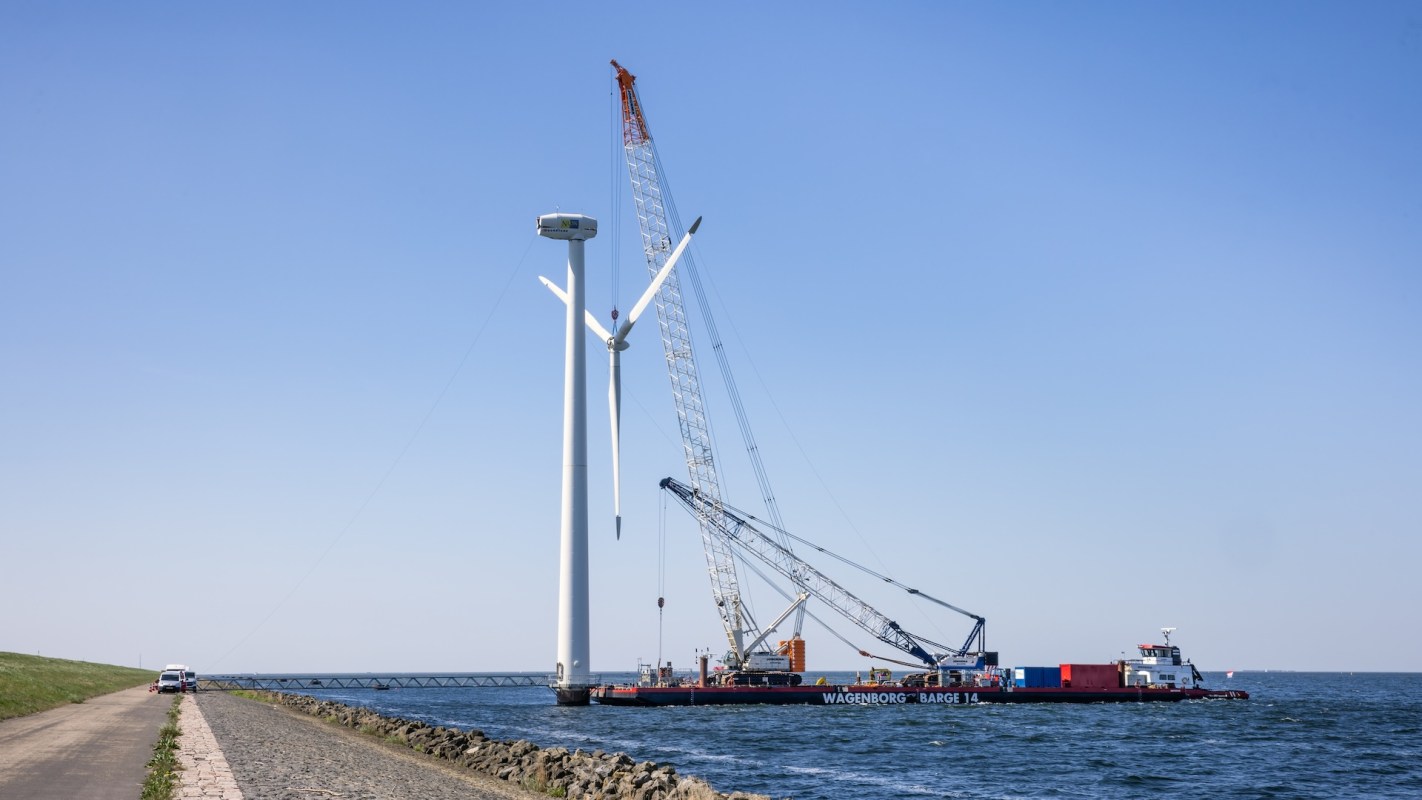
Offshore wind in the United States is running into a major political roadblock just as the industry was beginning to gain real momentum.
According to the Associated Press, the federal government has moved to halt or slow multiple projects off the East Coast, a shift that could weaken clean energy growth, threaten jobs, and limit future electricity savings for households even as China and Europe swiftly expand their own offshore wind industries.
What's happening?
The U.S. offshore wind industry is still relatively small, but it had been positioned for major growth.
The country has three operating offshore wind farms, with three additional projects already sending electricity to the grid while still undergoing construction or testing.
But the Trump administration has been buying back some of the more than 40 federal offshore wind leases issued, effectively paying developers to walk away from projects.
It also ordered work to stop in December on five East Coast developments — Vineyard Wind in Massachusetts, Revolution Wind in Rhode Island, Coastal Virginia Offshore Wind, Empire Wind, and Sunrise Wind — citing national security concerns.
TCD Picks » Quince Spotlight
💡These best-sellers from Quince deliver affordable, sustainable luxury for all




Developers and states challenged the order in court, and federal judges later allowed all five projects to continue after determining the government had not demonstrated an immediate enough threat to justify halting construction.
Globally, however, offshore wind continues to expand rapidly.
According to the Global Wind Energy Council, offshore wind was operating across 19 countries and markets in 2025, with China leading by a wide margin.
China installed 6.6 gigawatts of new offshore wind capacity that year, bringing its total to 48.4 gigawatts.
Worldwide, roughly 9.3 gigawatts were added in 2025 alone — enough electricity to power the equivalent of 10.2 million homes.
Looking ahead, GWEC projects China will account for roughly 56% of new offshore wind capacity added globally between 2026 and 2030, while the European Union is expected to make up 29%.
The U.S., by comparison, is projected to contribute just 5%.
Why is offshore wind important?
Offshore wind can generate large amounts of electricity without burning coal, oil, or gas. As electricity demand rises, renewable energy sources like offshore wind could help provide power without adding more air pollution.
The industry also carries major economic implications for coastal states.
The offshore wind sector supports around 18,000 jobs in the U.S.
According to Oceantic Network, the industry has already driven $25.5 billion in domestic investment tied to ports, shipbuilding, steel, transmission upgrades, workforce training, and research.
More than 1,000 U.S. companies across at least 40 states are now involved in the supply chain.
If projects are canceled, the losses could be substantial. Analysts estimate that canceling a single 1-gigawatt Northeast offshore wind project could erase nearly $10 billion in economic activity, largely through lost jobs and investment.
Consumers could also lose out on long-term energy savings.
Vineyard Wind, for example, is projected to lower Massachusetts electricity bills by roughly $1.4 billion over 20 years.
The 800-megawatt project is expected to power about 400,000 homes, while Coastal Virginia Offshore Wind could serve up to 660,000 homes.
What's being done about offshore wind?
Despite the federal setbacks, offshore wind development is still moving.
Court rulings have allowed the five contested East Coast projects to continue, and developers and states are still pushing toward completion.
Outside the U.S., meanwhile, countries such as China and the United Kingdom continue to expand aggressively.

Get TCD's free newsletters for easy tips, smart advice, and a chance to earn $5,000 toward home upgrades. To see more stories like this one, change your Google preferences here.






