


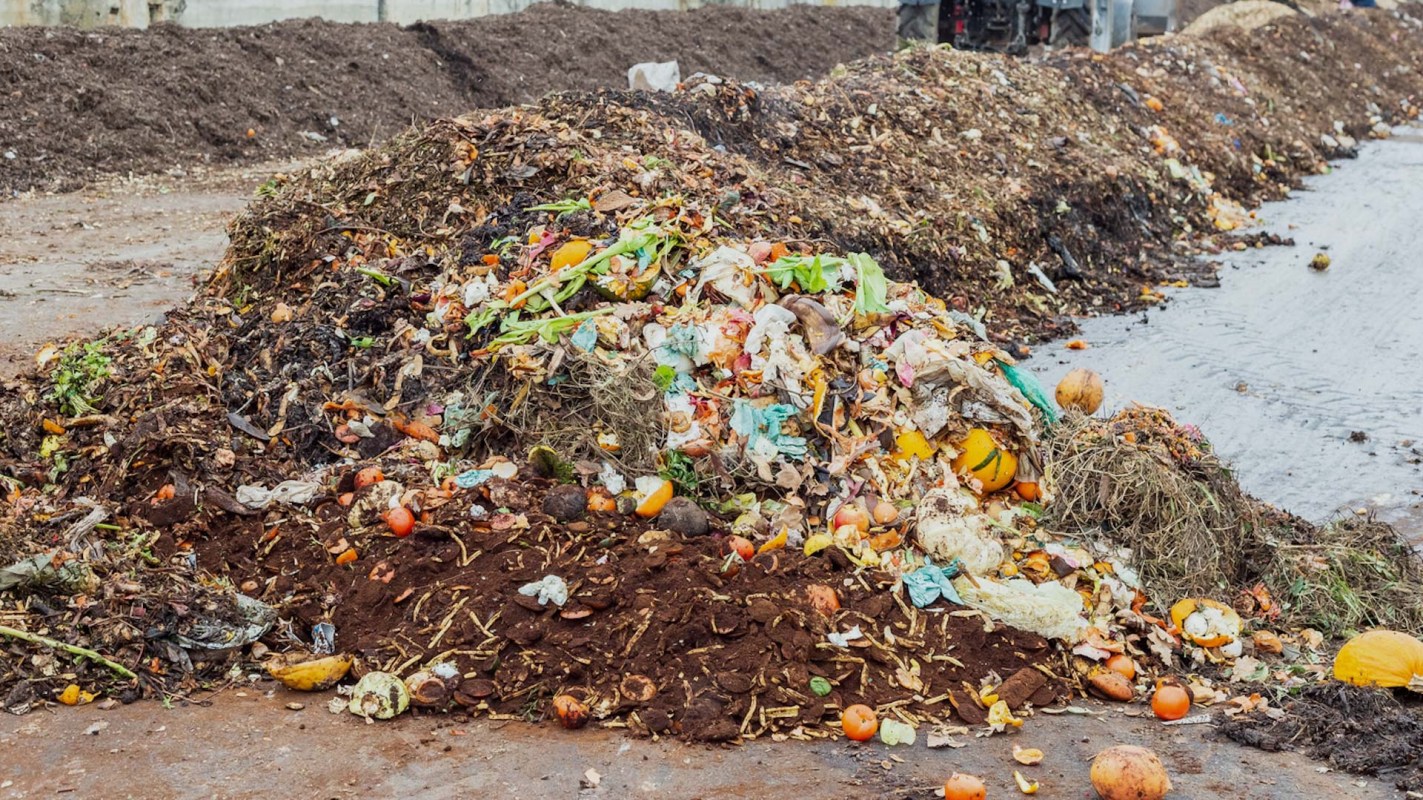
New York City has long been nicknamed "the Big Apple," so it's fitting that the metropolis found a way to turn food waste like fruit scraps into "black gold."
On Thursday, Reuters profiled a "surprisingly valuable" initiative unfolding in a Staten Island waste processing plant.
How New York turns millions of pounds of food waste into compost 'black gold'
— GMA Integrated News (@gmanews) September 11, 2025
Click the photo to read more: https://t.co/lxIU8Lc2DX
When people think about New York City, they tend to picture Manhattan. However, the City is comprised of five boroughs in total: the Bronx, Brooklyn, Manhattan, Queens, and Staten Island.
Not only is that a broader area of densely populated neighborhoods, but the City's nearly 8.5 million residents and attendant commercial enterprises, including innumerable restaurants, produce a massive, "absurd" amount of waste daily.
According to a March 2024 New York Times article, residents and businesses combined generated approximately 44 million pounds (22,000 tons) of trash on average each day. Of this, 22 million pounds come from households, and 20 million pounds come from businesses.
The Staten Island Compost Facility has long accepted organic material from City landscapers, but now also takes food scraps from residents. On average, the facility collects between 100 and 150 tons of organic waste like food, closer to 250 tons when landscapers are busy.
Food waste is a problem on many levels. In addition to food going uneaten, wasted food generates pollution at the production stage, during distribution, and in waste management.
The negative impacts don't end there. According to the Environmental Protection Agency, food waste accounts for roughly a quarter of all landfilled waste and is responsible for approximately 58% of unintentional methane pollution as it decomposes alongside other waste.
Jennifer McDonnell, deputy commissioner for solid waste management at the New York City Department of Sanitation, explained the City's proactive approach to food waste.
"We're making this awesome compost that we can use throughout the city and improve soil health," McDonell told Reuters. In the facility, organic matter like food waste is separated from other trash, retained, and heated to "over 100 degrees Fahrenheit" for compost.
TCD Picks » Quince Spotlight
💡These best-sellers from Quince deliver affordable, sustainable luxury for all




|
If you compost your food scraps, what's your primary motivation? Click your choice to see results and speak your mind. |
 Improving my garden's soil 🌱
 At the end of the process, food waste isn't damaging the environment by releasing methane. Instead, the City is left with compost, which is sold to businesses or distributed to residents.
"We've given out, we think, almost 6 million pounds of compost to the residents of New York City this year," McDonnell told Reuters of the successful initiative.
Although food waste is a multipronged problem, there are steps anyone can take to limit the amount they personally generate.
Strategic supermarket shopping and diligent food storage are practices that help reduce household food waste. Getting creative with leftovers is a fun way to minimize it further.

Join our free newsletter for good news and useful tips, and don't miss this cool list of easy ways to help yourself while helping the planet.
Cool Picks




