


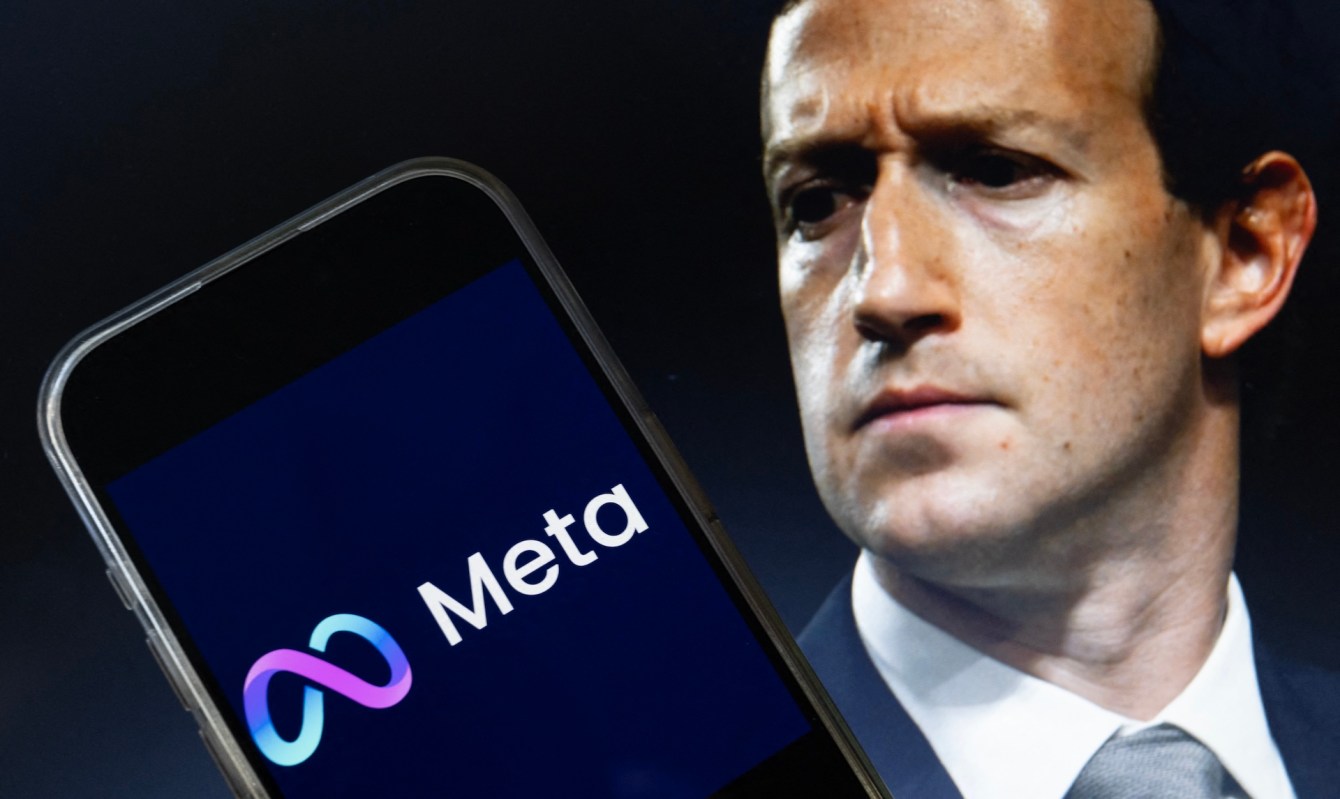
After years of hype and tens of billions of dollars in spending, Mark Zuckerberg's vision for the metaverse appears to be drawing to a close.
Meta has scaled back its once-ambitious plans for a fully immersive virtual world, signaling a major shift in strategy, The New York Times reported.
This week, the company announced it would stop adding new virtual reality experiences to its flagship platform, Horizon Worlds. While some features will remain, the original version of a fully built-out metaverse is no longer moving forward.
The move marks a dramatic turn for a project that has cost an estimated $80 billion since 2021.
At the time, Zuckerberg championed the metaverse as the next evolution of the internet — a digital realm where people could work, socialize, and even replace daily commutes with virtual interactions.
"Teleporting around the metaverse is going to be like clicking a link on the internet," Zuckerberg said in a 2021 interview. "Dropping our daily commutes will mean less time stuck in traffic and more time doing things that matter. And it'll be good for the environment."
Yet public adoption fell short of expectations. Despite substantial investment, virtual reality remained a niche interest, with platforms such as Roblox and Fortnite continuing to dominate digital social spaces without the need for headsets.
"They glommed on to the term 'metaverse' without really understanding the concept," Wagner James Au, author of "Making a Metaverse That Matters," per the Times. "Their efforts on their metaverse strategy seemed completely indifferent to what previous platforms had learned."
Now, Meta is pivoting sharply toward artificial intelligence. The company plans to spend over $115 billion this year, largely on AI infrastructure — including massive data centers needed to power increasingly advanced systems.
This shift carries real-world consequences. AI requires enormous amounts of energy, and the rapid expansion of data centers is driving a surge in global electricity demand.
TCD Picks » Quince Spotlight
💡These best-sellers from Quince deliver affordable, sustainable luxury for all




|
Which of these savings plans for rooftop solar panels would be most appealing for you?
Click your choice to see results and earn rewards to spend on home upgrades. |
 Save $1,000 this year 💸
 Still, Meta isn't abandoning immersive technology entirely. The company continues to invest in augmented reality glasses and maintains select VR offerings. But its messaging has noticeably changed.
"Sometimes, we knock it out of the park," Samantha Ryan, the vice president of content at Meta's Reality Labs division, wrote in a recent blog post. "Other times, we get things wrong. And when we do, we look at the data, take in feedback, make decisive adjustments to our business strategy, and keep building."

Get TCD's free newsletters for easy tips to save more, waste less, and make smarter choices — and earn up to $5,000 toward clean upgrades in TCD's exclusive Rewards Club.
Cool Picks





