


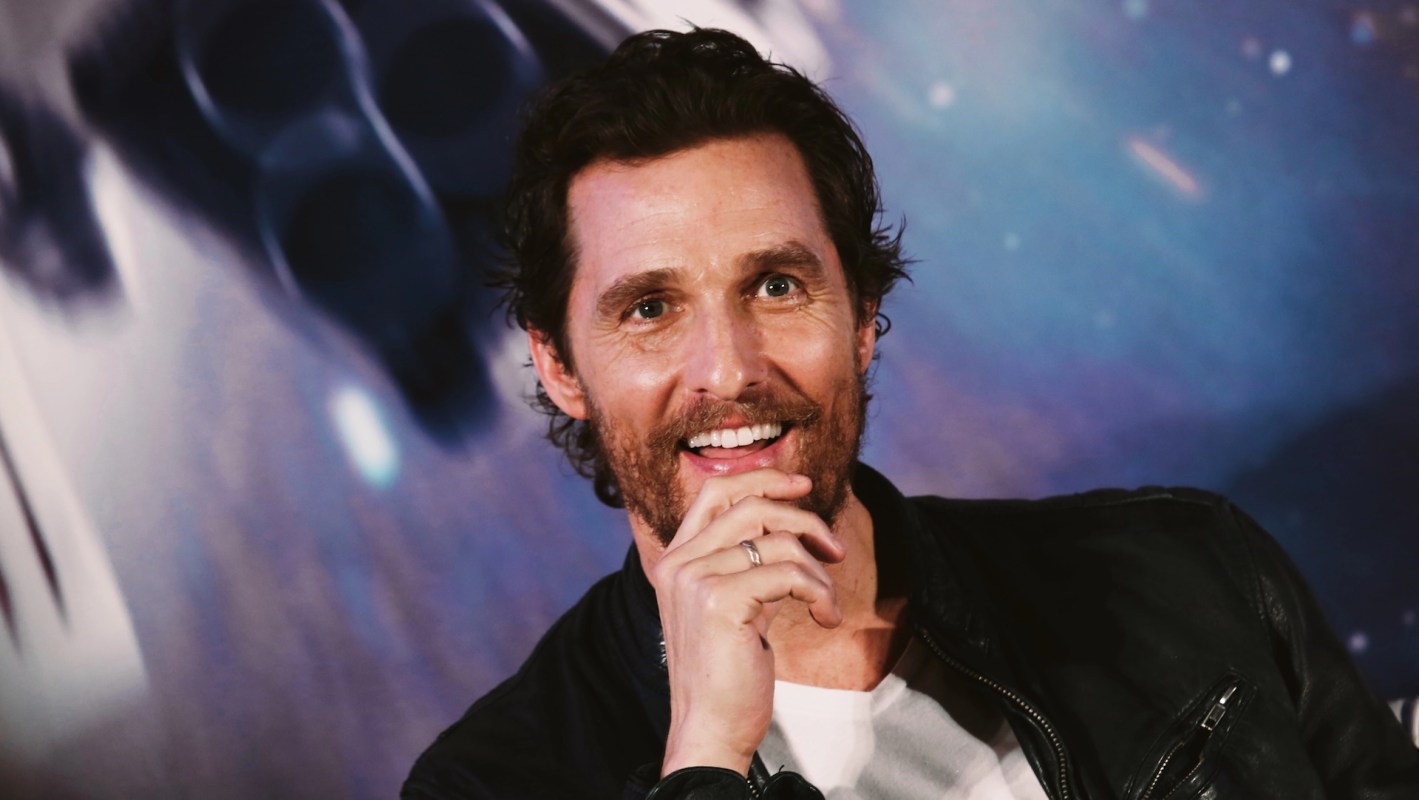
Actor Matthew McConaughey isn't waiting for the legal framework of intellectual property to catch up with the artificial intelligence boom, according to the Wall Street Journal.
Given its ubiquity in daily life, it's easy to forget that modern generative AI tools have only been around for a few years; ChatGPT was introduced in November 2022.
By the same token, it's stunning how rapidly this new technology has disrupted core aspects of daily life. AI has inflicted chaos in schools and worsened an already difficult job market, but few industries have been hit as hard by its ascent as creative ones.
Writers, artists, filmmakers, and actors have taken issue with AI from the outset, starting with the alleged use of copyrighted materials to "train" tools such as large language models, or LLMs.
Director Guillermo del Toro bluntly said he'd "rather die" than use AI in the filmmaking process, and actor Morgan Freeman expressed frustration with AI rip-offs of his inimitable, iconic voice.
"I'm a little PO'd, you know … I get paid for doing stuff like that, so if you're gonna do it without me, you're robbing me," he griped in a November interview with Entertainment Weekly.
Freeman's position was eminently reasonable, as his voice and likeness are irrevocably tied to his income — and that doesn't even get into the rapidly escalating problem of deepfakes.
In 2019, the American Bar Association warned that the danger of deepfakes, often used for scams or to spread disinformation, was "more frightening than Photoshop on steroids." Broadly, AI regulation is also in its infancy, leaving artists with scant legal precedent for recourse.
Like Freeman, McConaughey has one of the most distinctive and oft-imitated voices in Hollywood. In particular, his perennially viral line from the 1993 film Dazed and Confused — "alright, alright, alright" — was constantly remixed and used before AI entered the picture.
Freeman alluded to using his attorneys to deal with AI imitations, and according to the Journal, McConaughey had "a novel legal approach" in that regard: trademarking himself.
TCD Picks » Quince Spotlight
💡These best-sellers from Quince deliver affordable, sustainable luxury for all




|
Do you worry about companies having too much of your personal data? Click your choice to see results and speak your mind. |
 Absolutely 👍
 In recent months, McConaughey has secured no fewer than eight approved applications with the U.S. Patent and Trademark Office, including "alright, alright, alright."
In an email to the outlet, he said he and his representatives wanted the public to be certain the actor "approved and signed off on" any use of his voice or likeness.
"We want to create a clear perimeter around ownership with consent and attribution the norm in an AI world," McConaughey explained. Lawyer Kevin Yorn represents McConaughey and several other A-list actors, and he was hopeful the approach could protect his client.
"I don't know what a court will say in the end. But we have to at least test this," Yorn said.

Get TCD's free newsletters for easy tips to save more, waste less, and make smarter choices — and earn up to $5,000 toward clean upgrades in TCD's exclusive Rewards Club.
Cool Picks





