


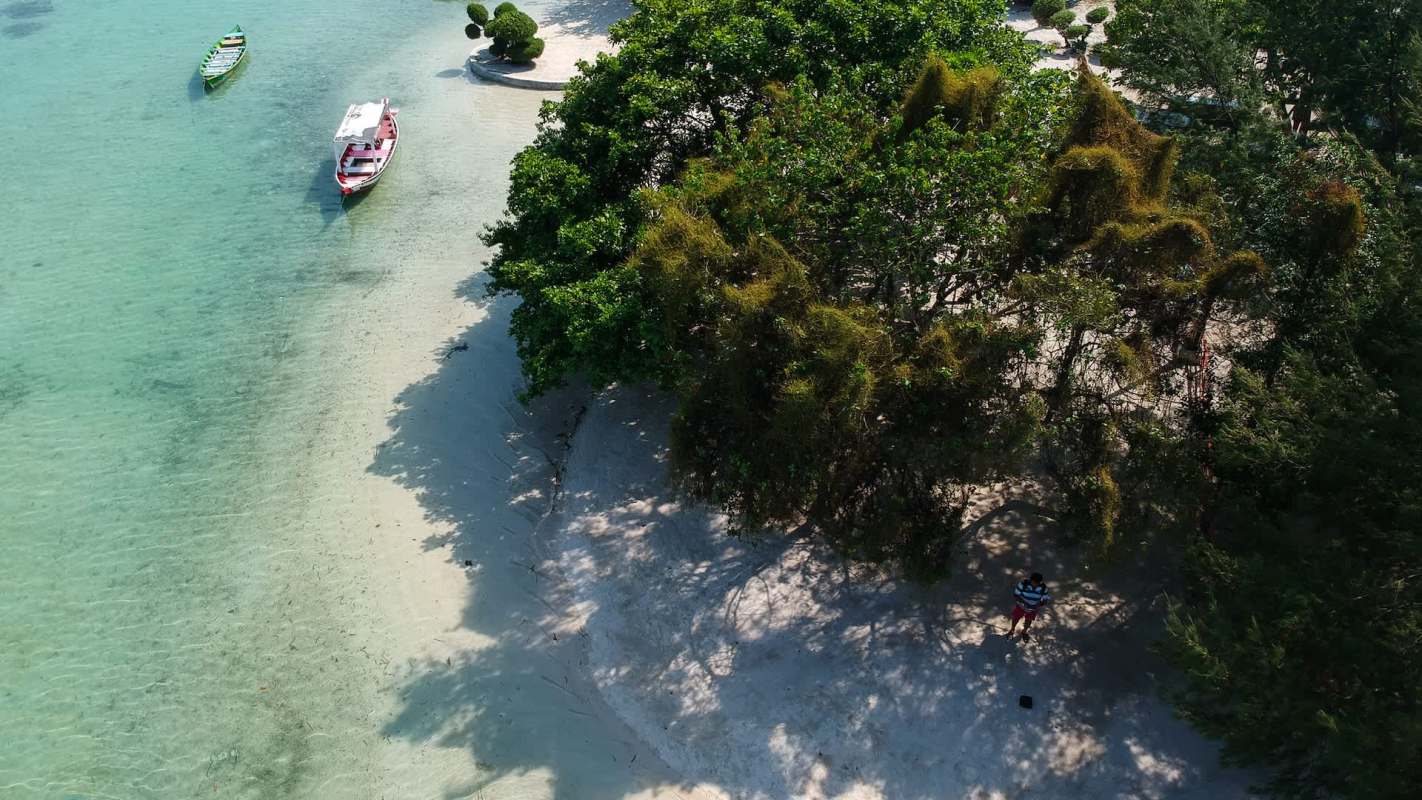
Indonesia's remote Pari Island is fighting a climate-related lawsuit against cement giant Holcim.
Residents face eroding beaches and the threat of homes being submerged, and they accused the company of contributing to rising sea levels.
What's happening?
Thomson Reuters Foundation reported that four islanders are trying to take Holcim to court after accusing it of "failing to cut emissions as their island faced repeated floods."
Asmania, a mother of three, is among the group that sued the Swiss company in 2023.
"The sea is not like it used to be," Asmania stated. "It's hotter, rougher, and it scares us."
Cement production is a major source of planet-overheating pollution. According to the Global Cement and Concrete Association, it accounts for 7% of global carbon dioxide pollution.
Indonesia is an archipelago that's vulnerable to erosion. The country has seen sea levels rise by about 4.25 millimeters a year since 1992, per the report.
Pari Island could be underwater by 2050. Asmania has noticed warming seawater since 2010. She experienced failed seaweed harvests and fish farming due to "seawater heat."
Why is Indonesia's island erosion concerning?
This struggle on Pari Island is the result of human activity.
Pollution from burning dirty fuel sources traps heat in the atmosphere, which exacerbates sea level rise by melting polar ice and water expansion. This endangers coastal communities, which have seen increased flooding, erosion, and saltwater intrusion.
TCD Picks » Quince Spotlight
💡These best-sellers from Quince deliver affordable, sustainable luxury for all




|
Should companies be required to help recycle their own products?
Click your choice to see results and speak your mind. |
 Definitely 👍
 Rising sea levels can destroy homes, livelihoods, and vital ecosystems like coral reefs. These impacts intensify with longer and more powerful storms, which are made worse by a warming climate.
The lawsuit is the epitome of climate justice. The Pari Island community contributes very little to global emissions, yet they are dealing with the most severe consequences.
"This is global damage caused by Holcim's emissions," Asmania said. "It's unfair because we are the ones suffering from the impact."
Climate-related disruptions, from food security to housing, leave vulnerable communities worse off.
What's being done about the rising sea levels at Pari Island?
The Swiss court has not decided on whether to hear the case against Holcim, per the report.
It's just one example of a growing trend, with communities trying to ensure corporate accountability through the courts. Regardless of the legal outcome, it sets an important precedent, and companies may be deemed liable for historical emissions.
For example, survivors of natural disasters in the Philippines and Pakistan have taken legal action to hold oil, energy, and cement companies accountable for pollution that contributes to extreme weather.
On Pari Island, residents like Asmania are not waiting. They are active and engaged in mangrove restoration efforts on Rengge Beach.
Mangroves are valuable assets for islanders, as they prevent erosion and absorb carbon pollution.
A fisherman quoted in the TRF report said the shrubs are "breeding grounds for fish, sea cucumbers, and crabs." Over half of Indonesia's total fish catch depends on mangroves.
"Planting mangroves is our way of holding on," Asmania said.

Get TCD's free newsletters for easy tips to save more, waste less, and make smarter choices — and earn up to $5,000 toward clean upgrades in TCD's exclusive Rewards Club.
Cool Picks





