


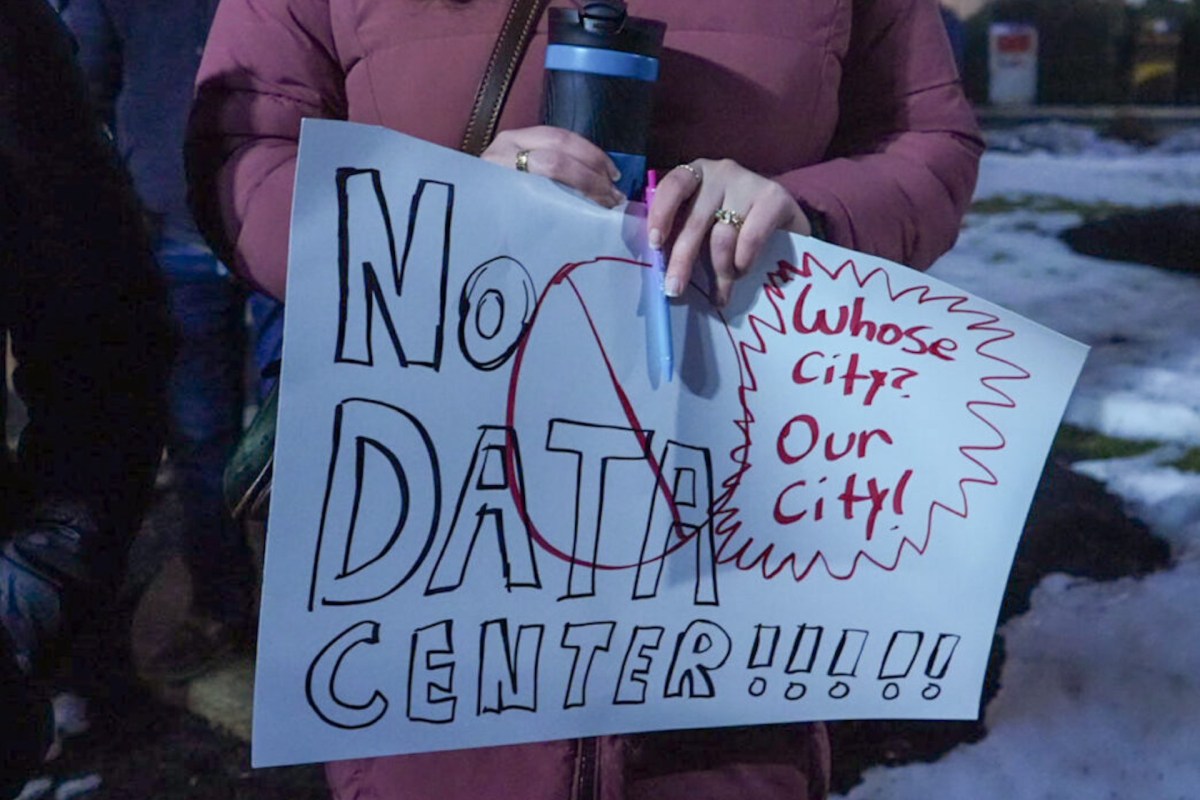
A Gen Z-led campaign has scored a major win against one of the most resource-intensive forms of new development.
On May 19, the Board of Commissioners in Millville, New Jersey, voted to ban new data centers within city limits, halting a proposed 2.6 million-square-foot project — which would have been the largest in the state's history — that opponents said would have placed strain on local water and power systems.
According to News 12, the facility was expected to use 1.4 gigawatts from the grid, roughly enough energy to power more than 1 million homes. It would have also required billions of gallons of water annually for cooling infrastructure.
The pushback was led by the Climate Revolution Action Network, a Gen Z-led environmental group that spent months organizing workshops, helping residents prepare public comments, and mobilizing hundreds of people to attend civic meetings.
That effort ultimately brought together a surprising coalition, uniting young climate advocates with long-established farming families in Cumberland County around a shared concern. They believed an enormous AI data center would leave the community carrying the environmental and infrastructure burden while private developers collected most of the benefits.
Opponents argued that a project of this scale could increase pressure on electric infrastructure and local water supplies while contributing to higher utility costs in a state already struggling with affordability concerns.
TCD Picks » Quince Spotlight
💡These best-sellers from Quince deliver affordable, sustainable luxury for all




Supporters of the ban also framed the issue as one of local control. Rather than allowing a highly energy-intensive facility to reshape the city's future, the vote gives Millville more authority over how its land, water, and grid capacity are used.
Data centers, particularly those tied to artificial intelligence systems, require vast amounts of electricity and water while creating relatively few permanent jobs compared to their physical size.
Critics of bans like Millville's argue that blocking data centers can also mean passing up construction jobs, tax revenue, and related business investment. Those concerns are especially significant for communities seeking economic growth and long-term investment opportunities.
Advocates for data centers have said the answer may not be blanket approvals or bans, but stricter development standards. Possible compromises could include requiring recycled-water cooling systems, cleaner energy sourcing, stronger hiring commitments, and agreements to ensure communities directly benefit from these projects.
For the Climate Revolution Action Network, however, the Millville vote is only the beginning.
The group is now urging New Jersey lawmakers to consider a statewide moratorium on new data center construction while officials study the long-term impacts on water use, electricity demand, pollution, and household utility costs.
Those questions are becoming increasingly common nationwide as communities take a closer look at who benefits from large-scale tech infrastructure projects — and who absorbs the costs.
For residents, the Millville fight also serves as a reminder that local organizing can still influence development decisions. People attended meetings, learned about zoning and infrastructure issues, and built a coalition across generations to challenge a project many initially assumed was inevitable.
"We had young people and long-time farmers working together to stop Big Tech from taking advantage of our community," said Kayleigh Henry, CRAN ecology director, per News 12.
"This is a winning coalition and something we need to see more of across the country. These corporations may have more money than us, but they're no match for people speaking out and making their voices heard."

Get TCD's free newsletters for easy tips, smart advice, and a chance to earn $5,000 toward home upgrades. To see more stories like this one, change your Google preferences here.






