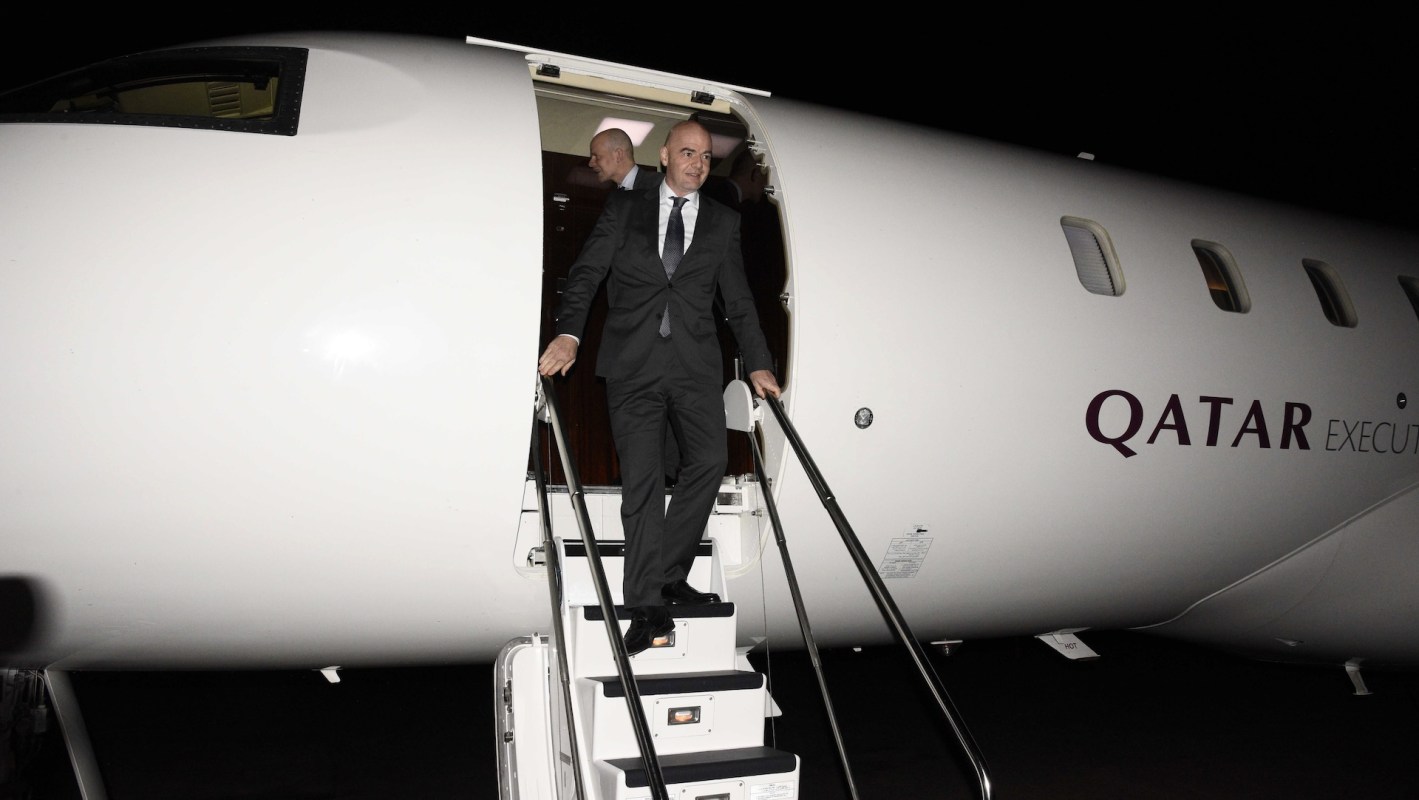
FIFA spent years promoting sustainability ahead of the 2026 World Cup, so one aspect of the tournament may frustrate many fans: FIFA President Gianni Infantino reportedly flew more than 100,000 kilometers (62,000 miles) by private jet during the event, spotlighting the climate impact of luxury travel in global sports.
What happened?
In his efforts to attend two World Cup matches each day, Infantino logged more than 100,000 kilometers (62,000 miles) and spent 142 hours in the air, according to movement and emissions data compiled during the tournament.
Tribuna reported that he traveled on a Qatar Airways private jet, and Qatar Airways is one of FIFA's official sponsors. When flight schedules kept him from getting to a match in person, FIFA sources said he watched from his official chauffeur-driven vehicle or onboard the jet.
The figures emerged as FIFA continued promoting sustainability around the expanded World Cup, drawing attention to the gap between its climate promises and the travel habits of its top executive.
Why does it matter?
Private jet travel is among the most pollution-intensive ways to travel.
Heat-trapping pollution is fueling worsening extreme weather, rising insurance costs, crop stress, and dangerous heat that communities around the world are already facing.
TCD Picks » Good Store Spotlight
Get 10% off your next purchase with code TCD10




Sports organizations hold enormous influence. When they model wasteful behavior, it can undermine trust in efforts to build cleaner and more equitable systems.
What's being done?
Pollution trackers, watchdog reporting, and public scrutiny are making it harder for major organizations to celebrate climate goals while obscuring the pollution tied to VIP travel.
For FIFA and other global sports bodies, meaningful action could include stricter travel standards for executives, better scheduling to reduce unnecessary flights, greater use of commercial travel where possible, and more transparent reporting on tournament-related pollution.
Organizers can also rethink how events are structured in the first place.
Smarter host-city planning, better regional clustering of matches, and stronger rail and public transit connections can cut pollution without taking away from the fan experience.
A World Cup marketed as sustainable should not be remembered for a 142-hour private-jet marathon.

Get TCD's free newsletters for easy tips, smart advice, and a chance to earn $5,000 toward home upgrades. To see more stories like this one, change your Google preferences here.