


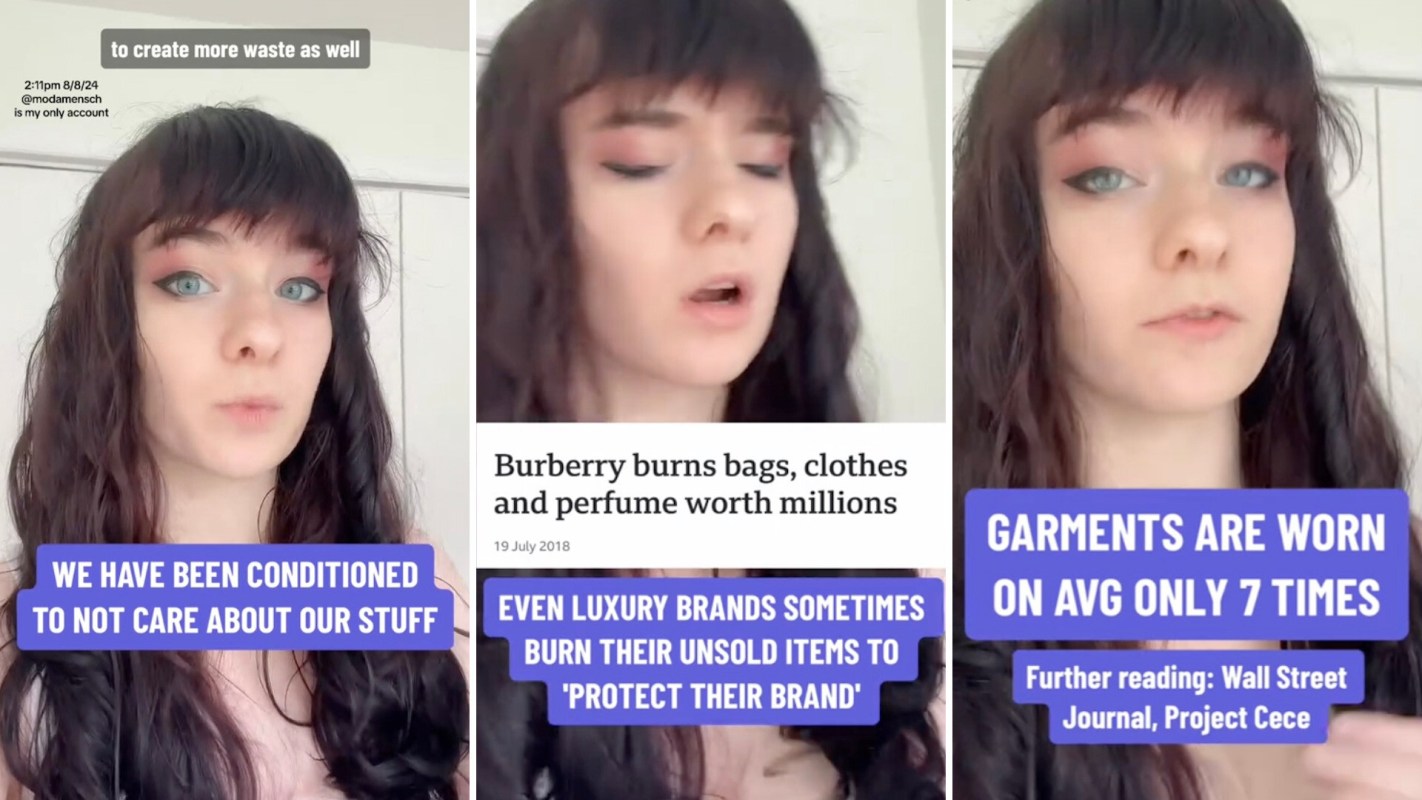
Many of the statistics we hear about pollution are in units of millions and billions, and it can be hard to visualize what those numbers mean. But one expert painted a picture of waste that was all too clear.
"The most important thing people need to understand about the fast fashion industry is the sheer amount of waste it produces," says sustainable fashion educator Jade (@modamensch) in a TikTok video.
@modamensch the true scale of fast fashion waste & how it is impacting climate change #fashion #fastfashion #slowfashion #sustainablefashion #sustainability #environmentalist #fashiontok #fashiontiktok #climatechange ♬ original sound - Jade | Sustainable Fashion 🪬
The annual waste produced, she continues, is "the equivalent of a dump truck of clothing getting dumped into a landfill every second."
There are many contributing factors. First, Jade explains, fashion corporations produce more than they need — so much so that many brands end up burning unsold inventory. This is particularly true of the notoriously cheap brand SHEIN, which introduces thousands of new designs to their website every single day, she says.
But corporations aren't the only ones responsible for excessive consumption — consumers also buy more than they need.
"In the US, a garment is worn on average seven times before it is tossed," Jade says.
Commenters were stunned.
"Wearing something 7 times is insane," one person wrote. "I haven't bought any new clothes except socks and underwear in literal years."
"I wear them as day clothes until they look shabby," another agreed. "They then become work clothes or pajamas until they are too damaged to wear. They then become cleaning cloths."
Unfortunately, this is not the approach that most people take, and it's created a massive problem. It's a waste problem, Jade says, "that is greatly exacerbating climate change and is worsening the economies of the countries affected by these landfills."
TCD Picks » Quince Spotlight
💡These best-sellers from Quince deliver affordable, sustainable luxury for all




She's right. Because literal tons of discarded textiles are generated every day, the percentage that can be sorted and recycled is minimal. Instead, many of them either sit in open dumps (or in nature), leaching toxic chemicals slowly into the soil and water around them. They're also frequently burned, which releases those chemicals immediately.
Either way, from impacting water quality to endangering agriculture, discouraging tourism, and endangering human health, these countries suffer from the overconsumption and clothing hauls of wealthier nations.
It's all the more reason, Jade encourages viewers, to choose to wear your clothes longer (including mending or upcycling them) and be mindful to only buy what you really need — and when you do need something, to buy it from a sustainable brand.

Join our free newsletter for good news and useful tips, and don't miss this cool list of easy ways to help yourself while helping the planet.
Cool Picks






