


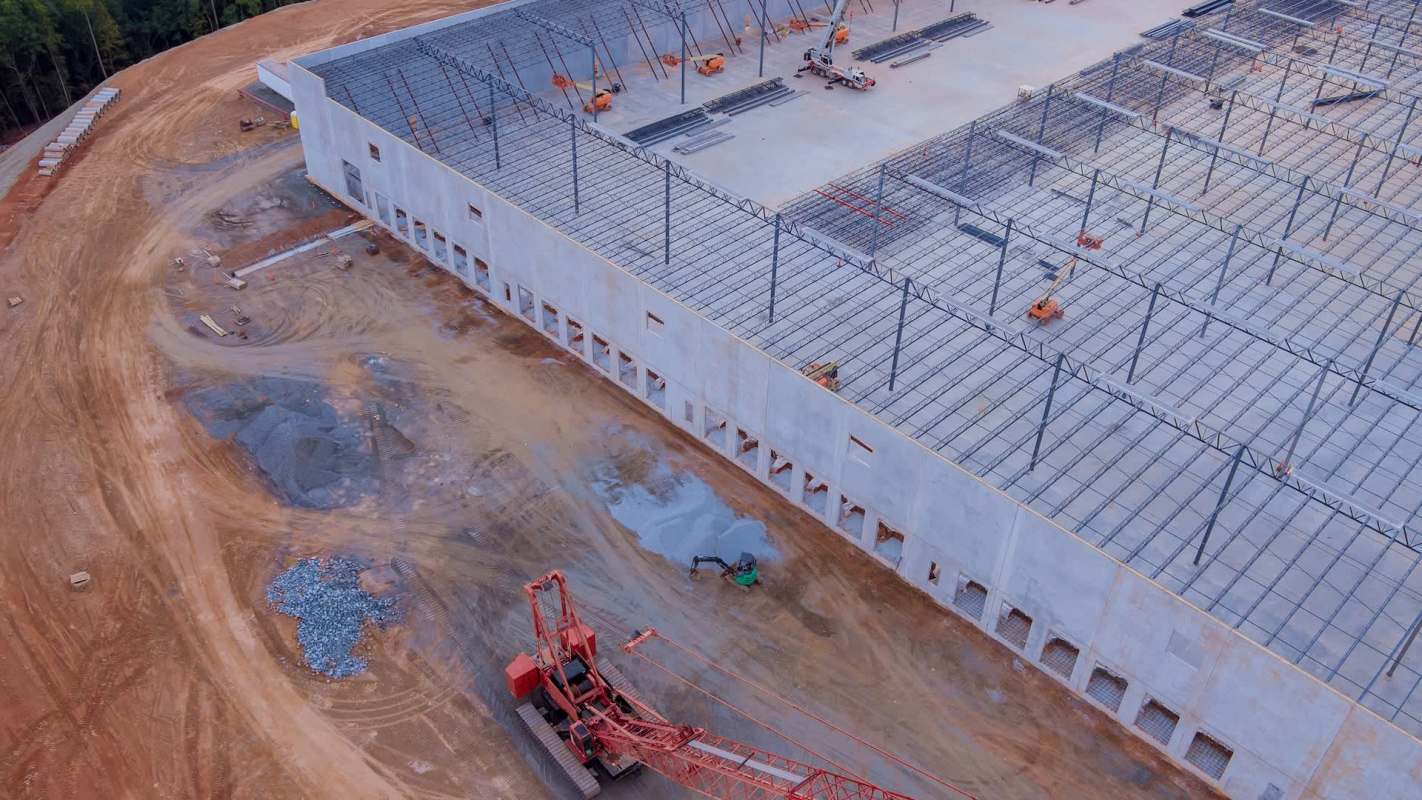
The EPA has proposed a nationwide policy change that would allow companies behind data centers, power plants, and other large industrial projects to start limited on-site work before getting the federal air permits now required upfront.
As E&E News reported, the agency said the move would help speed up development. However, critics have said it could do the opposite of what permitting is supposed to do: protect nearby communities by ensuring major projects are fully reviewed before momentum — and money — make them harder to stop.
What's happening?
On May 11, the EPA unveiled a proposal that would allow companies to begin work on "non-emitting" portions of large industrial projects before obtaining permits under the Clean Air Act's New Source Review.
The program is meant to ensure a new facility, or a major expansion of an existing one, does not worsen air quality beyond current levels. Under the proposed change, companies could move forward with certain projects, such as utility infrastructure, concrete pads, and buildings, before obtaining NSR permits.
However, companies will not be allowed to begin construction on equipment or components that directly emit pollution before obtaining an NSR permit.
EPA Administrator Lee Zeldin said the proposal would cut through red tape and "provide solutions to issues that have held up critical American infrastructure and advance the next great technological forefront."
TCD Picks » Quince Spotlight
💡These best-sellers from Quince deliver affordable, sustainable luxury for all




Zeldin noted the idea is to give developers "greater flexibility" while still maintaining public health and welfare protections, according to E&E News.
The proposal represents a meaningful shift from the EPA's earlier caution about what it once described as "equity in the ground" — the idea that once a developer has already spent significant money and started construction, regulators may face more pressure to approve a project they otherwise might have denied or required to change.
In response to this previous concern, the EPA stated that the proposal is "not intended to, and should not be construed as, establishing any equity or reliance arguments."
The EPA also released separate guidance aimed at speeding up another air permitting process known as Title V. According to E&E News, that guidance tells state permitting agencies they can send draft permits to the EPA during the same period those permits are out for public comment, rather than waiting until afterward.
Why is this concerning?
Air permits exist for a reason. They are one of the primary tools meant to protect families from dirtier air, worsening smog, and harmful industrial pollution.
Even if the EPA's proposal applies only to "non-emitting" parts of a project, critics have said the concern is not just what gets built first; it is what happens once construction is already underway.
When concrete has been poured and utility systems are in place, communities may reasonably worry that regulators will be more inclined to approve a project rather than force an expensive pause, redesign, or reversal.
For people living near major industrial sites, power plants, and large new data centers, where air quality may already be a serious issue, that's a concern. Exposure to more pollution has been linked to asthma attacks, heart and lung disease, missed school days, and greater health risks for children and older adults.
The EPA has said the same pollution standards would still apply and that companies would not gain special leverage simply because they started work early. But the agency's own earlier warnings help explain why some observers remain uneasy.
What's being done about this?
Once the proposal is published in the Federal Register, the public will have 45 days to comment. That gives residents, public health experts, environmental groups, and local officials a chance to weigh in on whether the change would actually preserve protections or instead make it easier for projects to move ahead before communities get clear answers.
Long-term, the better path is not simply faster industrial buildout, but rather cleaner industrial buildout. That means meeting new electricity demand with renewable energy, storage, and efficiency rather than defaulting to more pollution-heavy generation. It also means keeping strong public review processes intact, especially in neighborhoods that already carry an outsized pollution burden.
Residents can help by tracking comment periods for major projects in their area, submitting feedback to state and federal agencies, and pushing local leaders to prioritize cleaner energy sources and stronger air monitoring.

Get TCD's free newsletters for easy tips, smart advice, and a chance to earn $5,000 toward home upgrades. To see more stories like this one, change your Google preferences here.






