


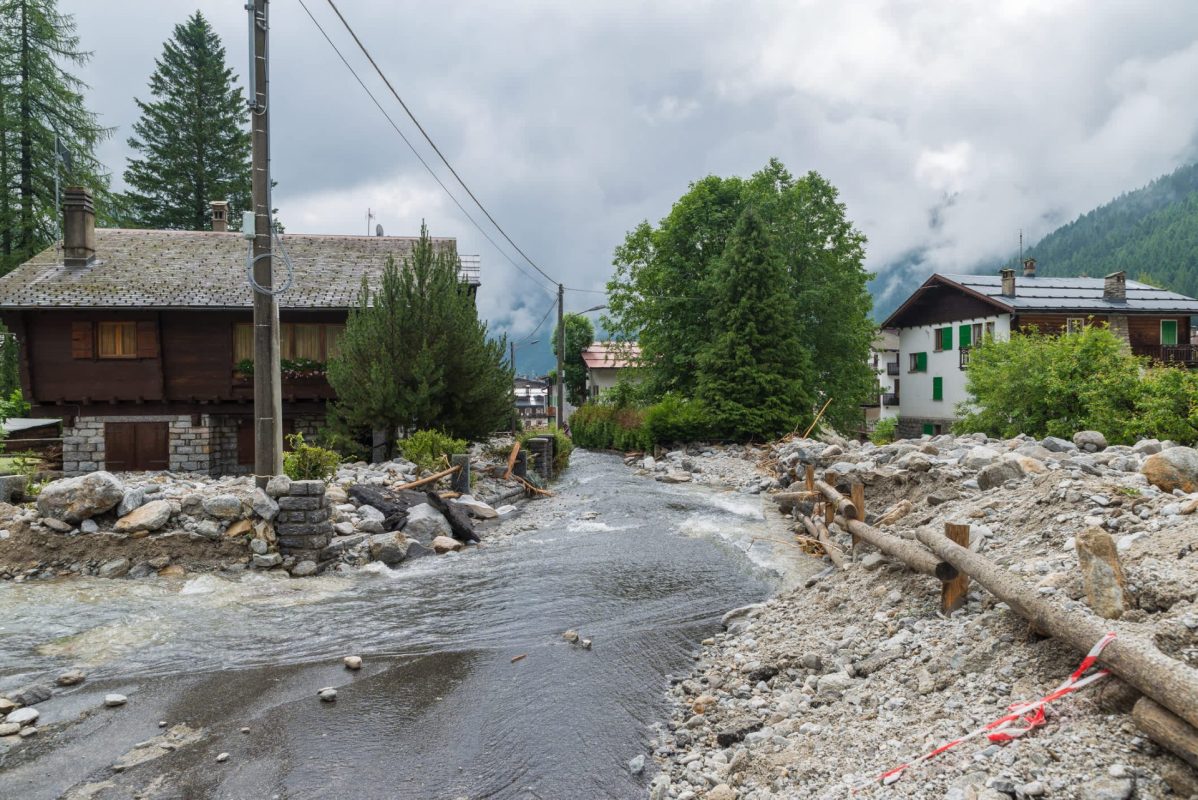
When you hear "flood damage," you might picture soaked homes or washed-out roads — but what about the local businesses that can't reopen or the loans they can't repay? The costs of flooding on the financial system in Europe are sending shockwaves through the economy, hitting companies' bottom lines and raising the impact on everyone.
What are the costs of flooding on the financial system?
Flooding doesn't just damage property — it affects how money flows through an economy.
A recent study, reported on in the Conversation, examined how climate-driven flooding in Europe is creating a domino effect. It's leading to lower revenues, higher borrowing costs, and tighter credit conditions for businesses already under pressure. And while the focus is on Europe, the warning signs are global.
When a business floods, it may lose inventory, pause operations, or see fewer customers — all of which hit its bottom line. With flood risks rising and insurance becoming harder to obtain, lenders are growing increasingly cautious, especially with smaller businesses.
"The indirect costs might not be immediately visible, but they are certainly not less significant," wrote Serena Fatica, the author of the Conversation report.
Why do the costs of flooding matter?
This isn't just about a few unlucky shops getting wet — it's about long-term economic resilience in a warming world.
Last year alone, floods displaced 413,000 people and caused at least €18 billion (more than $21 billion) in damages across Europe, according to a 2024 European State of the Climate report cited in the Conversation report.
A long-term study of Europe's Joint Research Centre found that businesses hit by floods often saw lasting losses in sales, jobs, and assets. In Italy, Spain, and Belgium, small and mid-sized companies struggled to repay loans, and leading banks hiked interest rates by up to 12%, per the Conversation. In Spain in 2024, flooding put a reported €20 billion (more than $23 billion) in loans at risk.
|
Do you worry about air pollution in and around your home? Click your choice to see results and speak your mind. |
 Yes — always 💯
 The financial toll is already adding up. Experts indicate that, despite the significant costs of taking action on risks such as floods, costs are only going to get worse without action.
"The cost of inaction is higher than the cost of transformation and adaptation," said Günther Thallinger of Allianz SE, one of the world's largest insurance companies, in a report from the Guardian on the broader impacts of such risks.
TCD Picks » Quince Spotlight
💡These best-sellers from Quince deliver affordable, sustainable luxury for all




How addressing flood risk helps protect the economy
Floods don't just destroy property — they drain cash flow and make it harder for businesses to bounce back. For smaller firms, especially, one disaster can mean shutting down for good.
And the bigger picture? The impacts can build. As the planet warms, extreme weather hits harder and more often — and the price tag keeps growing. Rebuilding after floods like the one in Valencia, Spain, costs billions, while investing in clean energy and flood defenses can help prevent that kind of damage altogether.
This isn't just Europe's problem, either. From storms in the U.S. to monsoon floods in Asia, climate-driven disasters are on the rise — and they're reshaping the economic landscape in real time.
Want to dive deeper? Explore this guide to discover critical climate issues.

Join our free newsletter for good news and useful tips, and don't miss this cool list of easy ways to help yourself while helping the planet.
Cool Picks





