


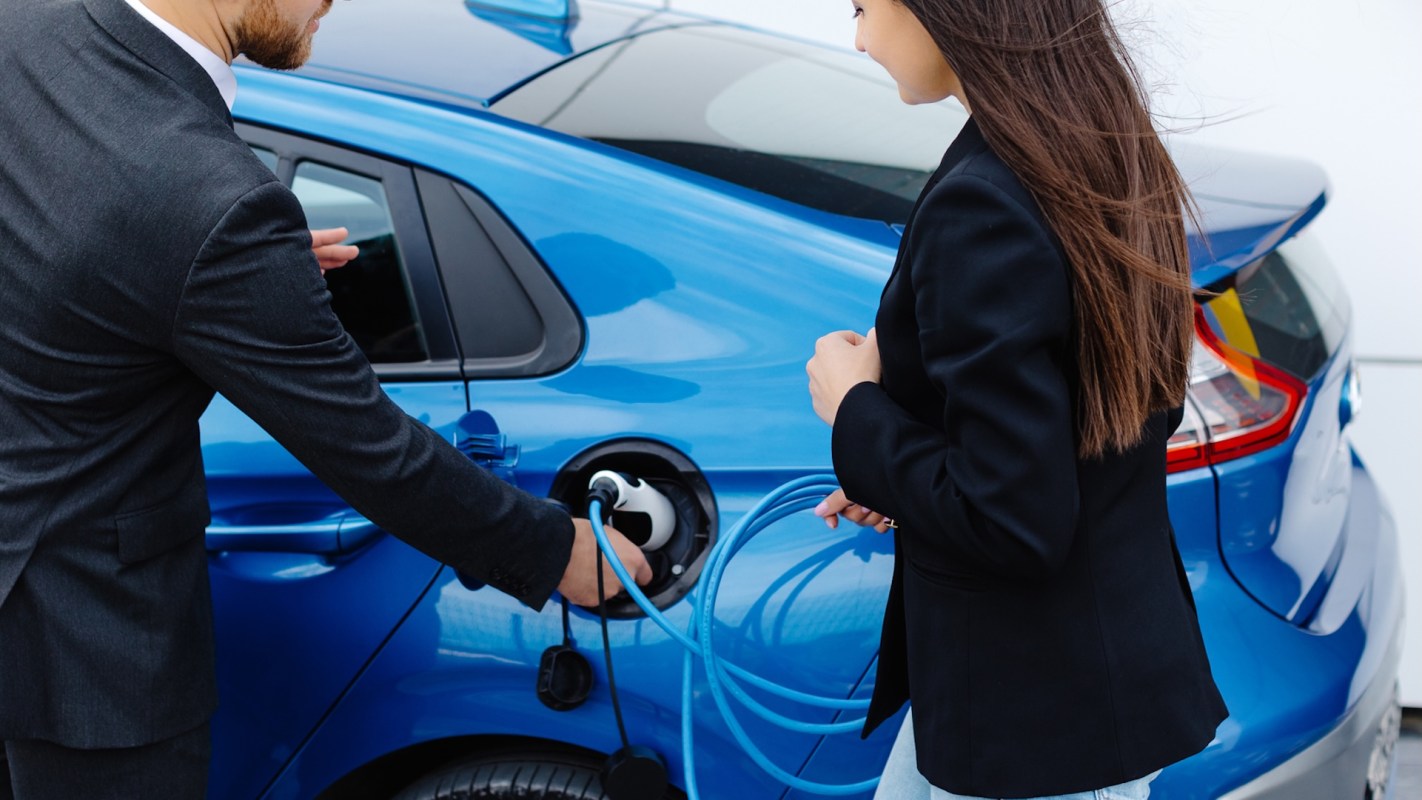
The war with Iran has sent gasoline prices soaring, so more drivers are considering switching to electric vehicles.
According to a report from Jack Ewing, auto reporter for the New York Times, there are signs of a shift happening among drivers.
Jessica Caldwell, head of insights at the online car shopping site Edmunds, said that "people want to be taken off the gas-price roller coaster," per the Times. Based on Edmunds' data, the share of people looking into EVs on its site rose to 24% at the beginning of March, up from 21% in early February.
Although EVs typically have a higher upfront cost, they're often much cheaper to run day to day and come with lower maintenance costs. In fact, the data shows drivers can save thousands over the lifetime of a vehicle by avoiding fuel costs and reducing the upkeep expenses associated with fossil-fuel-burning vehicles.
Also, EV drivers who charge at home typically see even more savings by taking advantage of lower residential electricity rates. If you're curious about how much a home charger can save you, the experts at Qmerit can help you get free installation estimates for Level 2 chargers.
Scott Case, chief executive of Recurrent, a firm that tracks the used EV market, also pointed out another benefit of EVs.
"[EVs are] probably loaded with a lot more cool technology inside," said Case, per the Times. "It boggles the mind that that free lunch hasn't been taken."
If you haven't made the switch to EV driving yet, Ewing shared a few key tips for making the change.
Save $10,000 on solar panels without even sharing your phone number Want to go solar but not sure who to trust? EnergySage has your back with free and transparent quotes from fully vetted providers in your area. To get started, just answer a few questions about your home — no phone number required. Within a day or two, EnergySage will email you the best options for your needs, and their expert advisers can help you compare quotes and pick a winner. Solar panels can save you more than $50k over their 25-year lifespan, and EnergySage can help you save as much as $10k on installation. Which begs the question — isn't that worth an email or two? |

Although Congress eliminated a major federal tax credit for EVs last year, there are still local incentives available.
"Some states and utilities still offer credits, rebates, or other financial support for electric car buyers, and there are exceptionally good deals to be had on used electric vehicles," Ewing said.
|
Which of these savings plans for rooftop solar panels would be most appealing for you?
Click your choice to see results and earn rewards to spend on home upgrades. |
 Save $1,000 this year 💸
 Plus, while electricity prices aren't immune to fluctuations, they tend to be more stable than gasoline prices. Ewing highlighted that public fast charger prices have barely budged since the war in Iran began, while gasoline prices have jumped over 30% nationwide.
Public chargers also tend to be more pricey than charging at home. If you install a Level 2 charger via Qmerit, you can save big on charging costs by ditching public stations altogether.
For solar panel owners, charging an EV at home makes even more sense. By using solar energy to charge your car, you're essentially driving on free energy.
If you're curious about how solar panels can transform your utility bills, connect with the solar experts at EnergySage. Homeowners who use their free tools can help you save up to $10,000 on the cost of installation.

Get TCD's free newsletters for easy tips, smart advice, and a chance to earn $5,000 toward home upgrades. To see more stories like this one, change your Google preferences here.






